
Exclusive:Why so many men are being killed by Scotland's drug deaths crisis as synthetic substances take hold
Professor Catriona Matheson says “back street operations trying to divvy up” drugs are adding too much potent synthetic opioids that are killing people, particularly men in their 40s with poor health.
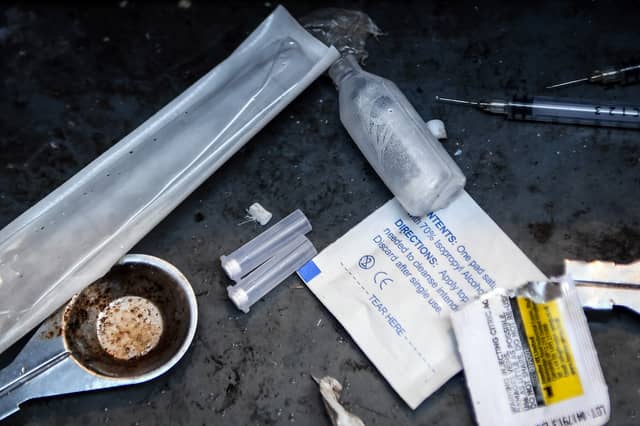


The former chief of the Scottish government’s drugs death taskforce has warned the country is “soaking up” the impacts of international illicit markets - as she argued that progress would likely have been made in cutting fatalities had it not been for the emergence of dangerous synthetic opioids.
Professor Catriona Matheson, professor of substance use at Stirling University, told The Scotsman that “back street operations trying to divvy up” drugs are adding too much potent synthetic opioids that are killing people, particularly men in their 40s with poor health.
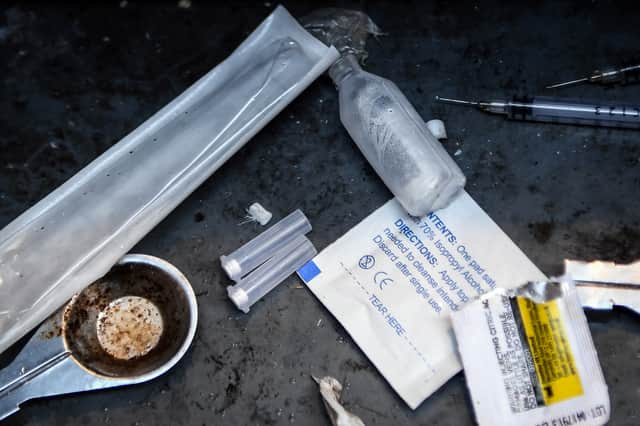
Prof Matheson was speaking after new statistics revealed 1,133 drug deaths in 2025 - an 11 per cent increase from the previous 12 months.
The National Record of Scotland statistics show that the rate of male drug use deaths was around three times the rate for females in 2025.
READ MORE: SNP has 'catastrophically failed' as drug deaths increase as cocaine and nitazenes fuel crisis
“The biggest group that are dying is men in their 40s who have been using substances for a long time, whose mental and physical health is pretty poor”, Professor Matheson said.
“If they continue taking multiple substances, unfortunately, something will push them over the edge.”
SNP drugs minister, Maree Todd, has pointed to a rise in synthetic opioids that “are exceptionally potent and causing death and destruction on our streets”.
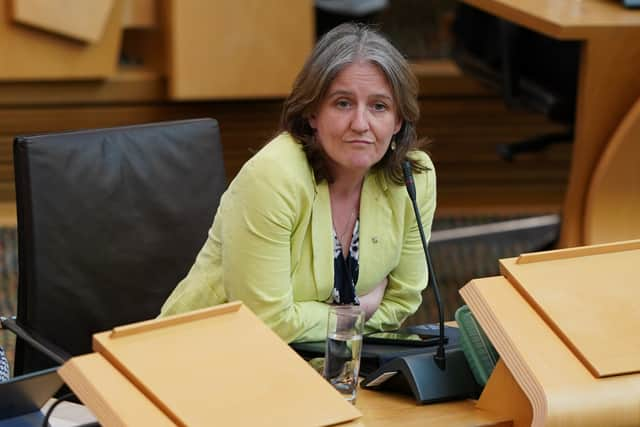
She added that the emergence of the substances “must drive more coordinated action across the country”.
Ms Todd said: “Much of the challenge that we face and many of the reasons why the drug deaths are going in the wrong direction is because of the ever-changing and lethal toxicity of the market out there.
“These drugs are really dangerous and they have only recently burst onto our scene.”
The statistics show that while opiates were implicated in more than two thirds of drug use deaths in 2025, potent lab-created opioids known as nitazenes, contributed to more than one in five drug use deaths last year.
“We’re talking about things that are 50 to 200 times more potent than heroin, which is a more old-school opiate”, Professor Matheson explained.
“High potency means that it’s a small quantity that needs to be taken. If you think about how these drugs are processed and put together and how they’re mixed and the accuracy of that, these aren’t done under pharmaceutical conditions.
“You have some back street operation trying to divvy up some drugs and add in these synthetics. They’re putting too much in these drugs and it’s killing people.”

She added: “There’s been a kind of heroin drought since the Afghanistan poppy fields were cleared and that’s been filled by adding these synthetics to the heroin supply.
“It’s just a really dangerous market. I’ve heard a few people say it was safer when we just had heroin and we knew what we were dealing with.”
The new figures also show that cocaine was implicated in more than half of last year’s drug deaths - the highest number since figures were first compiled in 2008.
“There was a bit of a glut of cocaine - there was a lot of cheap cocaine coming out the back of Covid from South America”, Professor Matheson said.
READ MORE: Scotland is already Europe's drug-deaths capital – and without action it’s about to get worse
“It was also stronger than people were used to. It’s a factor that it’s cheaper and more available. People do get a buzz from it and then often use sedative-type things to come down. So people get into a cycle of using more substances together and that is dangerous.”
But the expert has warned that evidence suggests that “cocaine markets are changing and that heroin might be coming back a little bit”.
“We’re keeping an eye on that”, she added.
“The glut of cocaine is maybe waning a little bit. The heroin market is coming now from Pakistan. There’s a lot of money to be made internationally from drug supply chains and Scotland seems to be soaking up the worst impact of that.”
Professor Matheson stressed that “we can’t control the drugs markets”, but warned that “we can control the treatment service and whether there’s drug-checking available”.
Glasgow’s first drug-checking facility is due to open next month, with further facilities planned in other cities.
But Ms Todd argued that getting the facility up and running has been “complex” after a licence was finally agreed by the UK Home Office in October 2025.
Professor Matheson has called for the Scottish government to invest more in core services, alongside further safe consumption and drug-checking facilities.
“We need to invest in our drug treatments services to make sure more people are getting access to the right treatment”, she said.
“I’d like to see the government do a bit more investing in core NHS-based drug treatment services.”
Scotland’s drug deaths crisis peaked in 2020 when 1,339 deaths were recorded, but the new statistics for 2025 showed a decline of just 206 fatalities. In the last six years, more than 7,000 Scots have lost their lives due to drugs use.
Asked why such little progress has been made in reducing annual drug-related deaths in Scotland since the peak in 2020, Professor Matheson argued that things would likely have gone in the right direction if the influx of synthetic drugs had not taken place.
“We were never going to just turn a corner and go on a steep downward trajectory”, she said. “That’s just not the way these things work.
“But we were doing well and I think had it not been for this influx of synthetics, we would probably have had a reduction. Things were going modestly well but this has been a bit of a blow all round.”
Comments
Want to join the conversation? Please or to comment on this article.