
Outlander: Replica 12th Century village in central belt stars in new location guide


The show might be over - but Scotland keeps driving it tourist drive for fans of show
A replica 12th Century medieval village set in woodland between Glasgow and Edinburgh is included in the first guide to all 48 locations in Scotland used to shoot Outlander during its eight-season run.
Visit Scotland has published the guide to mark the end of the drama’s run in collaboration with Sony Pictures Television to capitalise on the show’s resounding success of the romantic time travelling fantasy and its impact on tourism in Scotland, where the television show was largely shot.
Duncarron Medieval Village near Denny in the Carron Valley, which is owned by The Clanranald Trust for Scotland, appeared in series seven of the show when it twinned as Fort Ticonderoga, which was built by the French near the south end of Lake Champlain in New York state.
In the show, lead characters Jamie and Claire Fraser find themselves caught up at the fort in the early chaos of the American Revolutionary War, with the drama transplanted to the Central Belt.
Chara H. Gallos-Allan, Director of Duncarron Medieval Village, said: "Being part of the Outlander family since day one has been a tremendous privilege for The Clanranald Trust for Scotland.
"As a volunteer-led charity dedicated to bringing Scotland’s history to life, it has been incredibly rewarding to see our team’s historical knowledge, combat expertise and passion contribute to a series loved around the world.
"Welcoming Outlander ‘home’ to Duncarron Medieval Village for Season Seven – and seeing the site transformed into an early Fort Ticonderoga – was an especially proud moment for everyone who helped build and sustain it.”
Duncarron has also been used as filming location for a range of production, including Netflix’s Norsemen and BBC docudramas Rise of the Clans and Blood of the Clans.
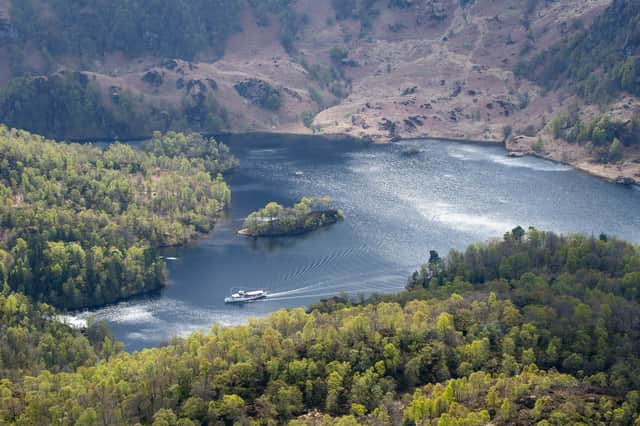
Duncarron, which opened in 2019 after taking more than 10 years to build, features in the guide - Scotland: The Home of Outlander - alongside locations including Pollok House in Glasgow, Culross Palace and village in Fife, Dysart in Fife and Loch Katrine in the Trossachs.

Since it began airing in 2014, Outlander's popularity across key international markets, such as France, Germany and North America has coincided with an increase in visits from those markets to Scotland, particularly from the US.
Outlander has been a major contributor to screen tourism activity which is worth £161.4 million to Scotland's economy, according to the latest report by Screen Scotland.

The Moffat Centre for Travel and Tourism Business Development, based at Glasgow Caledonian University, found total number of visitors to all Outlander attractions rose from 2,14m in 2014 to just over 3m in 2025 - a 41% increase.
A significant rises in visitor numbers due to the ‘Outlander effect’ have been recorded as several properties, including Doune Castle near Stirling, which starred as the fictional Castle Leoch, which recorded a 168% rise since 2014.

Newhailes House near Musselburgh, which played Governor Tryon’s home in North Carolina, experienced a massive 8000% increase in visits since 2014.
The special 40-page guide will be available to download from visitscotland.com, with a limited run of printed copies available exclusively for guests of The Caledonian Sleeper on its trains which have been wrapped in Outlander imagery.

Matthew B. Roberts, Executive Producer and Showrunner on Outlander, writes in the guide: "From day one, the people of Scotland welcomed a small group of Sassenachs from Los Angeles with open arms. They didn’t just let us film here - they embraced us, shared their stunning landscapes and culture, and made us feel like we belonged."
Jenni Steele, Film and Creative Industries Manager at VisitScotland, said Scotland’s history,heritage, culture and landscapes had “transfixed” fans of the shows.
Ms Steele added: "There's no doubt that Outlander has had an extraordinary impact on Scottish tourism on the global stage and is a clear example of the power of screen tourism. It has provided an important platform to tell Scotland's story to our key international markets and continues to support our work to grow the value of the visitor economy across Scotland."
Comments
Want to join the conversation? Please or to comment on this article.