
Martyn James: How to beat the Black Friday blues
Martyn James knows how to spot if that must-have item at a knock-down price is a genuine bargain
Black Friday is upon us at the end of November. If you’ve got sales fatigue, I don’t blame you. November can seem like one unending sales binge these days.
Yet millions of people will be shopping for reduced items over the next few weeks. I’ve been inundated with questions from readers about how to be sure if they are getting a bargain or not. So here’s my guide.
How do I know if something is really on sale?
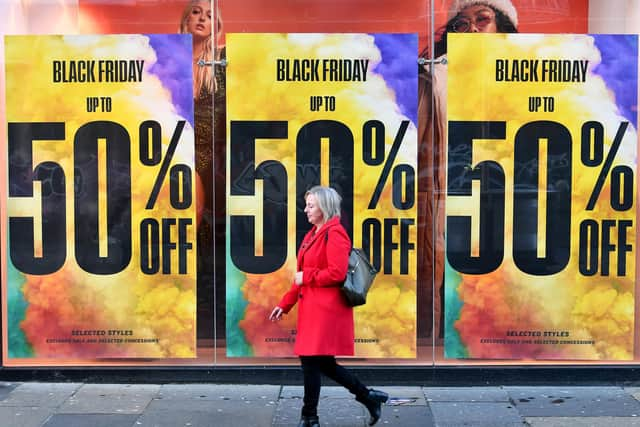

There are loads of complex and vague rules around advertising and discounts. So it’s better to assume that the huge 50 per cent discount on a new television isn’t quite as good as it might appear. The same goes for warnings about low stock levels that are designed to speed you to the checkout.
Shops use a staggering array of psychological tricks to get us purchasing before we put too much thought into whether we are getting a bargain. Fight back with a few quick checks.
Ultimately, goods are only really worth what you are willing to pay for them. But I’d suggest starting with the manufacturer’s recommended retail price (RRP). These prices are usually the top end that you might be expected to pay and are often artificially high so they can be discounted. Next, pop the item and brand you are thinking of purchasing in to a search drive and look at the ‘shopping’ options. You’ll get a good idea of what the current going rate is for what you want to buy. Watch out for shops you haven’t heard of offering suspiciously low prices though.
Price trackers
There are lots of free price tracker websites out there that monitor the cost of items over a set period of time – usually a year. I use sites like CamelCamelCamel for Amazon products and PriceSpy for other retailers. These sites will tell you if you’re getting a good deal on an item in the sale, or whether it was cheaper in the past. You can even set price alerts on some sites so you get notified when the price drops to your ideal range.
Don’t forget your shopping rights
I often mention the laws that govern retailers in this column. That’s why I work with fabulous organisations like the Competition and Markets Authority (CMA) to make it clear how they work. I spoke to Hayley Fletcher at the CMA who explained: “Your consumer rights don’t disappear in a sale. Under the Consumer Rights Act 2015, items bought in a sale must still be satisfactory quality (not broken or damaged), fit for purpose, and match the original description. If this isn’t the case, they can be returned for a refund, repair, or replacement”. Check out more CMA tips on their website.
Discounts and vouchers
Discount websites are largely rubbish, but some online sites like Honey search for voucher codes that actually work, so you can make the most of even bigger price reductions. You can also use cashback sites like TopCashback to get a bit of your money back on purchases.
Watch out for scams
Black Friday is prime time for scammers. Hayley recommends going direct to retailer’s websites and not clicking on unsolicited links you may get sent. She also advises watching out for unfamiliar websites, misspelled URLs, odd formatting, or other things that don’t look quite right. You can use free sites like Get Safe Online to check if a site is legit. Beware QR codes: they can hide malicious links that take you to ‘phishing’ schemes.
Buyer’s regret
If you wake up after a shopping binge and regret your purchases, you can usually cancel them and get your cash back. The Consumer Contract Regulations give you the right to cancel contracts when you buy online within 14 days.
The law only applies to online purchases and there are exceptions (like holidays or made-to-order items). If you buy on the high street, you are not covered by the law and are at the mercy of the shop’s returns policy.
Martyn James is a leading consumer rights campaigner, TV and radio broadcaster and journalist. Visit martynjamesexpert.co.uk
Comments
Want to join the conversation? Please or to comment on this article.