
From corn to mashed potatoes: how to get the most out of spring skiing


The key to enjoying spring skiing is getting your head around the variable snow conditions that come with variable temperatures, writes Roger Cox
For some reason the ski industry doesn’t consider spring to be “peak season”, but perhaps it should. According to the wisdom of the market, the best time to ski in Europe and North America is in January and February, and everything from flights to accommodation is priced to match. Up to a point you can see the logic. Your chances of getting fresh snow are highest during the depths of winter, and that should make things optimal both on and off-piste. You can usually rely on the temperature staying the right side of freezing during this period, too, ensuring the snow conditions remain fairly consistent throughout the day.
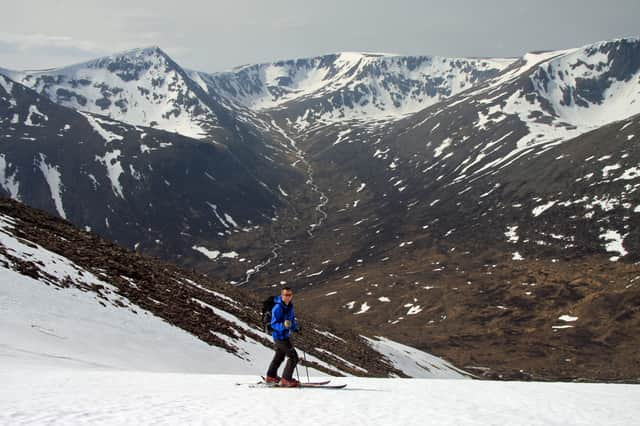
Skiing in the spring, though, can be just as good as skiing in the winter. In fact – whisper it – sometimes it can be even better. There are plenty of high-altitude ski resorts that pride themselves on staying open into May, too, from Val Thorens in France to Mammoth Mountain in California to Riksgränsen in Sweden, where they keep the lifts spinning into June. Even here in Scotland, while our low-lying ski centres might not all be able to operate much beyond Easter (even in an above-average winter like this one) there’s often still snow to be found later in the year for those who are willing to hike. Google “Glencoe" and “Midsumer Slide” if you don't believe me.
In skiing and snowboarding terms, then, spring – warmer, sunnier, less expensive and less-crowded – is peak season for opportunists, whether that means bagging a week’s holiday for half the price it would have cost during February half-term, or slogging up to some remote snow patch in order to enjoy a few quiet, sun-kissed turns.
Whatever kind of spring skiing you’re into, though, there’s one skill it really pays to master, and that’s getting your head around the variable snow conditions that come with variable temperatures. On a well-below-zero day in January, you can ski the same piste all day from 9am to 4pm and – assuming it’s not so busy that moguls start to form – have more or less the same experience every time. Try doing that in April or May, however, and you'll be amazed at how many different kinds of snow you can encounter.

In his 2008 book The Snow Tourist, journalist Charlie English gives an excellent appendix on “The Great ‘Eskimo’ Vocabulary Hoax.” The idea that the indigenous peoples of the Arctic have 50, 100 or even 500 different words for snow, he explains, originated with the anthropologist Franz Boas (1858-1942), who cited four different “Eskimo” words for snow – a number which somehow seemed to take on a life of its own and “inflated steadily over the years.” In the 1980s, a new generation of anthropologists set out to puncture this myth but, as English points out, they probably went too far the other way. The word “Eskimo”, used in Boas’s time to refer to a variety of different Arctic peoples, is now considered offensive, but the Yup’ik of Central Alaska, one of the groups formerly lumped together under the term, have a whole host of snow words – I particularly like “Muruaneq” for soft, deep snow and “Qetrar” for snow with a crust. Like the Yup’ik, skiers and snowboarders have developed a range of words for spring snow, and understanding them is key to enjoying your spring ski trip.
Let’s get back to our imaginary piste – the one we skied all day in the middle of winter. Back then, because the temperature was below freezing 24 hours a day, the snow quality didn’t change much. In the spring, though, the snow is probably going to melt during the day, then re-freeze overnight, and then melt again during the next day. These freeze-thaw cycles all contain some fun times and some not-so-fun times – you just need to know what happens when.
Good news for those who like a lie-in: first thing in the morning tends to be a not-so-fun time. The top layer of snow that got all soggy in the sun yesterday afternoon has frozen solid overnight and, depending on how wet it got, will now either be boilerplate (very hard, bordering on ice) or hardpack (what it sounds like). You can go and scratch around on this if you must, but the best thing to do is to make yourself another cup of coffee and wait for the sun to work its magic.

Once the temperature starts to rise, the top layer of the piste will start to soften up. You might describe conditions at this point as firm: you can start to sink an edge into the snow, but push too hard and you’ll definitely feel that hardpack layer just below the surface pushing back. After a couple of laps of this, though, you’re entering the magic zone – a period of the day during which snow is variously described as corn, butter or hero snow. Timings will vary depending on what the weather’s doing, but often this period lasts from mid-morning to early afternoon. You’ll want to maximise your time in the hero snow, so aim for a late lunch.

How will you know when it’s lunchtime? Well, eventually the hero snow will start to get too wet, to the point where it turns into what’s often called slush or mashed potatoes. Smashing wet, sloppy snow around the place can be fun for a while, but once it starts to get really wet it will start suddenly and unexpectedly gripping your skis, sometimes with alarming results. So, the recipe for spring success? Simple: skip the boilerplate, maximise your time in the corn but be sure to quit before it all goes mashed potatoes.
Want the latest Scottish headlines sent directly to your phone? Sign up to our new WhatsApp channel here.
Comments
Want to join the conversation? Please or to comment on this article.