
Scottish ski resorts celebrate best season in eight years

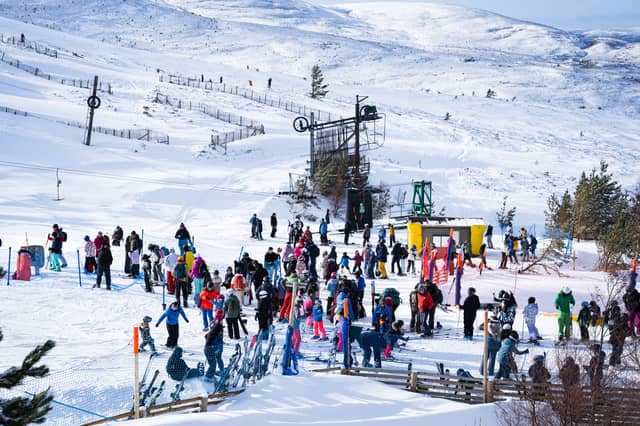

Scotland’s ski industry has had a difficult time since the pandemic, but visitor numbers for the 2025/26 season make for positive reading, writes Roger Cox
How do you determine the quality of a ski season? It seems like an obvious question. Loads of snow? Then it was probably a good year for skiing. Not so much snow? Then it was probably a bad one. Trouble is, it’s never quite as simple as that – and that’s particularly the case here in Scotland.
For a start, you need to take the variability of the weather into account. In the big, international ski resorts in the Alps and the Rockies, locals often act as if the world is ending on the rare days when the wind gets above about 20mph, battening down hatches right, left and centre and (in really extreme cases) folding up deckchairs and carrying them inside. In a typical Scottish winter, by contrast, the wind is above 20mph most of the time. Here, 20mph barely qualifies as a breeze. There will be days, though, when even by Scottish standards it’s just too windy for the ski resorts to open. In theory, then, Scotland could be hammered by snow storms from December to May – could have its snowiest winter on record – and yet still have an awful ski season, simply because it wasn’t possible to get out on the hills much unless you were prepared to crawl around on all-fours.

Then there’s the vexed question of freeze-thaw cycles. Again, this is less of an issue in the world’s larger mountain ranges, as higher altitudes usually guarantee consistently low temperatures, which in turn means snow that falls during the winter can mostly be relied on to remain in a snowy state until it melts towards the tail-end of the spring. In Scotland, by contrast, where most of the skiing infrastructure is located at less than 1,000m above sea level, temperatures can swing wildly right through the winter, from well below freezing one day to well above freezing the next. So, again, hypothetically speaking Scotland could be hammered by snow storms from December to May – could have its snowiest winter on record – and yet still have a poor ski season, simply because each big dump of snow was followed by a few days of high temperatures and hairdryer winds, which stripped the white stuff off the hills almost as quickly as it fell.
READ MORE: Snowsport Scotland's CEO on how to ensure a future for Scotland's ski centres in a warming world
Counter-intuitively, then, snowfall totals aren’t necessarily all that much use when trying to determine if a winter was any good for skiing. A far better unit of measurement is the annual “skier days” statistic produced every year by ski-scotland, the combined marketing body for Scotland’s five ski areas, Cairngorm, Glencoe, Glenshee, Nevis Range and The Lecht. This measures how many people paid for a day’s skiing at one of the resorts – so, if two friends spend a full day skiing together at Cairngorm, that counts as two skier days; if those same two people go back the next day and each buy half-day passes, that counts as one skier day, and so on.
The skier days stat isn’t perfect, as there are plenty of things it doesn’t capture: cross-country skiing, for one; backcountry skiing for another, the latter increasingly popular and therefore an increasingly important part of the overall Scottish snowsports mix. What it does give us, though, is a rough idea, not just of how much snow there might have been on the hills during a given winter, but how often snow conditions and weather conditions combined in such a way that people thought “Y’know what? I think today would be a good day for a ski.”
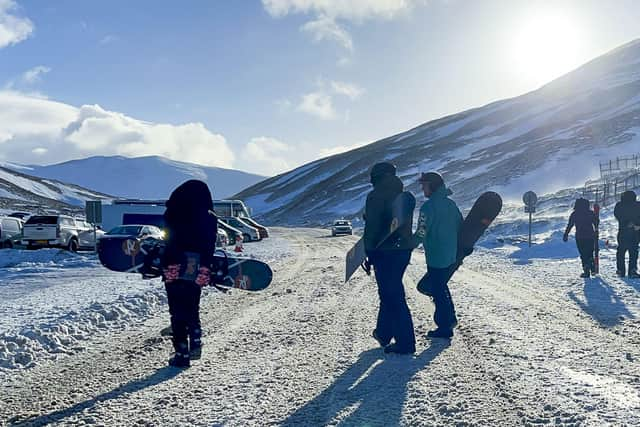
The last few seasons have been bleak for Scottish skiing: the 2024/25 winter was the worst on record, with just 51,825 skier days racked up across all five resorts, and prior to that (not including the Covid-compromised 2019-20 and 2020-21 seasons) four of the worst ever winters for Scottish skiing had occurred in the previous ten years. The industry was badly in need of a bit of good news, in other words, and now it has some: the official skier days stat for 2025/26 is 139,445 – the best result since the spectacular 2017/18 season, which saw 254,958 skier days recorded.
Last season’s number is reassuring for all kinds of reasons. Significantly, it suggests that climate models like those produced by Michael Spencer of Scotland’s Rural College (SRUC) for the Cairngorms National Park in 2019 are broadly right: there will be less snow on Scotland’s mountains as the century progresses, but there will be plenty of variation from year to year, which means there should still be plenty of good, snowy winters like the one we’ve just had to look forward to.
Perhaps most importantly, though, the latest skier days stat suggests that Scotland’s skiing and snowboarding community has largely kept the faith during the last few disappointing years. Anecdotally, we already knew last winter was a good one in terms of snowfall – Cairngorm, for example, was able to open in November, thanks to some welcome early season snow, and it kept going right through to May, the first time in a long time it’s been able to offer such a lengthy season. But good snow and good weather conditions aren’t enough all by themselves – for Scotland’s ski centres to survive they also need a loyal customer base and this year’s numbers suggest that there are still plenty of people who are willing and able to throw skis in the car and head to the hills when the conditions are right. Long may that continue.
READ MORE: Scottish Ski & Board 2025/26 e-mag
Want the latest Scottish headlines sent directly to your phone? Sign up to our new WhatsApp channel here
Comments
Want to join the conversation? Please or to comment on this article.