
Exclusive:Andy Burnham must not tax his way to growth, Scots finance leader warns
New PM should give firms ‘breathing space’ says leading business figure


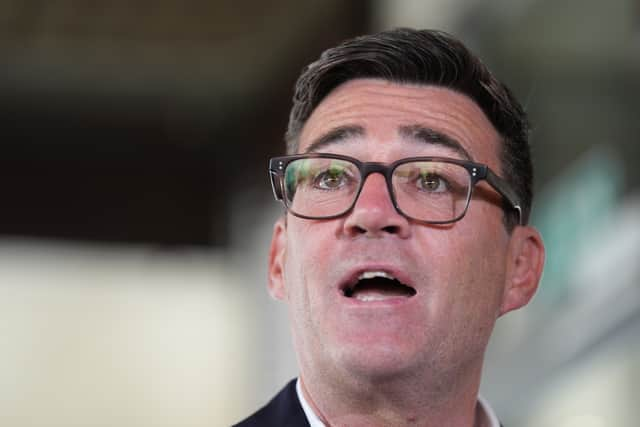
Andy Burnham has been urged by a leading Scottish financial figure not to “tax his way to growth” and to instead provide business with “a bit of breathing space.”
Sandy Begbie, the chief executive of Scottish Financial Enterprise, said the new prime minister has been “long on ambition but short on detail” so far, and said that while he welcomed some of the UK cabinet appointments, there were concerns around others.
These include the new Secretary of State for Energy Security and Net Zero, Miatta Fahnbulleh, who earlier stated her support for rapid net zero transition.

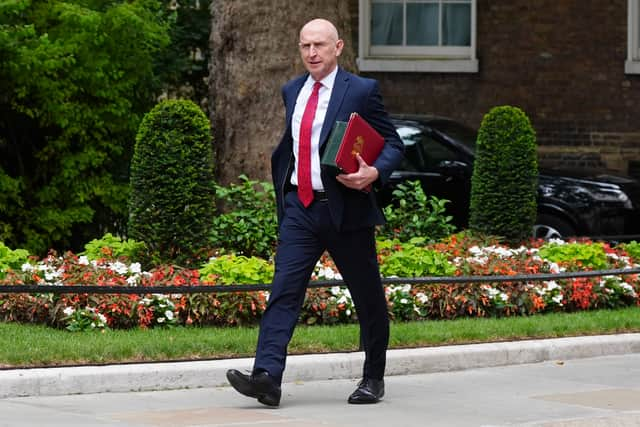
The chancellor, John Healey, has already spoken of pursuing key priorities in order to “build a new economy,” and there has been speculation that he and Mr Burnham are considering a wealth tax on the UK’s super-rich households, and a hike in tax charges on banks.
Already, Jamie Dimon, the chief executive of JP Morgan, which employs around 4,500 staff in Scotland, has cautioned against the latter policy, warning that it would have “adverse consequences”.
Mr Begbie echoed those misgivings, stressing that any such charges would have an impact on investment in the economy.
“I think Jamie Dimon sent out the right message,” he told The Scotsman. “If Andy Burnham is serious about economic growth, there needs to be a recognition that you don’t tax your way to growth. If they stick to the Labour manifesto commitments not to raise the three main levers on tax, it forces them down other avenues, and invariably takes them to business.
“Obviously things like a bank tax have been looked at previously, and Jamie Dimon is right. Government officials need to understand that if you continue to play about with tax, it affects investor sentiment and confidence, it introduces volatility, and it stops people making investment decisions.”
Mr Begbie said he hoped Mr Burnham would announce that there will be “no further taxes” on business for the “time being” in order to provide firms with a “bit of breathing space,” and suggested the new prime minister could also take steps to help companies further.
“Ideally, he could reverse some of the damage caused by the National Insurance contribution increases, especially across key sectors like retail and hospitality,” he explained. “The impact of that on jobs has been significant and youth employment has gone up again at UK level.”
The finance sector leader also said Mr Burnham’s widely expected push to devolve further powers to the UK’s nations and regions would require a “degree of thought” from the Scottish government, and expressed hope that his appointment could lead to a reset in relations between the administrations in Edinburgh and London.
With focus increasingly turning to Mr Burnham’s economic plans, it is unclear what, if any, immediate steps will be taken in his first days in power.
“It’s been long on ambition but short on detail,” he said. “Obviously, there’s been the policy announcement on VAT on electricity bills, and I think he wanted to put something out there very early on about the cost of living that distinguished him from the previous prime minister.
“From our perspective, we’ve been clear there’s really only two levers left to pull - how to shift the dial on economic growth, and how do you deliver public sector reform. Those things are inextricably connected, and when it comes to economic growth, it’s not evident which way the prime minister is going to go, he’s not said that much about it.”
Mr Begbie said that while he welcomed the appointment of Mr Healey and the return of Jonathan Reynolds to the Department of Business and trade, he was less sure of the decision to give the energy secretary job to Miatta Fahnbulleh. Prior to entering parliament, the first-term Labour MP was chief executive of the New Economics Foundation, where she advocated for a rapid net zero transition.
“She seems to have even more firm views on net zero than even Ed Miliband had, and it’s clear there are concerns in the north east and what it means for oil and gas in Scotland,” he reasoned. “That’ll be a big test for them because there’s £50 billion in economic growth lying on the table there.”
The new education secretary, Lucy Powell, said that the weekend that Mr Burnham’s government would take a more “pragmatic” approach to the oil and gas industry, with suggestions that he will announce plans for new drilling in the North Sea. Mr Begbie said the prime minister’s views on the issue - and his preparedness to act - would be key.
“You got a real sense in the last couple of months of the Starmer government of real tension on this issue,” he went on. “You had Rachel Reeves increasingly being public about her support for Rosebank and Jackdaw, and you had Ed Miliband more or less saying almost nothing, and certainly nothing positive about it.
“Part of it will come down to how Andy Burnham operates as prime minister, and if there are opposing positions across key departments in his government, does he step in and force a decision? The previous prime minister seemed reluctant to do that.”
Mr Begbie, a former senior executive with Tesco Bank and Standard Life, also told The Scotsman that investors wanted to see changes around planning, supply chains, and ensuring there is a “pipeline” of projects in place for them to consider, pointing to data centres as an example.
“We are in an increasingly competitive world for capital, and I’m not suggesting that all the proposed applications and locations for those data centres are right, but we have countries around the world, like New Zealand, Canada, the Republic of Ireland, and Scandinavian countries, who are all moving up their investments because they have excess renewable power and a good climate.
“We’re stuck in a polarised political debate and all that’s happening is that we’re falling further behind, so I think pace around economic growth, both at a UK and Scottish government level, is going to be really important.”
Comments
Want to join the conversation? Please or to comment on this article.