
Daring exploits of WWII Shetland Bus crossings celebrated in new documentary

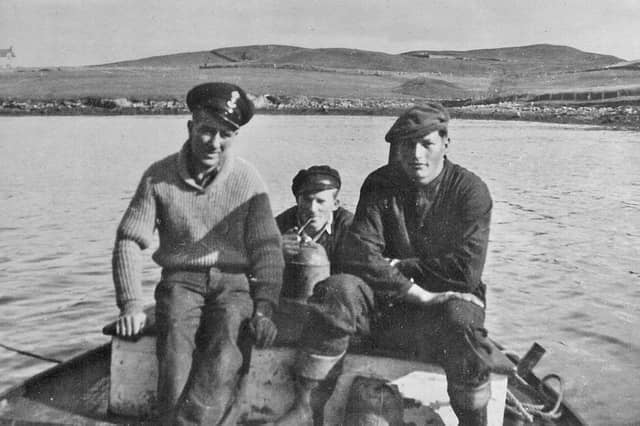

Families of those who risked lives pay tribute
It was a clandestine operation that brought vital resources and hope to the resistance in Nazi-occupied Norway, with the small fishing boats that were a common sight on the North Sea's perilous waters used to transport weapons, cargo, and special agents.
Now, a new documentary has shed light on the enduring legacy of the Shetland Bus crossings during World War II, and the friendships forged between those on Scotland’s most northerly archipelago and their Scandinavian neighbours.

‘Hearts Across The Sea’ features extensive interviews with the relatives of those who took part in the dangerous convoys, as well as Shetlanders who befriended and helped the Norwegians who provided a crucial escape lifeline for refugees and fugitives.
Although it remains an often overlooked chapter in World War II history, the Shetland Bus played a fundamental role in the espionage and sabotage missions conducted across German-occupied Europe.
After the Nazis invaded Norway in April 1940, King Haakon VII and his family went into exile in London, with thousands of Norwegians taking to fishing boats in search of refuge. Many made their way west to Shetland, and before long, it became clear that the islands could serve an even greater purpose.

By June that year, Prime Minister Winston Churchill had set up a secret organisation called the Special Operations Executive, which paved the way for a network that would allow Norway to fight back.
The film, produced by Claire White and filmed and edited by Jonathon Bulter, has already been viewed nearly 40,000 times since being uploaded to YouTube last weekend. They said at a time when fewer people can remember the extraordinary operation first-hand, they hoped to preserve “precious memories” and ensure that its stories are heard by future generations.
Bill Moore, a trustee of Scalloway Museum, which boasts an extensive archive devoted to the Shetland Bus, is among those interviewed. He explained: “The Shetland Bus was part British but the operators were mostly Norwegians, who were very often fishermen or local traders who were all volunteers at the beginning.

“There were about 20 fishing boats involved in total, and they went across from here on very dangerous missions to supply the resistance with whatever they needed in Norway.”
As well as being a keen historian of the Shetland Bus, Mr Moore has a personal connection to the operation. His father, Jack, ran an engineering and ship repair business, and would travel to carry out “constant repairs” to the boats at their initial base in Lunna, before it relocated to Scalloway. He was eventually honoured by King Olav V, receiving a Norwegian knighthood for his work in maintaining the fleet.
“The son of Arthur Sclater, who was the head of the base, said his father always said that without my father, the Shetland Bus couldn’t have succeeded, so it was a very strong accolade from the man in charge,” he told the documentary.

Also interviewed is Astrid Larsen from Bergen, whose father, Leif, was the first non-Briton to receive the Conspicuous Gallantry Medal, and one of the most famous figures involved with the Shetland Bus.
He risked his life on dozens of sailings from Shetland to Norway, and led an audacious attempt to sink the Tirpitz, a Bismarck-class battleship. Having set off from Shetland in the Arthur fishing boat with mini-submarines, each containing divers, the plan was for the men to stick explosive charges to the vast vessel in a Norwegian fjord and escape. But despite getting in sight of the Tirpitz, a series of waves snapped the tow cables that were carrying the mini-subs.
“At one point, one of the big newspapers in the west coast of Norway called him the man of the century,” Ms Larsen said. “They made a statue of my father on what they call Shetland’s Larsen Pier in Bergen.
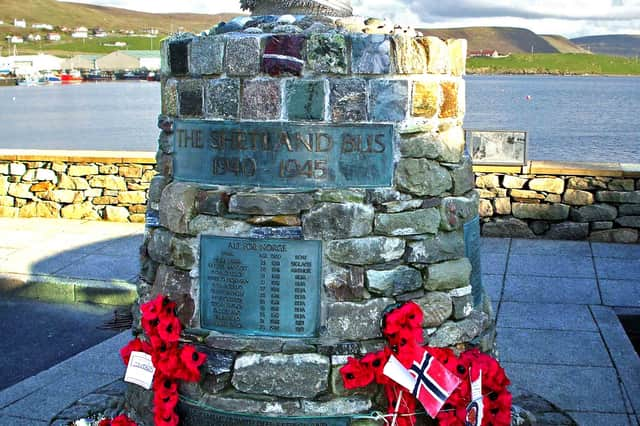
“To visit Shetland these days meant to me that we have to honour those who really did something so we could have our freedom back,” she said. “It reminds me to work for our freedom today and to still have hope. It also tells me something about the very strong friendship among the people in Shetland, especially the west coast of Norway.”
The film also hears from Sven Sandvik, whose father, Åge, was the engineer on the Vita, which completed several successful crossings before becoming the first of the Shetland Bus vessels to be captured by the Germans. Åge went on to spend three-and-a-half years in prison before returning to Norway, but his son said he came close to being killed.
“When he was captured they brought him to Grini [a Nazi concentration camp near Oslo] where they actually should be shot,” he recalled. “But the English knew what was going on. They sent a message to Germany that if you shoot this group we have 20 German officers we are going to shoot.”
By 1943, 44 men and 10 fishing boats had been lost, and the Shetland Bus crews began to use sub-chasers - wooden craft that could withstand poor weather - that helped prevent the loss of any further life.
Ms White said she was grateful for the attention the film had received over the past week. She explained: “We've been surprised and delighted by the number of people who've engaged with Hearts Across The Sea since it launched online just a few days ago. The universally positive feedback we've received on social media, via YouTube and in person makes this labour of love worthwhile.
“Of course, the real credit goes to the film's contributors who provided such wonderful material to craft into an accessible, impactful film.”
Hearts Across the Sea is available to watch for free on YouTube
Comments
Want to join the conversation? Please or to comment on this article.