
Developers set out plans to replace Edinburgh's Argyle House with homes, offices and hotel
1960s pre-cast concrete building ‘coming to the end of its usable lifespan’
Developers wanting to demolish Edinburgh's Argyle House say their plans to replace it with homes, offices and hotels would “reintegrate” the site back into the city.
The massive 1960s office block in Castle Terrace - which stars as police headquarters in the Netflix series Department Q - has been branded one of Edinburgh's biggest eyesores.
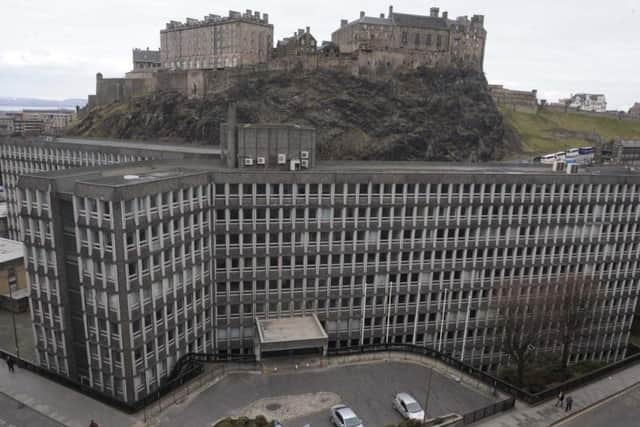

But when plans to bulldoze it were announced in November, Edinburgh architect Malcolm Fraser hit back, calling it "a distinguished modernist building" and arguing it would be "madness" to knock down a building which was "sturdy, solid and useful".
Historic Environment Scotland ruled that it met the criteria for being designated a building “of special architectural or historic interest”, but said its policy was not to list buildings where a development proposal was already being advanced.
Argyle House is currently occupied by tech incubator CodeBase, with around 900 people working there. And the lease on the building runs until 2033, so any redevelopment may not happen for several years.
But developers Herd Henderson and Mayfly Capital have been consulting on their proposals for the site ahead of submitting a planning application.
They say Argyle House is "coming to the end of its usable lifespan and no longer meets the needs of the modern occupier". And they say the aim of their proposals is to provide "a high quality mixed-use development" which the city-centre location deserves.
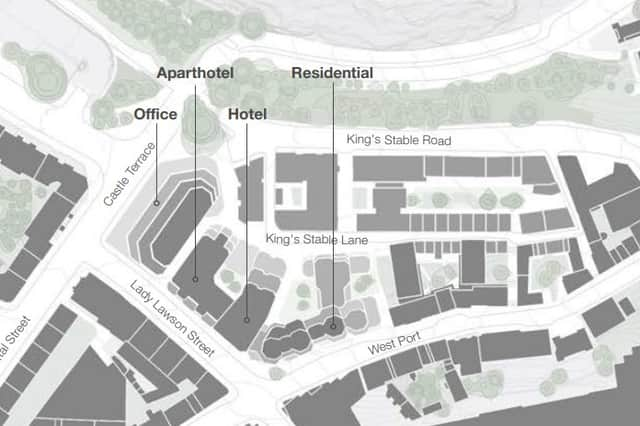
The plans show offices fronting onto Castle Terrace, a hotel and apart-hotel on Lady Lawson Street and the residential development on West Port.
They do not give any details of how many flats are planned, how much office space there will be or how many rooms in the hotel.
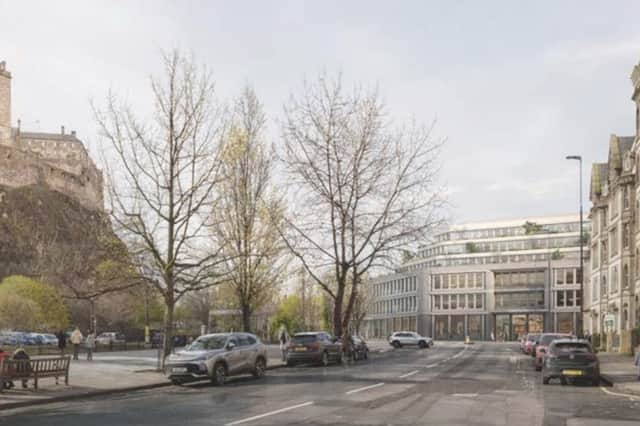
The developers say they have reduced the heights of the proposed buildings in response to feedback from the consultation sessions.
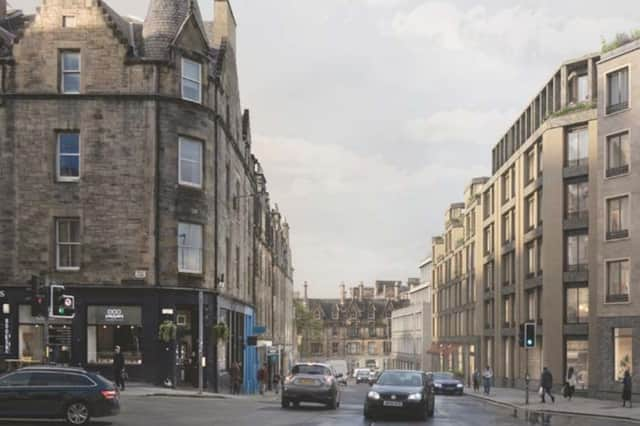
They said: “The reduction has been carefully considered, reflecting the heights of the surrounding buildings, and allows greater protection of views of the Castle from Spittal Street.”
There are currently no public routes across the Argyle House site, with people instead having to walk around its edges. But the new scheme would reinstate the former Baird's Close, with steps connecting West Port to King’s Stables Road and a lift next to the existing stairs at the junction between Castle Terrace and King’s Stables Road to offer a step-free alternative.
A pocket park is proposed on Castle Terrace at the entrance to the public lift, and also in the hotel courtyards adjacent to the public pend connecting West Port and King's Stable Lane.

Argyle House was designed by Edinburgh architects Michael Laird & Partners, built using pre-cast concrete, and completed in 1968. It was used as government offices for a long time and also served as an annexe for Edinburgh Sheriff Court.
And as well as being used as the exterior of the police headquarters in Department Q, it also had a similar role in the TV version of Irvine Welsh’s novel Crime.
It has regularly been criticised as “an eyesore” and “second only to the St James centre in the ugliness stakes”. The Cockburn Association once described it as one of the worst examples of the city's 1960s office blocks.

But in his defence of the building, Malcolm Fraser said: “Argyle House is a distinguished modernist building, in a city that continues to erase its recent heritage. In its sturdy, grey monumentality it is characteristically Edinburgh; and in placemaking it does a nice thing in stepping back from the tight junction at the head of West Port, a move that Patrick Geddes, doyen of town planning and Edinburgh hero, would have surely approved, given his adage of ‘letting some light in’.”
A planning application is expected to be submitted in September and the developers hope it will go to the council’s development sub-committee in February next year.
Comments
Want to join the conversation? Please or to comment on this article.