
Doug Allan's extraordinary wildlife photography


For Sir David Attenborough, “wildlife cameramen don’t come much more special than Doug”.
Doug Allan, who has died aged 74 after suffering a brain haemorrhage on a climbing trip in Nepal, was the cameraman Sir David wanted by his side. The pair formed a special relationship after meeting in the early 80s in Antarctica. Mr Allan, who hailed from Dunfermline and studied marine biology at Stirling, was working as a research diver for the British Antarctic Survey when they first met and struck up a friendship on the sea ice.
The pair worked for 30 years together shooting in some of the world’s most inhospitable places. They went where humans were not designed to comfortably be and, in the process, forged a partnership that brought the world’s natural wonders into the homes of us all via programmes such as The Blue Planet, Planet Earth, Frozen Planet, and Life in the Freezer.
They went further than ever before to bring nature as close to us as they possibly could. Mr Allan, who was awarded the Polar Medal, eight Emmy Awards, five Baftas, and five Wildscreen Panda Awards, alongside multiple honorary doctorates and fellowships, leaves behind a family and a legion of fans and friends - and an extraordinary body of work which will endure for generations.
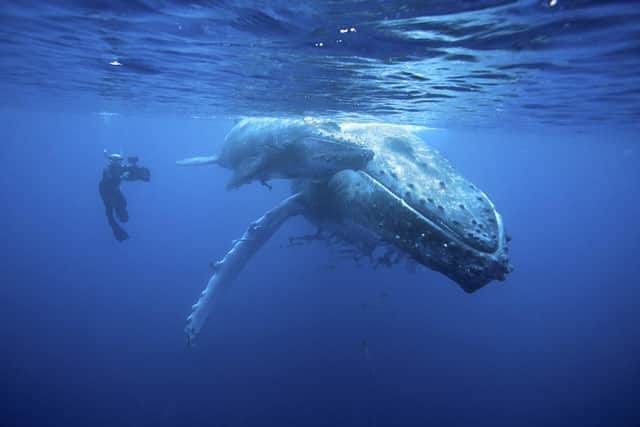
As Sir David Attenborough wrote in the foreword to Mr Allan's book Freeze Frame: “He cheerfully endures conditions more uncomfortable and for longer periods than anyone I know. He has an uncanny understanding of animals, which enables him to capture breathtaking, perfectly composed shots.”
When once asked ‘if heaven were a place on Earth, where would it be?’, Mr Allan effortlessly displayed his knack of putting others at ease.
“Heaven is being anywhere in the company of a wild animal that trusts you enough to relax and behave naturally in front of you, even if that means he or she simply goes to sleep,” he said.
On the piece of film or photograph he was most proud of, Mr Allan said simply: “It’s with my old friends the polar bears”. He described a “wonderful afternoon” swimming between the floes in Hudson Bay, where a polar bear “totally accepted our presence” and “wasn’t the slightest bothered”. Mr Allan used a little remote underwater camera on the end of a pole.
“No one had ever seen an image of a bear like that before, in the final show we ran four minutes simply of him swimming. The scene had a beautifully unexpected majesty about it,” Mr Allan said.