
'Highland Hotel Robbers' among 100,000 online Victorian prisoner records


Records hailed as ‘rich source of information’ for social researchers and family historians
The once-notorious ‘Highland Hotel Robbers’ are among more than 100,000 Victorian prisoners whose records have been made available online.
Scotland’s People, the official site for Scottish government records, has published details of more than 100,000 inmates from Ayr and Inveraray jails.
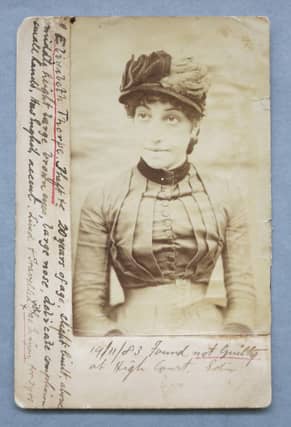
In the summer of 1883, American James Edward Lyon and Eliza Thorpe targeted well-to-do guests in upmarket hotels as far afield as Argyll and Aberdeenshire.
Cash, jewellery and other valuables went missing and Lyon and Thorpe always seemed to be around when it happened.

The pair, who travelled as man and wife, were arrested at a hotel in Edinburgh, while their associate Joseph Dowling was caught red-handed with some of the stolen items.
At their trial, the men were convicted but the case against Thorpe, who was 20 years old, was found not proven. Lyon was sentenced to seven years behind bars at Inveraray.
Photographs of Lyon, Thorpe and Dowling were kept in an album of interesting cases by the local procurator fiscal. Their entries in the registers for Inveraray prison are among 4,600 records for the jail now on Scotland’s People.
Others include the cases of Archibald and Martha Graham, a father and daughter from Islay who were admitted to Inveraray in May 1866 after being accused of stealing a sheep’s carcass.

Archibald, then 75, was described as a pauper who had worked as an agricultural labourer for most of his life, and although further information regarding the background to the theft has yet to be uncovered, it is likely they simply needed the carcass for food, or sought to sell its wool for money.
Men, women and children were incarcerated at Inverary in the 19th century, with the youngest being seven-year-old James McCulloch, who was caught stealing and sentenced to five days in an industrial school. The oldest was 82-year-old Ann Kerr, who was found guilty of “vagrancy,” serving eight days in prison.
One tranche of documents from Inveraray document the dramatic escape of three prisoners in August 1874. The three inmates, William Dickson, James Duncan, and John Campbell, were discovered to have fled when the warden found their cell doors locked, but with no one inside.
On carrying out a search, prison staff found an access hatch to the roof had been broken open, with a rope hanging down to the ground outside.
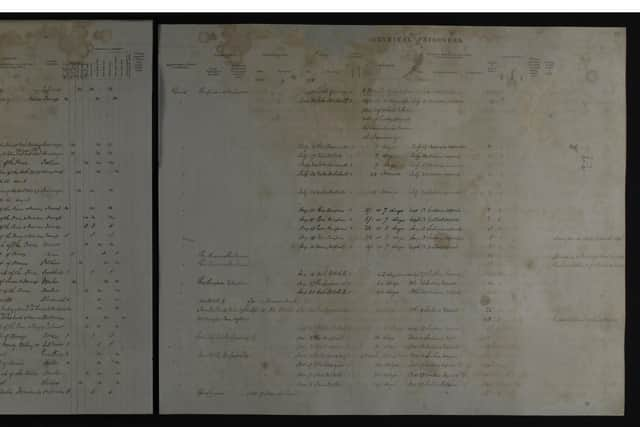
The Procurator Fiscal issued an offer of a reward of £15 for the capture of the three men, who were awaiting trial on the charge of housebreaking, and their bid for freedom was only partly successful.
The day after their escape, a police constable in Arrochar recognised Dickson and Duncan, and moved to apprehend them. In the ensuing struggle, Dickson tried to strike the policeman’s head with a club, only to accidentally strike his fellow escapee.
Both men were eventually liberated without trial, but there is no record of Campbell having ever been captured and imprisoned at Inveraray following his escape.
The newly published records also include 98,000 entries from Ayr Prison from 1841-1911.
Notable prisoners included murderers Joseph Calabrese, Thomas Bone and Mary Boyd. All of them were sentenced to death but were spared.
Calabrese, who was born in Naples and later settled in Scotland as an ice cream vendor, murdered his wife, Jessie, and their four children, Minnie, Thomas, John, and Lucinda, at their home in Kilbirnie in April 1904.
The couple had had a fractious relationship and during periods of drunkenness Jessie had often antagonised Calabrese with the taunt that he was not the father of his children. On the night of the murder, the children were woken by their fighting and got into bed with their mother, throwing coal at Calebrese.
The two eldest siblings, together with their mother, shouted at him that he was not their father. In a rage, Calebrese grabbed the hatchet and murdered his family. Afterwards he got dressed and reported himself to the police.
The records for Bone, a miner from the long gone East Ayrshire village of Glenbuck, show that he murdered his wife, Agnes, who was also his second cousin, in 1908. The couple had gone for a walk and witnesses described seeing bone stamping on the ground, picking up a stone, and throwing it forcibly.
After being found guilty at the High Court in Glasgow, Bone’s death sentence was reduced to life imprisonment, and he was subsequently certified as insane and transferred to what was known as the criminal lunatic department of Perth Prison. He was found dead in his cell in November 1912.
Scotland’s People said prison records provide a rare glimpse into the lives of people, often in desperate circumstances, who may have left few other records behind.
They provide details including names, imprisonment dates and details of their offences, and can also include details of an inmate’s physical characteristics, health, religion and level of literacy.
Archivist Veronica Schreuder said: “Prison registers are a rich source of information for social researchers and family historians alike. While it can be a shock to find an ancestor in prison, it can sometimes lead to details that are unlikely to have been preserved for most people.
“Finding out the colour of their hair, details of their health or whether they could read or write can turn a name and some dates into a much more rounded person. And, of course, if they have committed a serious crime, it can explain a lot about the decisions of other relatives such as moving area, changing a name or simply never talking about them.”
The additions mean there are more than 400,000 historical prison records available to search on Scotland’s People.
This includes the old Edinburgh prisons, Barlinnie, Perth and Largs.
Histories of both prisons and more on the cases highlighted in this story are available at Scotland’s People.
Comments
Want to join the conversation? Please or to comment on this article.