
Like many young people I lost faith in climate politics - could going to COP31 change my mind?
I spent two days at COP31 in Türkiye with a group of young journalists from across the UK - here’s how it went
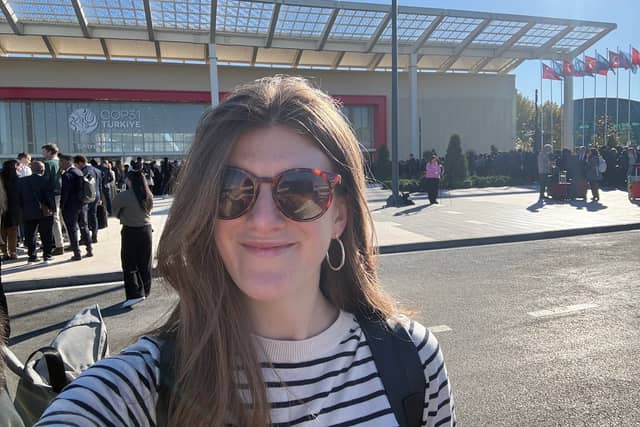


I’d never heard of COP, the world’s annual climate summit, before it came to Glasgow five years ago. I remember the activists who took over the streets, and the mammoth logistical undertaking as thousands of leaders, delegates and campaigners descended on the city.
Since then, I can’t say I’ve been following climate diplomacy closely. In fact, just like millions of young people across the world, the sense of hopelessness which rises every time I’m reminded of our burning planet, and more so of our inadequate response, has made me subconsciously avoid climate-related news.
But climate change - once something I learned about in National 5 science - is now part of our everyday lives. Just a few months ago, we watched from our windows as Arthur’s Seat burned, while wildfires engulfed the Cairngorms scorching 25 square kilometres of moorland and forest and forcing residents to flee their homes.
The target of 1.5C global warming, agreed by world leaders in 2015, has now drifted out of reach. Now scientists say even in the most optimistic scenario, in which all nations fully implement their climate pledges, global warming would only be limited to 2.1C this century.
So when I was offered the opportunity to travel to COP31 happening right now in Antalya, Turkey, I was sceptical. Somewhere since my idealistic teens I’ve lost faith in these kinds of summits, where world leaders fleetingly appear to tout their green credentials while continuing to defend the very projects and industries we know are destroying our planet.
That scepticism was only compounded by the fact COP31 co-hosts Turkey and Australia have overseen significant fossil fuel expansions since taking over the presidency. In a post on X earlier this week, President Recep Tayyip Erdoğan celebrated the discovery of two new oilfields in the Gabar mountains, which he claimed would increase production in the region by 30 per cent.
Despite all this, on Monday when I arrived at the Antalya EXPO Centre, I made sure I had an open mind. This year's summit was billed as an implementation COP, focusing on practical, tangible outcomes rather than new commitments. Maybe this could be the year where great strides are made to close the gap between commitments and actions.
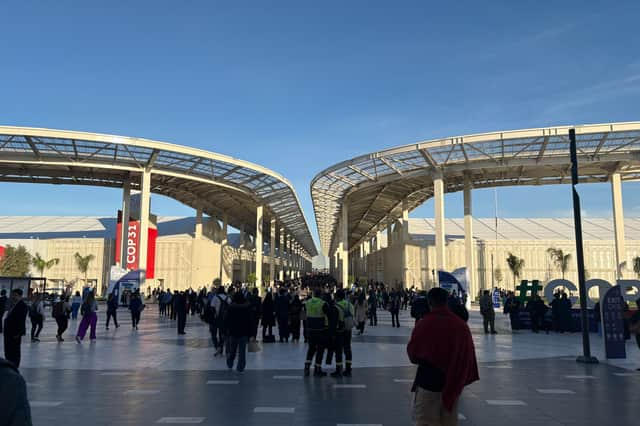
Under the unblemished blue sky and futuristic roof of the conference centre, which felt like it had been plucked out of The Capitol in The Hunger Games, the energy on the first day of the summit was high. Having never attended anything like this before, and even after the two-hour wait to collect my press pass, I was excited.
Officials in swish suits or national attire buzzed between closed-door meetings to public panels and press conferences, each pushing their own priorities and agenda. In the crammed pavilions hall, every country had a stall showcasing their culture and climate considerations, government ministers and industry leaders dropping in for panel discussions and presentations.
Hundreds of events and meetings take place every day over the two week conference, and as a first timer the sheer scale of it felt overwhelming. On my first day I circled the venue three times trying to find the media room I’d left moments before, never mind successfully keeping tabs on where all the most important people were and what they were doing.
On Monday afternoon, after a brief meltdown over a snapped tripod, I interviewed Gillian Martin, Scotland’s Cabinet Secretary for Climate Action and Rural Affairs in between some of her engagements with other regional governments.
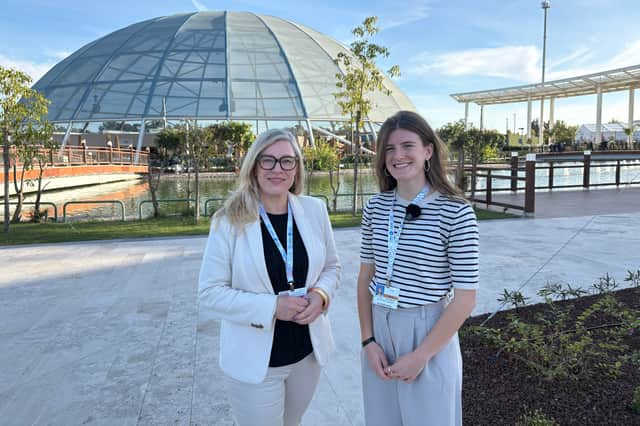
We discussed the Scottish Government’s priorities, which revolved around climate justice and loss and damage, and she refused to acknowledge a conflict between the government’s softening stance on oil and gas and its climate ambitions.
Campaigners later said her commitments to developing nations were like “providing watering cans to a neighbour after starting a huge fire” as long as the Scottish Government refuses to oppose new oil and gas exploration in the North Sea.
Day two of the conference got off to a poor start as attendees, including delegates, volunteers and journalists, battled three hours of traffic to get to the venue, with roads closed for security reasons. A well-seasoned COP attendee told me it was by far the worst-organised summit he’d experienced.
Greta Thunberg’s surprise arrival on Tuesday afternoon brought the first bit of drama to the conference, accusing climate leaders of “hypocrisy” and “whitewashing” as she entered the conference centre amid a swarm of journalists and superfans. It’s the first time she’s attended a COP since Glasgow, where she dismissed world leaders’ commitments as “blah, blah, blah.”
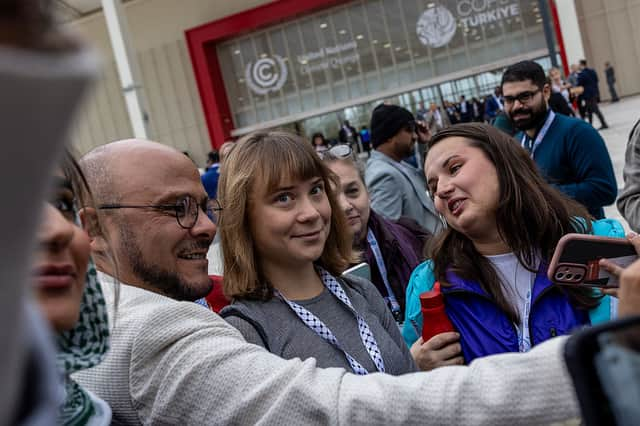
During the short two days I spent at COP, I’m not sure I even began to get to grips with the process of negotiations, or comprehend how on earth 190 countries with vastly different priorities and politics could ever manage to reach a point of agreement.
But I thoroughly enjoyed the Fossil of the Day awards, where a man dressed as a giant dinosaur hands a fossil to the country which has done the most to block progress in the negotiations that day. On Monday the title was awarded to New Zealand, and on Tuesday to the "absent leaders” of developed countries.
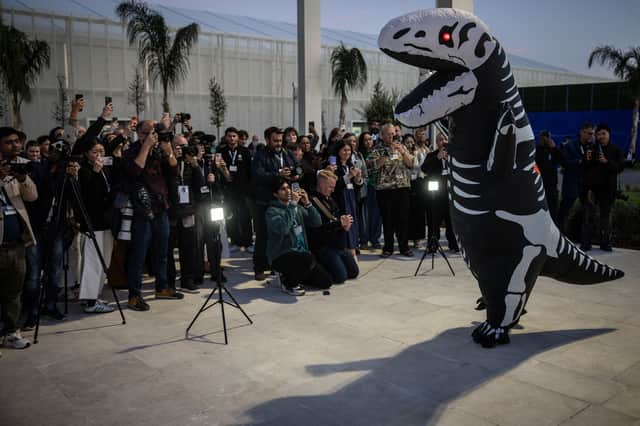
With the US and other big hitters nowhere to be seen, I can’t say my experience at COP helped me to feel more optimistic about the willingness of those in power to collectively and urgently deal with the crisis we are hurtling towards.
But I left with a renewed admiration for the scientists, campaigners and communities who have been raising the alarm for decades, and who continue to dedicate their lives to finding solutions in the face of political inaction and denial.
In my climate doom, it was helpful to be reminded that there are still reasons to be hopeful; that renewable energy has grown significantly faster than expected over the last ten years, and while the 1.5C target is fading away every single fraction of a degree avoided could save millions of lives.
While COP is far, far from perfect, the reality is that it’s all we have and without it there is little hope of collective action. All we can do is keep trying.
Comments
Want to join the conversation? Please or to comment on this article.