
'Black alerts' and warning of 'disastrous' winter - how flu outbreak threatens to wreak havoc on Scottish NHS
Medical professionals warn more needs to be done to help health and social care system cope

It is an annual challenge for Scotland’s under pressure health and social care network, but this year, it is altogether more fraught. With a spike in flu cases underway, and rates of infection expected to soar in the coming weeks, this Christmas and New Year threatens to put extraordinary strain on a system that is already struggling.
Senior medical professionals told Scotland on Sunday that the early spread of flu cases and the projected surge over the festive period will exact a heavy toll.
Some warn that parts of the NHS in Scotland will be under siege via what is known as a ‘black alert’, with hospital wards full, and stress that without further help from the Scottish Government, it will be a “disastrous” winter.
Others working at the frontline of the flu outbreak say they are already having to treat patients in inappropriate settings, with a lack of planning and manpower hampering efforts to care for those in hospitals as community care settings.


The fear of what lies ahead can be glimpsed in the data compiled by Public Health Scotland. The number of inpatients with influenza in Scottish hospitals has been rising sharply over the past month.
Cases increased by 24 per cent, from 1,875 to 2,331 in the past week, while hospital admissions rose 15 per cent, from 860 to 986.
In the NHS Grampian area, the number of people in hospital with flu more than doubled– with admissions to Royal Aberdeen Children’s Hospital (RACH) the highest on record. A number of schools in Aberdeenshire have moved lessons online as the infection spreads to pupils and teachers
There have also been pronounced regional spikes, with NHS Dumfries & Galloway and NHS Greater Glasgow & Clyde witnessing laboratory-confirmed influenza activity increasing from ‘medium’ to ‘high’ level, with the latter health board encouraging visitors and clinical staff to wear face masks to reduce the spread of the virus. Authorities in Shetland in Tayside, meanwhile, saw their activity levels go from low to high in the space of a week.
‘Chaos’ of winter
For those working day in day out in the NHS, the frustration stems from the fact that more can, and should, have been done to ensure the health system is better placed to withstand the winter flu season and all its attendant challenges.
Dr Fiona Hunter, the Royal College of Emergency Medicine’s vice-president for Scotland, said: “We knew a flu surge would come, as it does every year, but this year Scottish emergency departments were already close to buckling under the pressure as it was. Summer this year was extremely challenging. It is typically the time of year where emergency medicine staff get a chance to catch their breath, and get some respite, compared to the chaos of winter.

“But, due to congestion at the back end of our hospitals resulting from inadequate efforts to tackle delayed discharges, our departments remained extremely busy in the warmer months, despite no significant increase in the number of people attending compared to previous years.
“As we feared, winter is here and these issues were not addressed in time. An earlier than usual spike in flu cases has piled on the pressure when we already had so little capacity to spare.”
A spokesperson for the Royal College of Physicians of Edinburgh (RCPE) agreed that the seasonal pressures were adding to persistent difficulties. “Corridor care now appears to be a continuous cycle throughout the year in some hospitals, so the early start to the flu season is compounding already overstretched services,” they explained.
So too, nursing staff across the NHS in Scotland are struggling to cope, with the Royal College of Nursing Scotland (RCN Scotland) pointing out that while increased flu case admissions are expected, the resultant level of pressure was "unmanageable" after a summer in which over 30 per cent of patients attending A&E waited longer than four hours to be admitted, transferred, or discharged.
“The early start to the flu season this winter has exacerbated this and is adding immense stress to an already pressure-filled system,” explained Eileen McKenna, associate director for nursing, policy and professional practice at RCN Scotland. “We know the impact that this is already having on staff - our members report having to deliver care in inappropriate settings as frequently as every week, or even every day. Every time it happens, patients are put at unnecessary risk and robbed of their dignity.

“The current situation demonstrates a failure to learn the lessons from the pandemic. Yet again we have entered winter, without the necessary planning and the right number of staff in post.”
Dr Nora Murray-Cavanagh, deputy chair of BMA Scotland, agreed: “We are now witnessing an early and fast rise in flu cases in Scotland, which will add to pressures on GP practices and hospitals in the coming weeks. If the NHS was functioning properly, the system should be able to prepare and be able to cope with a severe seasonal flu outbreak.
“Unfortunately the reality is instead that in a system that is already stretched to its limits, this has the potential to push services to breaking point, which will add to the risk of delays for patients who are already often waiting too long for timely treatment.”
Veteran GP warns of ‘black alert’
Quite how bad things will get is unclear as yet, but the Public Health Scotland data offers an insightful and alarming insight into how quickly cases can escalate. This time last year, there were around 148 inpatients in hospitals across the country with influenza; come the first week of January, the number had rocketed to 1,221. In the first 14 weeks of this year, flu was recorded as the underlying cause in 463 deaths.

Dr Chris Williams, the vice chair of the Royal College of General Practitioners Scotland (RCGP), and a GP based in Grantown-on-Spey, told Scotland on Sunday that there would be parts of the system under severe strain.
“I think we can easily anticipate what we call ‘black alert’ in parts of the country, where the capacity is used up, wards are full, accident and emergency [departments] are backed up, and potentially, where the ambulance service isn’t easily able to meet increased emergency demand,” he said.
One complicating factor making the situation worse is that the predominant strain of the flu virus that is spreading like wildfire is the ‘drifted’ - or mutated’ H3N2 subclade K version, meaning there is less built up immunity against it. Although vaccination is still the best way of receiving effective protection against severe flu, the mutation means the current outbreak no longer resembles the vaccine strains as closely as authorities would like.
On top of that, there is also a desire to see more people get vaccinated, given the looming rates of infection that are expected between now and early January. On the face of it, vaccination numbers are up.
In the past week, just under 9,000 more adult Scots were vaccinated by NHS against flu, bringing the total to 1,238,970. For children, vaccines have now been given to 470,825 young ones aged between six months and 17-years-old.
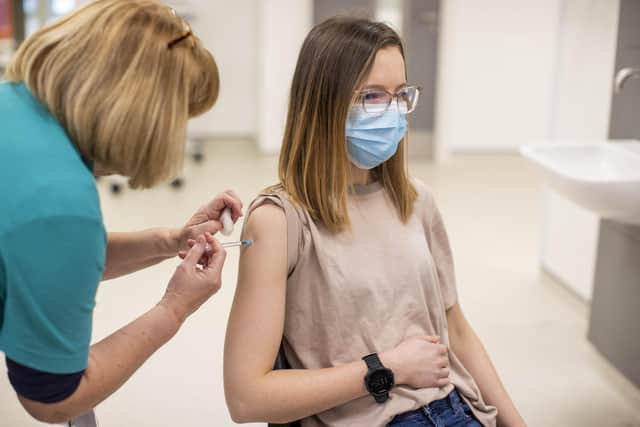
But, there is room for improvement. During winter 2023, for example, more than 1.48 million adults had received their vaccinations by 26 November, according to Public Health Scotland data.
An analysis by Scotland on Sunday found that many vaccination centres offering flu and Covid-19 jabs to those who are eligible are fully booked through to January, indicating that the public messaging is getting through. But there are also questions over whether the current delivery plan is as good as it could be.
Dr Williams, for instance, said that some of his colleagues in general practice felt a “sense of grief” that they could no longer play as active a role in the vaccination programme as they once did, with the focus shifting to health and social care partnerships.

“We were very proud that we could have influence at an individual population level - we could reach people that were quite hard to reach,” he explained. “The current model can work well in certain circumstances, like urban environments and the central belt, but even then, people have to be motivated and need to travel sometimes quite a distance.”
‘I hope that further help is coming’
As is often the case surrounding the NHS, there also questions around resourcing and planning. The Scottish Government set out its national planning priorities and principles for winter preparedness last month, a strategy which involves the recruitment of more than 290 new frontline ambulance staff, the creation of new sub-national planning structures across the east and west of Scotland, and a £20 million fund to bolster social care capacity.
Even so, many in the NHS believe that alone will not suffice. Dr Hunter, a consultant in emergency medicine at NHS Lanarkshire, said that while the “ideas were good” in the government’s plan, with the extra funding welcome, it was far from a solution.
“This should have just been the start of continued support for health boards to implement the improvements needed to fix this crisis,” she reasoned. “I hope that further help is coming from the government, or this winter will be disastrous.”

Ms McKenna, meanwhile, deemed the measures to be “too little too late,” stating: “There was nothing in that statement to reassure nursing staff and the wider workforce that they will have the systems and resources they urgently need to cope with what the coming weeks and months will bring.
“The government can’t continue using short-term solutions for the crises within our healthcare system. They must commit to long-term action and investment. Capacity must be increased where it matters most to eradicate care in inappropriate settings.”
She added: “The current situation demonstrates a failure to learn the lessons from the pandemic. Yet again we have entered winter, without the necessary planning and the right number of staff in post.”
The RGPE said the medical workforce was “exhausted” and at times, feeling demoralised, with suboptimal workforce planning leaving some services with long-term gaps and vulnrable to staff absences.
The need for investment, many believe, must also focus on community and social care so as to prevent infection and reduce unnecessary hospital admissions, which can in turn lead to delayed discharges as inpatients wait on care packages being ratified.
Care providers have ‘robust’ plans in place
Already the network of residential, nursing, and day care facilities across the country is steeling itself for a challenging winter period. Dr Donald Macaskill, the CEO of Scottish Care, the representative body for independent social care services in Scotland, said the earlier than usual spike in cases and hospital admissions has created “knock on pressures” for its members, such as staff illness, more complex care needs, and the practicalities of outbreak management, “right at the point when services are already stretched.”
He said: “An early, intense flu season means more sickness absence, heavier workloads, and emotional strain, particularly when supporting residents through outbreaks while safeguarding visiting. We’re concerned by last winter’s drop in vaccination uptake and reports of some staff paying privately for Covid vaccines - that must not become normal.”
Dr Macaskill said he wanted to see it made easier for frontline social care staff and older people to get vaccinated with swift access, flexible clinics, and clear messaging, with health protection teams offering “clear, practical guidance,” and support for the workforce which allows for rapid backfill support during outbreaks, fair funding for sickness absence, and enables providers to maintain safe staffing without penalising residents’ rights.
He emphasised that care providers have “robust” winter readiness plans in place, with a focus on “proportionate, rights-based infection” control which kept people safe while ensuring life in people’s own homes and care homes was “as normal as possible.”
Such measures will undoubtedly help, but for now, it remains to be seen exactly how fast - and how hard - the mutated flu virus will hit across Scotland. But for the army of staff battling the spread, winter has already come.
“The result is thousands of patients waiting upwards of 12 hours in emergency departments, some of whom will end up being treated in a chaotic, noisy hospital corridor, which we know can make them sicker,” Dr Hunter said.
“Our staff will get through this winter, and we will be there for patients who need us, due to flu or anything else. However, this working in such conditions will have a dire toll on the physical and mental health of our members.”
Individual Health Boards operate their own escalation policy for the management of inpatient capacity, which includes locally-agreed trigger points for maintaining a safe service and ensuring patient safety.
A Scottish Government spokesperson said: “We are taking a range of measures to ensure services are as resilient as possible over winter – our investment of more than £220 million is helping boards to improve capacity and remove blockages keeping some patients in hospital longer than needed.
“This includes up to £20 million of winter funding to bolster social care capacity and address pressure at the front door of A&E. Latest data shows 97% of all hospital discharges happen without delay.
“Vaccination remains the best protection against winter flu - we encourage everyone who is eligible to come get protected. New evidence from Public Health Scotland and early evidence from UKHSA shows the vaccine does a good job of preventing hospital admissions for the strains currently circulating.”
Comments
Want to join the conversation? Please or to comment on this article.