
Another general election! Why Labour is preparing to go to the polls early – Brian Monteith
The Budget raised taxes and borrowing – when we need desperately to cut both – and also included strong signs that Andy Burnham is planning a May general election, says Brian Monteith

Last week was the new Prime Minister’s first big policy test. Sure, the Budget was delivered by his Chancellor, John Healey, but with a communications operation so carefully controlled by No 10, it was about maintaining “the vibe” of warm, pleasant feelings.
In all likelihood, this Budget was war-gamed to please Labour backbenchers, strategised to consider the next general election, market tested with focus groups and certified by Andy Burnham before Healey stood up and dampened down the moment with an unsteady, soporific performance.
Unfortunately, for all the care taken, it was Labour’s third disastrous Budget in a row. First Rachel Reeves and now Healey have increased taxes by a total of £73 billion (£40bn, £26bn and £7bn) and added to state borrowing by nearly £40bn (£21bn, £6bn and £13bn).
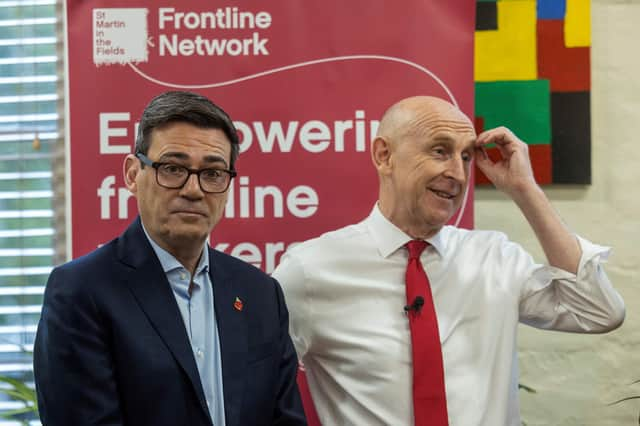

Splashing billions on EU schemes
For all the Chancellor’s best intentions to revitalise economic growth, it continues to flatline and is projected to fall, chiefly because Labour is squandering billions on their favoured electoral groups where they could be finding savings to create incentives.
The government continues to guarantee generous pensions for protected public sector employees and has increased their pay while private sector workers are losing jobs and earnings are falling. It allows the scope and value of welfare benefits to grow even where likely abuses are visible due to ballooning applications or diagnoses.
It’s also planning to splash billions on EU schemes we do not need that will increase the cost of living and open up job opportunities for 70,000 European youths while our number of young unemployed grows.
Burnham is continuing with Keir Starmer’s £34.7bn Chagos deal with the China-leaning Mauritius government, against the wishes of the Chagosians. Now the Prime Minister appears open to considering borrowing more billions to pay reparations for slavery that the current generations of British people had no hand in and which past generations paid to bring to an end, in blood and taxes – while other countries sought to continue the abhorrent practice.
Let me put this ‘do little, quietly’ Budget in context. The public finances are shot: we have a national debt of over £3 trillion and have not had a fiscal surplus since 2003. With no prospect of significant economic growth, rising taxes choking off revenues and the growing debt requiring further borrowing just to pay the interest, the total burden will only continue to rise towards £4 trillion.
Britain needed a Budget that took account of the past failings of not just the Conservatives but the additional damage done by Reeves and Starmer, but it ducked that urgent imperative.
Cancelling out the pre-election sweeteners
Instead, Healey’s Budget was careful not to frighten the voters. It provides a one-off relief of £100 towards energy bills that the same government will later authorise to increase by £300 to £400. The subsidy will, however, be limited to people living in properties valued at Council Tax bands A to D (hard cheese if you live in bands E and above). It also postpones the rise in petrol and diesel fuel duty planned for January and April – but confirmed it shall be introduced in July, after a potential spring general election.
The Budget means that, while in pre-election campaigning, Labour can promote its new giveaways and subsidies, with the additional costs that would cancel out the sweeteners for many households coming after the vote.
For instance, the cost of a rise in petrol or diesel of 8.7p a litre on a household using a car with consumption averaging 40mpg would be £99 for 10,000 miles or £148 for 15,000, so that energy payment of £100 may be soon used up. For a two-car household driving 20,000 miles between the vehicles, the additional annual fuel bill could be around £200 while electric vehicle drivers can expect to be paying an additional £150-£360 annually for 5,000-12,000 miles – on top of road tax.
Landlords and savers will be especially hit. The two additional points added to income tax on earnings from property and savings will mean £200 extra tax annually on £10,000 of taxable rental income and £100 extra tax annually on £5,000 of taxable savings income above allowances. This is a direct breach of Labour's manifesto, which committed not to increase income tax.
READ MORE: How Andy Burnham's broken Brexit pledge risks making him the new Keir Starmer – Brian Monteith
Smoke and mirrors
While many analysts are focussing on the tax changes planned for after May next year, there is also a tell-tale detail about public spending – with Labour planning to find spending reductions of £11bn in 2028. It failed to find spending reductions of £5bn in 2024 and 2025 so how it can achieve a public spending cuts more than twice as large is not obvious.
Through the smoke and mirrors, two outcomes are therefore beginning to emerge: the first is the stronger prospect of a general election on 6 May next year; the second is that Burnham cannot seriously go the full term to 2029 – by then the bills will be bigger and unavoidable.
On top of the taxes on savings and property incomes, other tax hikes that will add to the cost-of-living crisis include VAT on electricity bills, returning in July and adding £40-£60 for a typical electricity customer. Duty and VAT will add 2-4p to a pint of beer, 13p to a bottle of wine and 44p to a bottle of spirits.
The taxes and their revenues are now baked in to the public accounts. They are not going away. A reckoning will come. And still our defences remain weak and the man who confirmed this truth is now in charge of the Treasury. This is Alice-through-the-looking-glass levels of political absurdity.
Brian Monteith is a former member of the Scottish and European parliaments and a senior advisor to the Tax Reform Council.
Comments
Want to join the conversation? Please or to comment on this article.