
How Andy Burnham’s renegotiated Brexit deal can lay the foundations for a return to the EU
If new deals on trade and energy make a noticeable difference, the case for a return to the EU will get stronger
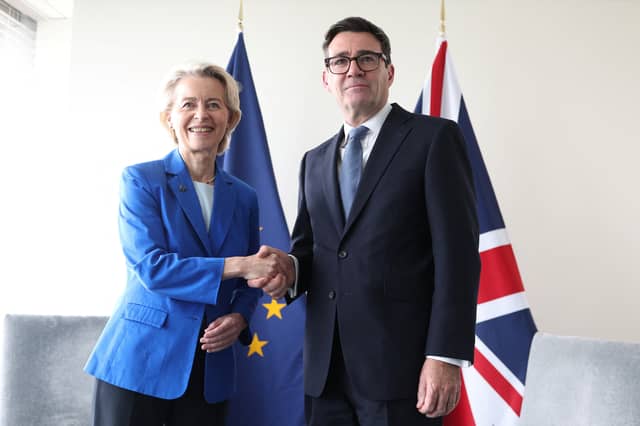


On becoming Prime Minister shortly after he was elected as an MP, Andy Burnham wasted no time in making the European Union a central issue in British politics.
The Prime Minister has stressed he will stick to the Labour manifesto’s promises not to rejoin the EU, its single market or customs union during this parliament. However, he has given much encouragement to those who believe Britain would be better off inside the EU. He has made the unsayable sayable again and politicians have clearly noticed the warm reception from the public.
In a social media post, Burnham wrote that, ten years after the referendum, it was “clear that the change promised by the promoters of Brexit has not materialised”. Boris Johnson’s Brexit deal had “done more harm than good” and had been “much harder” than the one sold to the public before the 2016 vote, he added.
‘He won’t succeed’
Later this week he will attend a summit with EU leaders, hoping to strike new deals to remove barriers to trade, particularly those affecting food, reduce electricity prices, and make other changes.
Despite polls suggesting a majority in favour of rejoining or getting closer to Europe, Johnson said he thought the UK would back Brexit in the event of another referendum. “... one way or the other, people will wake up to what is going on. They won’t want it, and he won’t succeed,” the former Prime Minister said.
READ MORE: How one of Scotland’s biggest ports is responding to increasing demand for supply chain resilience
However, if Burnham’s renegotiated Brexit deal delivers tangible improvements, the case for a return to the EU will surely grow. If businesses that had been struggling to export and import products see a noticeable increase in trade, the resulting good news stories could help win many people over. Conversely, if the results are minimal, voters may conclude the benefits of membership are being over-stated.
Given the threats posed by Vladimir Putin and the undermining of the USA’s commitment to Nato by Donald Trump’s administration, there are more reasons than just economics for the UK to rejoin. But if this particular brand of ‘unionism’ is to succeed, it needs to be able to demonstrate a sizable, positive impact on people’s everyday lives.
Comments
Want to join the conversation? Please or to comment on this article.