
How renewable energy can turn cost-of-living crisis into cost-of-living miracle
The cost of electricity generated by gas-fired power stations is more than double that produced by renewables like solar and wind power

In October 2021, energy regulator Ofgem raised the annual price cap for the average household by £139 to £1,277, citing a 50 per cent increase in the price of wholesale gas. At that time, charity National Energy Action estimated 4.5 million UK households were experiencing fuel poverty.
In February the following year, Vladimir Putin sent Russian forces to invade Ukraine, prompting oil and gas prices to skyrocket. The following October, after the then Conservative government had provided billions of pounds in support to help people pay their bills, the average energy bill hit £2,500. It would have been even higher, at £3,549, had the government not intervened. By this time, an estimated 6.7 million out of 28.4 million households were in fuel poverty.
The energy crisis also caused food prices to soar, with a kilo of sugar rising from 69p in April 2021 to £1.19 in April 2024, a tin of baked beans going up from 65p to £1.04, and a kilo of white potatoes rising from 59p to 88p, according to the Office for National Statistics.
READ MORE: GB Energy to take Scandinavian inspiration to become power company amid renewable slowdown alarm


UK economy flatlined
Suddenly, everything required to keep body and soul together had become a lot more expensive and costs remain high to this day. No wonder people feel stressed out, angry and fed up with politicians struggling to find a solution to their problems.
The extraordinary rises in energy and other prices also affected businesses who faced difficult decisions over whether to pass on the extra costs to customers by increasing their prices, risking lower sales, or absorb the blow themselves. Partly as a result of this, the UK economy basically flatlined, experiencing a shallow recession in the last six months of 2023, and it has been struggling to return to decent growth rates ever since.
Rishi Sunak may wonder whether he would still be Prime Minister if Putin hadn’t launched his invasion. For all the talk about ‘stopping the boats’, governments usually stand or fall on the strength of the economy.
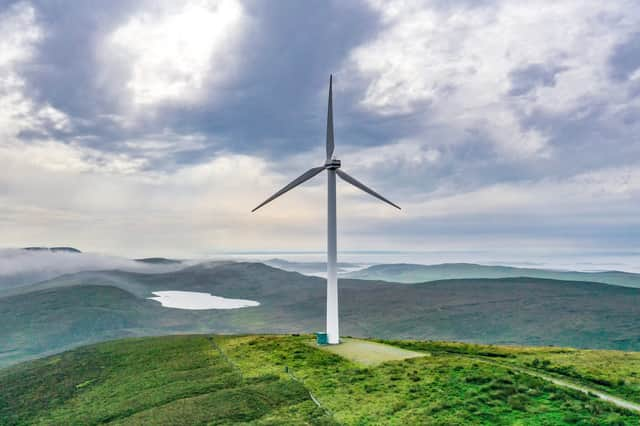
The opposite of a cost-of-living crisis
However, there is another way of looking at this. The crisis showed that the price of energy has an extraordinarily large influence on our lives and livelihoods. So what if domestic bills, instead of doubling over the space of a year, could be cut in half? Think of the transformational effects this would have as the country effectively experienced the opposite of the cost-of-living crisis – perhaps a cost-of-living miracle?
Of course, I’m not suggesting that anything as extraordinary as that is about to happen, but the UK Government is looking at ways to reduce energy costs and is focussing on the difference that renewable energy can make.
While comparing prices between different sources of electricity generation is complicated, a Department for Energy Security and Net Zero study found that new, large-scale, solar power projects can produce electricity at a cost of £41 per megawatt hour (MWh), new offshore wind at about £44/MWh and new onshore wind at £38/MWh – all of which are well below half the £114/MWh for electricity produced by new gas-fired power stations.
The reason why our electricity bills remain so high despite the growth of renewable energy is that they are almost always set by the price of gas. Frustratingly, breaking this link appears to be much harder than it can seem to outsiders like me but, still, the potential is there, it is huge and there are many who can see it.
‘Exciting, terrifying’ pace of change
Speaking to The Rest is Politics: Leading podcast, Emma Pinchbeck, chief executive of the UK and Scottish governments’ independent advisors, the Climate Change Committee, said that “based on ten years of working in the energy sector, I'm pretty confident that we're in the middle of the kind of energy transition that we last experienced at the turn of the industrial revolution. I cannot tell you how exciting, terrifying, fast the change in technologies were happening away from fossil fuels towards electrification.
“This isn't a Climate Change Committee view, though we've got cheap electricity in our modelling, it's an energy sector view. I cannot understand why any economy looking to grow – where energy is such a key input to everything else that you're trying to do, particularly after an energy crisis caused by volatile gas [prices] – would not be trying to make electricity as cheap as possible and taking advantage of the fact that we can have renewables...”
‘Net zero’ not stupid
There are steps along the way that need to be taken. For example, the National Grid is currently undergoing what it calls the “Great Grid Upgrade” – with the aim of building “five times more electricity transmission infrastructure over the next six years than has been constructed over the past three decades” – as part of the transition to clean energy.
Tom McGarry, the Grid’s deputy external affairs director, has said that this will “help address the issue of rising energy costs” mainly caused by the “volatility of the commodity cost of gas”. “Having more renewables connected to the UK energy system will help overcome the price spikes we have seen recently, ensuring bills are more affordable in the long-term,” he added.
Expensive energy has been trashing the UK economy for years. Renewables are unquestionably cheaper than fossil fuels and yet, for their own reasons, there are still politicians who talk about “net stupid zero” and claim low-carbon energy is the reason why bills are high.
They would condemn us to a future in which we can do little but wait for the next global crisis to send energy costs spiralling ever higher and hope we can somehow muddle through. In contrast, renewables provide an offer of real hope and it would be a tragedy of historic proportions if this country ever decided to spurn it.
Comments
Want to join the conversation? Please or to comment on this article.