
How SNP reneged on promise of £10 million to compensate islanders for ferry chaos – Stuart Beaufoy
A pledge of a £10 million fund within 20 days if the SNP government were re-elected has been watered down so much that it's putting jobs and companies at risk
Ferries are a lifeline service for those of us who live and work on Scotland’s islands. Whether they are transporting food or providing the links needed by haulage firms, we all rely on their ability to connect us to the mainland and neighbouring communities.
With tourism being the number one industry in the Western Isles, it is obvious just how critical ferry services are when it comes to bringing visitors here. That is why April was such a disaster for our island economies.
At a time when we should have been capitalising on the Easter holidays, many of us were instead dealing with an unprecedented number of cancelled bookings – the likes of which I had never seen before.
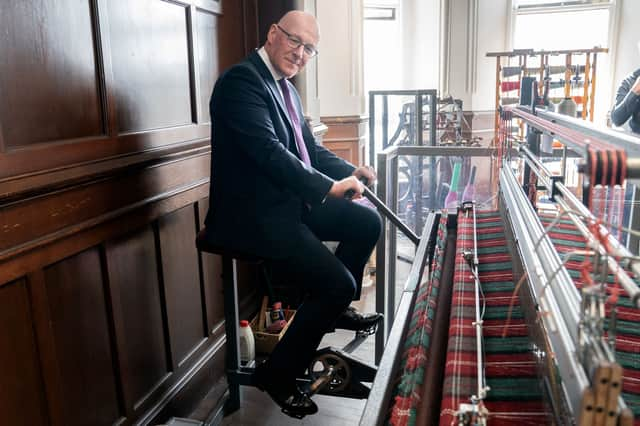

Bad news for SNP as election loomed
At one point, as many as ten ferries were out of action across Scotland, disrupting people’s holidays and directly hitting the pockets of the businesses that rely on them. The effect was not just immediate – potential visitors also abandoned longer-term plans because of a lack of confidence that they could even get here in the first place.
Of course, none of this was good news for the Scottish Government either, particularly as the disruption came just before the Holyrood election in May.
First Minister John Swinney was one of those who did manage to get to Lewis around that time, and we were told that, should the SNP be re-elected, £10 million would be made available within the first 20 days of government to help compensate island businesses.
As well as being a director of Cala Hotels, I’m also a director of Visit Outer Hebrides, and we personally spoke to Mr Swinney during his visit. We informed him we had spoken to businesses that had struggled to access a share of the £4.4m in funding already made available in 2025–26, and called for the process to be made much simpler. He asked us to put our concerns in an email to his office, which we did.
It was reassuring to hear that, given the unprecedented disruption we were facing at that time, a £10m Island Resilience Fund would be made available. That was until the goalposts shifted.
From 20 days to five years
Firstly, 20 days became 100 days. Then, on the First Minister’s return to the Outer Hebrides earlier this month, it was announced that only £3m of the funding would be committed this year, with the remainder to be distributed over the course of this parliamentary term.
This news was particularly disappointing because, quite simply, it isn’t what we were promised. There had been no previous mention of the £10m being phased, and we have businesses on the islands that need financial support now. The parliamentary term is another five years, so potentially we could be waiting a long time yet for more than two-thirds of the funding.
And, to compound our disappointment here on Lewis, we also learned that businesses on the island were not eligible to apply, despite three-quarters of the Western Isles population living here.
What this shows, unfortunately, is a lack of understanding of how tourism works here. We are all interlinked. Visitors who come to Lewis will often want to visit other islands too. What happens on one island will affect all of us to some degree. It really is a case of when one part is not working, none of it is working as it should.
If there is ferry disruption affecting Harris, of course that is going to affect the tourism industry on Lewis too. So, to have a situation where businesses on Harris can apply for compensation but businesses on Lewis cannot is bizarre – and is not something that has been explained to us.
Ferry problems still continuing
I readily acknowledge that the islands to the south of us have been most affected by the ferry disruption this year and, to be clear, I am certainly not saying that they should receive less financial support. But what I, and so many others, are calling for is the full £10m to be made available now – and for it to be available to all of us.
While we on Lewis may not have suffered as much as the Uists, for example, we still saw reduced capacity due to damage to the Loch Seaforth ferry as well as five full weeks when all new bookings were suspended between Lewis and the mainland.
And although there is no doubt the ferry situation has improved on Lewis since May, we are still seeing problems. For example, there has been disruption this month on the route between Leverburgh and Berneray, which, given it is a key service to and from Harris and Uist, has a direct impact on us here in Lewis.
To illustrate my point further, we also have a business called Hebridean Hopscotch Holidays, which offers fly-drive holidays for people flying into Barra and then hiring a car to travel north through the Uists, Harris and Lewis – or making that journey in reverse.
If the ferries aren’t running, that journey simply does not work. Obviously, the disruption we have had this year has impacted that business, but we cannot claim compensation through the fund because we are registered in Lewis. To say it is frustrating is an understatement.
This has been a really hard year for tourism businesses across the islands and, the smaller the business, the harder the impact is likely to have been. Many cannot potentially wait another four or five years for the full resilience funding to be released – they need help now.
The sad truth is that some businesses will not survive as a result and, while we wait, jobs will be lost.
Stuart Beaufoy is the managing director of Cala Hotels
Comments
Want to join the conversation? Please or to comment on this article.