
Scotland's Ozymandias? The historic lesson of Roman Emperor's golden statue
Statues to mighty rulers have a tendency to end up being reduced to little more than their boots


In 1951, an eight-metre (26ft) statue of Soviet dictator Joseph Stalin was erected in Budapest in a sickening display of loyalty to their communist master by Hungary’s rulers. During the Hungarian Revolution of 1956, it was torn down. Today a replica of Stalin’s surviving boots can be seen in a park in Buda, a reminder of bleak times and that unsuccessful struggle for freedom.
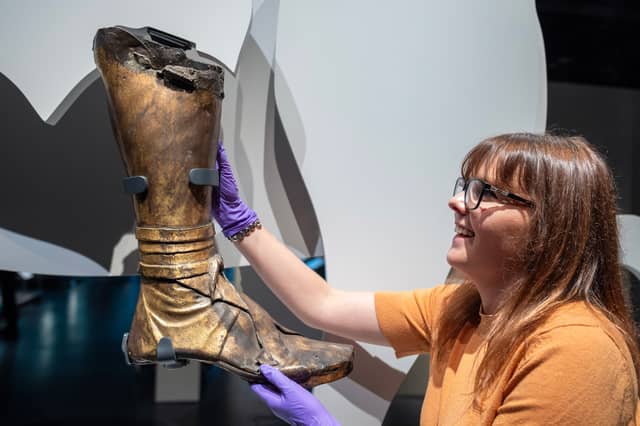
Now new research suggests a huge gilded statue of the Roman Emperor Antoninus Pius stood in the Scottish Borders in around 140AD. Again, all that survives is his lower leg with his foot in a boot. According to the Encyclopaedia Britannica, he was “mild-mannered and capable” and one of the “five good emperors” during a nine-decade period of peace and prosperity in the Empire.
In Percy Bysshe Shelley’s famous poem, Ozymandias invites us to “Look on my works, ye Mighty, and despair!” Yet his statue had been reduced to “two vast and trunkless legs of stone” and “half sunk, a shattered visage” in a “boundless and bare” desert.
All things must pass. And whether good or bad, the powerful always eventually fall.
Comments
Want to join the conversation? Please or to comment on this article.