
Scottish Budget: How cutting taxes can benefit public services
Higher taxes do not necessarily mean higher revenues to fund public services, while lower taxes – funded by extra cash from the UK Government – would help Scotland’s businesses
With the Scottish Government’s Budget set to be presented to Parliament, it is not surprising that the inboxes of MSPs have been deluged with demands from interest groups for more spending in vital areas.
Whether it is tackling homelessness, increasing teacher numbers, supporting hospices, or a whole range of other worthy causes, MSPs are being lobbied to use their votes to ensure the causes that individuals hold dear do not lose out as ministers allocate £60 billion in spending for the coming year.
As sure as the sun comes up in the morning, we can expect SNP politicians to always complain about the level of the block grant from Westminster. This year, their grounds for complaint might be less secure than on previous occasions. Following decisions taken by Rachel Reeves in the UK Budget in October, Scotland’s public finances will be boosted by some £3.4 billion for next year – the highest increase in the history of devolution, with the consequence that the Scottish Budget will be, in real terms, the largest ever.
Consumer spending downturn
That does not mean there will be easy choices. Some of what Rachel Reeves has done has caused headaches for the SNP Finance Secretary. The increase in employers’ National Insurance doesn’t just add £500 million in costs to the Scottish public sector (only partially offset by additional Westminster support), but it also causes huge problems for third-party contractors who deliver public services, such as GPs, dentists and pharmacists, while the charitable and voluntary sectors are facing similar pressures, and are looking to the Scottish Government for help.
At the same time, the business community is feeling the impacts of a downturn in consumer spending as costs keep rising. Sectors such as hospitality, in particular, which are large employers, have been hit both by the increases in the national living wage and employers’ National Insurance.
Partly in recognition of this, the UK Labour government has promised a 40 per cent rates relief for retail, hospitality and leisure businesses in England, a welcome move albeit a reduction in the 75 per cent provided by the previous Conservative government for the same sectors for the past two years. Unsurprisingly, hospitality businesses in Scotland are looking for the Scottish Government to at least replicate that here, given the even greater relative importance of the sector to the Scottish economy.

Of course, the block grant is only one component of the money available to the Scottish Government. The overall quantum of cash available to Finance Secretary Shona Robison is ultimately determined by the relative performance of Scottish tax revenues – notably income tax and land and buildings transaction tax – compared to what has been gathered south of the Border.
Counterproductive tax rises
In recent years, the SNP have pursued a policy of increasing income tax rates, particularly for higher earners. Whilst they claim this has raised over £1.5bn additional funds annually for public services, more objective voices are increasingly sceptical as to the value of these higher taxes.
The independent and respected Institute for Fiscal Studies is on record as saying that the increased tax rates on the highest earners may actually have been counterproductive and raised less money than if the rates had been left as they were previously, because of behavioural changes.
That’s not to say wealthier people are necessarily leaving Scotland because of higher tax rates, although some may be. What I regularly hear from those in business, particularly in higher-paid sectors such as financial services, is that they now struggle to attract some of the most talented people they need to come to Scotland, because of the higher taxes paid here. In some cases, a “Scottish supplement” has to be offered on top of basic salaries in order to persuade higher-paid individuals to make the move north.
We also hear about above-average earning individuals limiting their working hours, because the level of tax they will pay on additional earnings simply doesn’t make it worth their while. This is a phenomenon that exists not just in the private sector but in the public sector too: I personally know of GPs and other medics who limit their working days to under five a week, simply because their take-home pay after tax makes it unattractive for them to take on the additional shifts.
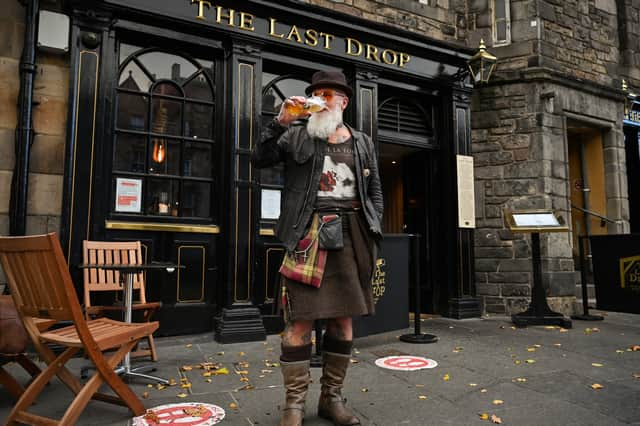
100% rates relief for pubs
Since 2014, the Scottish economy has grown on average at around one-half of the rate of the UK as a whole. We are not going to improve that position, and generate increasing tax revenues through economic growth, while tax rates act as a drag on Scottish economic performance. That is why in our response to this week’s Budget, Scottish Conservatives are calling for the SNP to use at least some of the extra money they are receiving from Westminster to cut taxes both for individuals and businesses.
So we would not just pass on the 40 per cent rates relief for retail, hospitality and leisure funded by the UK Government to businesses here. We would go further and offer 100 per cent rates relief for pubs and restaurants for the coming year, reflecting the unique challenges facing that sector.
On personal tax, we would scrap both the 20p and 21p tax rates, saving the average worker some £222 a year. The total cost of these cuts, around £900m, could be met by utilising additional funds from the UK Government, by cutting SNP vanity schemes such as their spending on independence white papers, and by driving greater efficiency through the public sector.
Ultimately, it is a stronger performing Scottish economy that we need to fund our public services better, and we will never achieve that while high levels of tax act as a drag on our ability to attract the brightest and best. That is why tax cuts need to be at the heart of this Budget, and why we are unashamedly making the case for them this week.
Murdo Fraser is a Scottish Conservative MSP for Mid-Scotland and Fife
Comments
Want to join the conversation? Please or to comment on this article.