
Ten years of Brexit have been a lesson in the costs of isolationism
Ten years on from the Brexit referendum, why now is the time to be bold on a new relationship with Europe
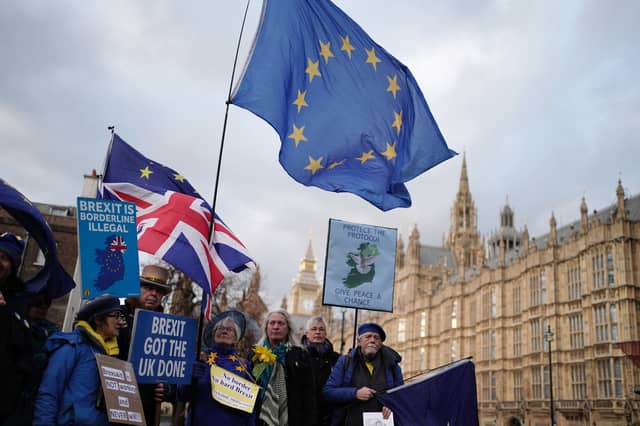

At the start of this year, Canadian Prime Minister Mark Carney set a challenge for liberal democracies around the world: build alliances and economic partnership between ourselves, or face being bullied and browbeaten by hostile powers.
Nowhere is that challenge more pressing or more relevant than in the United Kingdom. Over the past decade we have had an abject lesson of the cost and consequences of cutting yourself off from your economic and political allies.
Ten years on from the Brexit referendum, its legacy is plain for all to see – which is why now is the time for our government to be bold on a new relationship with Europe.
Whatever your politics, one thing on which we can all agree is that our economy has been facing headwinds for the past decade. That is not solely or even primarily because of Brexit itself. Those new trade barriers with our nearest neighbours, however, have been a drag on our growth and on our recovery from the impact of Covid, the war in Ukraine and now the conflict in the Middle East.
If we are going to kickstart our economy and trade then we need to focus on what works – and what does not. Just this week another report by the Centre for European Reform confirmed that Brexit had reduced trade in almost every sector of our economy, in keystone food and drink exports like Scotch whisky and in vital service industries alike. Any given analysis shows that the UK rejoining the Single Market would bring a boost to exports and growth.
Meanwhile, having long been a bugbear for food producers the EU is now, seemingly, beginning to take a more pragmatic approach on farming and food security – and one that risks putting our own governments’ efforts to shame. The upcoming SPS (food and drink) deal will be a test of just how far that pragmatism is going to take us – and whether the EU itself can recognise the need to strike a constructive deal for the good of everyone, rather than seeking short-term advantage. Easy though it is to forget at times, it is in Europe’s interests to have a positive relationship with the UK as well, both as an ally against external pressures and to balance against isolationist and far-right forces within their own borders.
Integration and cooperation with Europe is about trade and economic opportunity, but it is also about values – whose values we share and whose we do not. In June 2016 it might still have been possible to look to the US or other economic power blocs and see them as an alternative model for our future; only the most optimistic (or Trump-oriented) would make that case today.
It should be no surprise that my party has been banging the drum for a closer relationship with Europe – internationalism is in our DNA as liberals. What is in question is whether the Labour government can wake up and let go of its outdated “red lines” on Europe. The sooner they do so, the better for us all.
Ten years of Brexit have been the lesson in the practical costs of isolationism. Now is the time to link arms again with our neighbours – and reap the benefits.
Alistair Carmichael is the Scottish Liberal Democrat MP for Orkney and Shetland
Comments
Want to join the conversation? Please or to comment on this article.