
The dangerous belief in 'inevitability' shared by Donald Trump and the SNP – William Deans
Scottish independence and Donald Trump’s ‘America First’ nationalism may seem unstoppable to some supporters but voters should never be taken for granted

“Independence is inevitable.” That, at least, has been the refrain from SNP politicians for many years, with the minister for public finance, Hannah Mary Goodlad, being just the latest to trot out the claim last week. Whether it comes from dodgy projections about generational change or simply cast-iron faith in the cause, this mantra is never far from the lips of nationalist campaigners.
If you wanted an object lesson in the dangers of becoming convinced of your own inevitability, however, you could not ask for much better than the shellacking of Donald Trump’s Republican party last week in the US midterm elections.
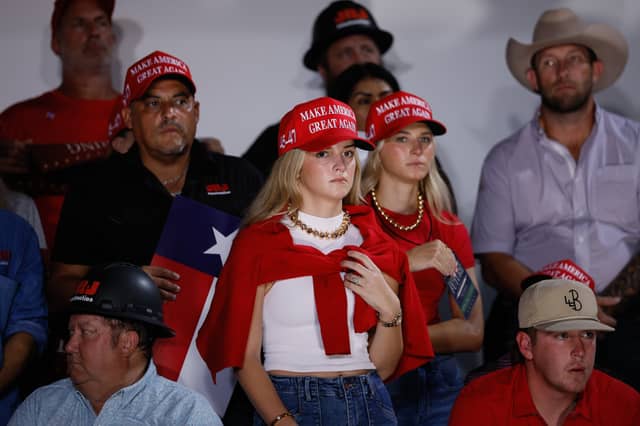
When Trump was returned to power in 2024 – in spite of brazen, violent attempts by his supporters to overturn the result of 2020 election – many on both the left and the right were convinced that his victory represented a fundamental shift in American politics towards illiberal populism.

The swagger of people who feel untouchable
Trump and his ideological hangers-on were gleeful in taking his second victory as a mandate for radical change. As more than one commentator observed, the new administration acted like a movement which did not expect to lose power any time soon – if ever again.
They set about dismantling longstanding government agencies, directed law enforcement against political enemies, and behaved with all the swagger of people who feel that they are untouchable. This was to be an administration that would irrevocably overturn past political norms – and everyone else had to get with the times.
Just two years later, it has emerged that this unstoppable rightward momentum was not so unstoppable after all. We cannot yet say what the second half of Trump’s time in office will entail – plenty of risk to democratic institutions and basic good governance remains – but even so, the pace of the Republican retreat should be a caution to all those who share a similar complacent certainty about their political projects.
Furthermore, arguments from “inevitability” are usually a double-edged sword. When they appear plausible, they are a powerful tool. When they lose their credibility, they risk leaving you looking like you are entirely out of touch with reality.
READ MORE: Looming £6 million cut to Scottish prosecution service shows SNP's priorities are plain wrong
The danger of lazy thinking
That is true of Trump’s Maga diehards in the US, who are struggling with their new reality – but it is equally true when it comes to the arguments of inevitability around Scottish independence. This grandiose claim has been one of the SNP’s greatest recruiting sergeants and sources of unity over the past decade – but it has also, quietly, become one of their greatest weaknesses as well.
Projecting confidence is a powerful move. If you can convince people that your cause is certain to win, you can attract more support – there are always people who want to back a winning horse. In the process, you can also demoralise and divide your opponents.
That certainty, however, cuts both ways. The clue is in the name: inevitable. When something is inevitable, it is already a sure thing. It doesn’t need any extra work, it doesn’t require winning any arguments, it just happens. So, why try harder? It is a belief that ultimately makes politicians and campaigners lazy – on a practical level and an intellectual one.
Nicola Sturgeon infamously said a few years ago that she had “time on my side” because of Scotland’s demographics, with younger generations more likely to support independence than older ones. We might less charitably call this the ‘wait for the oldies to croak’ strategy for independence.
Quebec stepped back from nationalist brink
And yet, if independence is so inevitable, you might well ask why a place like Quebec in Canada went from the brink of nationalist secession in 1995 to largely disengaged from constitutional debates 30 years later.
What happened was not demographic “inevitability”, with Quebec turning inexorably towards the nationalist side. Instead, in the aftermath of the knife-edge 1995 referendum, liberal leaders and academics challenged nationalist narratives, changed minds, and made the case for a Canadian society of both diversity and shared common interest.
That outcome in Canada was no more inevitable than a victory for nationalism. The point about living in a democracy is that no one has a lock on your country’s future.
Forget “independence is inevitable” and forget the “Trump realignment”. For nationalists and non-nationalists alike, whether of the Scottish or American varieties, the route ahead is not something that can be taken for granted.
That is a good thing. I believe that, in the contest between liberal democracy and nationalism, the ideas and values that work are with the liberals – those of us who believe in pluralism and openness – but that belief is only the start of the debate, not the end.
READ MORE: A decade on, why it could be game over for Donald Trump, Brexit and the populist revolution
We cannot take core values for granted
We have to constantly relearn, relitigate and rebuild the ideals of a shared society with different values, nationalities and communities, against those who see the liberal democratic compromise as something that gets in the way of their own ideology, whether nationalism, populism or authoritarianism.
Trump’s win in 2024 showed conclusively that we cannot take liberal democratic values for granted – but his defeat last week showed that nationalism’s victory is no sure thing either.
Voters deserve a little more by way of ideas and ideals, and a little less talk of “inevitability”. We ought to respect one another enough to make the case for our beliefs, year by year and day by day.
It is sometimes said that change seems impossible until it is inevitable – but as last week’s elections proved, what seems inevitable in one moment can change just as easily in another.
William Deans is chief of staff to Alistair Carmichael MP
Comments
Want to join the conversation? Please or to comment on this article.