
Why Labour Budget will be met with a shrug by rural Scotland

What we are missing is some sense of strategy for the distinct rural economy
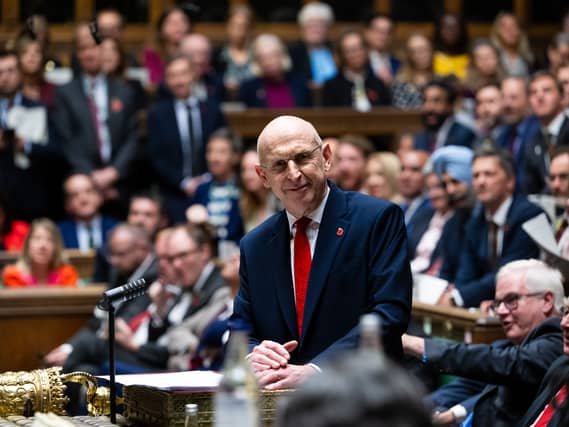
When John Healey was appointed to head up the Treasury in July, I wrote in these pages that he could prove to be the most consequential Chancellor since Gordon Brown. I am not quite ready to abandon that prediction – but if you were looking for signs of great consequence in Healey’s first Budget this week, you would have to be looking quite hard.
That, of course, may not be the worst outcome we could have seen from a government fiscal event. In the event Wednesday’s Budget was a fairly middle-of-the-road affair – better than some disasters we have had in recent years, but not really shifting the dial where it matters.
I suspect, instead, that for most of my constituents and for rural communities across Scotland, Mr Healey’s Budget will have been met with something of a shrug. What was on offer was largely piecemeal changes, with any “big ticket” improvements to come into effect at some ill-defined point in the future.
Efforts to decouple energy costs from volatile gas prices, for example, are all to the good – but will take time to deliver. Extending the cut in VAT on electricity through to July is also welcome – but hardly life-changing for most families.
The abolition of gas standing charges, meanwhile, will not do a great deal for places like the Northern Isles (and indeed most of the Highlands and Islands) which are off the gas grid. What our communities needed was a clear timetable for regulation of the heating oil market and for that, it seems, we will still have to wait. I will not, however, go so far in my criticism as the SNP’s Dave Doogan, who was so fixated on opposing the government’s plans and mining for grievances that he forgot that he had campaigned for years to end standing charges.
All of which brings us to the Scottish Government’s role in the aftermath of this Budget. Where there are significant measures – on business rates or direct money back on energy bills for example – these are largely left to the Scottish Government to decide what they do with the funds they have been given. Scottish ministers have at least confirmed that they will replicate the £100 off energy bills for people on lower council tax bands, but based on past performance I suspect the SNP will have to be dragged kicking and screaming to deliver any sort of fair deal for rural communities.
Whichever government we are talking about, however, what we are missing – and have been missing for some time – is some sense of strategy for the distinct rural economy. Rural communities ought to be central to our country’s economic success. Our farmers, fishermen, food producers and energy businesses all make a contribution that goes far beyond pounds and pence – and yet when it comes to basic things like industrial strategy, keystone rural businesses like food production are entirely ignored.
If the Chancellor is serious about tackling the cost of living and “good growth in every postcode” – and if he wants to be the sort of consequential Chancellor that we need – then rural and island communities must be at the heart of his plans going forward.
Alistair Carmichael is the Scottish Liberal Democrat MP for Orkney and Shetland.
Comments
Want to join the conversation? Please or to comment on this article.