
Why opening up the UK to Brazilian beef is a threat to us all – not just farmers
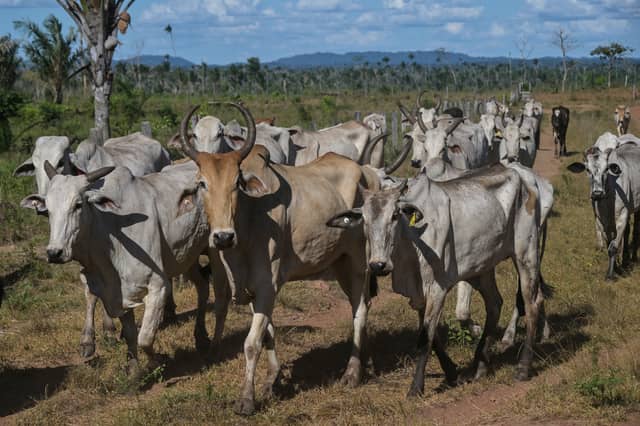

The government must take up this issue with urgency
Forget “where’s the beef?”. The big question facing Scottish farming this month is “where’s the beef from?”.
Less than two weeks from today, our neighbours in the EU will remove Brazil from their approved list of beef suppliers, due to concerns about the overuse of antibiotics in Brazilian farming. As matters stand, the UK will not follow suit – which could leave a significant Brazilian oversupply heading towards our shores instead.
Leaving the floodgates open to Brazilian beef risks becoming a threat to us all – not just our farmers. Undercutting our livestock producers in a critical selling period would be bad enough for rural communities in Scotland, but the environmental and public health ramifications of a wave of Brazilian animal products hitting our shelves could be even more serious in the long term.
The broad concerns around Brazilian agriculture are pretty well versed at this point. We have all seen the images: swathes of irreplaceable Amazon rainforest cleared for the sake of pasture for beef herds (or soy crops to feed those herds). It is a scale of farming that UK producers simply cannot match, even if we set aside the social and environmental consequences of such farming.
Less visible is the issue of antibiotic usage in Brazilian food production – the concern which has prompted the EU’s block on beef supplies from the 3rd of September. British producers have cut antibiotic sales by 60 per cent since 2014, including reducing by 83 per cent those critically important for human health. That is in line with EU and now UK law – but it is also in line with general good sense, given the growing consensus that overuse of these products on animals risks fuelling antibiotic-resistant diseases amongst livestock and humans alike.
If we expect these standards – responsible medicine use, with regular and transparent veterinary oversight – of our farmers, we surely ought to expect them of meat being brought in from abroad.
This is not about singling out Brazil. The same arguments would apply for any other country using these methods of animal rearing. One way or another, however, there has to be a process that accounts for both the social harm of undercutting farming communities in our country, and the human health consequences of antibiotic overuse.
Time is running out. That 3rd of September deadline set by the EU is fast approaching. For their part, even the US and China have moved to restrict Brazilian beef in turn. If we do not match these measures then we are likely to see higher Brazilian beef imports in the autumn, even as hill farmers and crofters seek to sell their own livestock. If just a fraction of the beef previously allocated for EU export comes to the UK instead, it could cause a significant shift in the market, right at the moment that our small producers need it least. A collapse in domestic beef prices would be a hard hit to their already-thin margins.
If the government does not take up this issue with urgency, they risk leaving the impression that we will let other beef producers work to lower standards than we expect of our own farmers – and if that pattern holds, the answer to “where’s the beef from?” may soon be “not here”.
Alistair Carmichael is the Scottish Liberal Democrat MP for Orkney and Shetland
Comments
Want to join the conversation? Please or to comment on this article.