
Why Scotland needs Winston Churchill's alternative to independence
To counter the SNP’s endless campaign for independence, unionist parties need to think about introducing a federal system of government in the UK


The forthcoming Scottish elections will, understandably, deal with bread-and-butter issues and how parties plan to spend nearly £68 billion of taxpayers’ money a year. But overshadowing this, and every election campaign in Scotland, is the ‘edge’ that identity politics gives to the SNP at the expense of traditional parties.
The latter appear reluctant to brandish their Scottishness and are often blamed for the woes of Westminster. However Scots remain divided and unconvinced about what is on offer from the SNP. The debate is cluttered with traditional alliances, old ideas, uncontested assertions and time-served prejudices. Crucially, there is a dearth of alternatives to independence.
The SNP’s constitutional campaigns may have been making the political running, but they have achieved little since coming to power 2007 and this phoney war is damaging Scotland’s real interests. After 26 years of devolution, 150 years of debates at Westminster, and the ebb and flow of constitutional concerns since 1707, it is worth reminding ourselves of the failure of the SNP’s efforts to sell independence.
An electoral ritual
Despite all the endless debates, intense campaigning, acres of press coverage, massive opinion polling, Scottish and Westminster elections, local council elections, a referendum, excessive parliamentary time given over to the issue, Scotland is no closer to resolving the constitutional question. The SNP has been unable to convince Scots of the wisdom of ‘Scexit’.
So is Scotland in a rut? Are we destined to discuss this issue as some kind of electoral ritual? Despite their best endeavours, the SNP’s signature issue is going nowhere with support for independence remaining at about the same level as at the 2014 referendum.
Why, when faced with this, are there no attractive long-term alternatives on offer to Scots? This is remarkable. Devolution was never designed to be a once-in-a-lifetime event but rather the start of a journey that has no end. New thinking is long overdue.
Ghosts of past campaigns
In the meantime, Scotland is paying a heavy price. The nation is stalled. Important policy areas are neglected. Relationships with Westminster remain tense and unproductive. No one can argue about the desire of any political party to pursue their ideas, but the potential of devolution is not being realised and the pursuit of independence is holding the country back.
But why are the UK Government and the traditional political parties allowing the SNP to dominate the constitutional space – and the news cycle – and not offering their own visions of a different future for Scotland? It sometimes seems like the views of the 50 per cent plus of Scots who don’t support severing links with the UK are being ignored, as the ghosts of past campaigns continue to haunt our politics.
The SNP appears determined to pursue independence to the exclusion of any alternative views, seeking short-term political gain at the expense of a stable, long-term, majority vision for Scotland. A narrow 50 per cent vote for pro-independence politicians in the forthcoming elections is not a mandate for change. Voters remain weary and critical of the SNP, for all that identity politics continues to give them that ‘edge’. The constitutional question demands more serious consideration.
A Union of Nations
Meanwhile, the traditional political parties attack independence without providing an alternative. They fear appearing to be ‘too Scottish’ in case they are associated with nationalism, but this just frustrates their efforts to create a distinctive Scottish political identity.
As Westminster seems to be losing interest in devolution, more Britishness is not the answer. We need a Union of Nations, as suggested by former Prime Minister Gordon Brown, an idea that opens up the possibility of more productive debate on Scotland’s future in contrast to the SNP’s desperate “let’s get it over the line” strategy.
In a Westminster world of absolute sovereignty, it is not clear how or when Scotland’s future will be decided. But when the reckoning comes, federalism stands out as a voter-friendly alternative to independence.
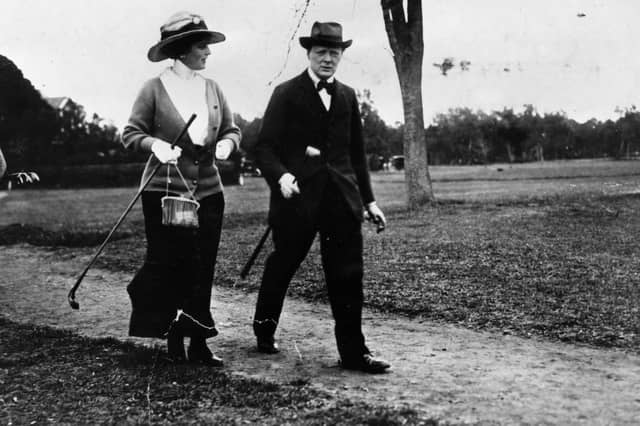
The idea has been around for a long time. In a speech to his Dundee constituency on October 9, 1913, Winston Churchill, referring to a previous speech, said: “I spoke of the establishment of a federal system in the UK, in which Scotland, Ireland and Wales and, if necessary, parts of England could have separate legislative and parliamentary institutions as the great and prosperous states of the American union.” A remarkable speech!
The SNP continues to argue that devolution has run its course. There is, of course, no evidence to substantiate such a claim and reality paints a vastly different picture.
Key policy areas have seen little progress since the SNP took control in 2007. There is no sense of national unity, social solidarity, unity of long-term purpose or even a hint of a consensual approach about our future direction. The huge potential of the Scottish Parliament has not been realised. Support for independence is stable, but stalled.
The reasons for voting for the SNP are varied, but the SNP strategy is to sneak a majority, one more push, and get the job done. For them, the margin of victory does not seem to be an issue, even a tiny majority in favour of independence will do. The closeness of the Brexit vote provided a salutary lesson about how such political recklessness can cause long-term harm.
Devolution was intended to build the foundations of a modern parliament, government and nation. Just saying no to independence is not enough. To move Scotland forward, respect voters and build a consensus, we must take a long view and embrace a form of federalism.
Henry McLeish is a former First Minister of Scotland
Comments
Want to join the conversation? Please or to comment on this article.