
Why the new Scottish Government must now back the oil and gas industry
A modern industrial Scotland will not be delivered by divisive rhetoric about ‘clean’ and ‘dirty’ energy but by a pragmatic recognition that both renewables and fossil fuels are important
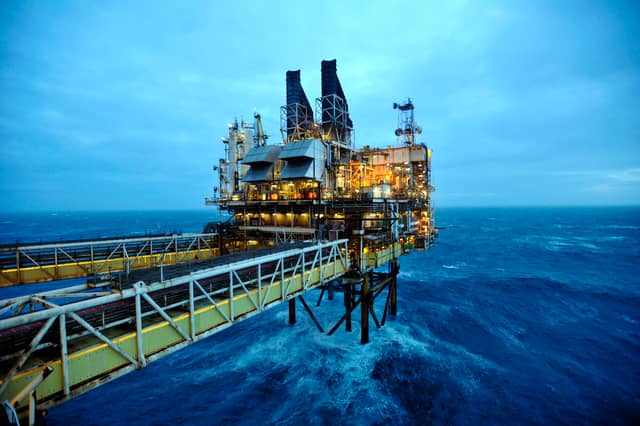

If Scotland’s political parties do not back Scotland’s industries, how can we realistically expect Westminster to? The offshore energy sector supports more than 128,000 jobs nationwide, with around 112,000 linked to oil and gas.
From the north-east to the Central Belt and island communities, the sector sustains skilled, hardworking people and underpins local economies across the country. Yet too often, Scotland’s industrial strengths are treated as a political inconvenience rather than a national asset.
That hesitation matters because industry does not exist in isolation. Offshore energy sits at the heart of an interconnected system: manufacturing, engineering, ports, fabrication yards, logistics, skills and specialist services. When uncertainty hits one part of that system, the effects ripple quickly through the rest.
Oil denigrated, renewables at risk
We have seen how fast that confidence can evaporate. The closures of major industrial sites at Grangemouth and Mossmorran show how loss of confidence in one area can cascade across the wider economy. When Scotland hesitates to back its own businesses, it becomes immeasurably harder to argue for stability and support at a UK level.
Too often, our energy debate is framed as a choice between competing sides. Oil and gas are frequently portrayed as part of the problem rather than part of the solution, despite providing much of the energy we rely on today. At the same time, Scotland’s renewables sector, particularly offshore wind, faces its own challenges: grid delays, high transmission charges, planning bottlenecks and growing resistance that risk slowing delivery just as global competition intensifies.
Negativity directed at one part of the energy system does not strengthen another. It weakens both. Scotland will not build a successful industrial future by running down its oil and gas sector, nor by undermining confidence in renewables through policy inertia and mixed signals. We need both, working together, if we are to secure jobs, attract investment and maintain energy security through the transition.
Creating the conditions for success
A modern industrial Scotland will not be delivered through polarisation – by dividing industries into “clean” and “dirty”, or by pitting today’s energy against tomorrow’s. It will be delivered through pragmatism: recognising both oil and gas and renewables as national assets and treating each with the seriousness they deserve.
We are rightly proud of Scotland’s industrial heritage – from shipbuilding on the Clyde to world-class food and drink exports such as whisky. These sectors thrive because Scotland chose to believe in them and built the conditions for their success.
Our North Sea expertise, recognised around the world, deserves that same confidence and respect. After people cast their votes on Thursday, the future of Scotland’s economy should be front of mind. The new Scottish Government faces a clear choice: seize the opportunity to build on our strengths, or allow industrial decline to ripple more deeply through our economy.
A modern industrial Scotland, secured by homegrown energy, will not be delivered through political slogans or polarisation. It will come from pragmatic policy decisions, building consensus, and visible backing for the people and industries that already deliver.
If Scotland does not stand united for its own industries and workers, we cannot expect others to do it for us.
David Whitehouse is chief executive of Offshore Energies UK
Comments
Want to join the conversation? Please or to comment on this article.