
Readers’ Letters: Are there really two Anas Sarwars?
A reader suggests that the Anas Sarwar who is being elevated to the Lords cannot be the same Anas Sarwar who leads Scottish Labour
I am not sure if he is aware of it, but the Scottish Labour leader appears to have a double masquerading as him.
A gentleman called Anas Sarwar is set to quit as Labour in Scotland’s leader and enter the House of Lords to become a UK government business minister (your report, 22 July).
Yet, in an interview on 5 May, another gentleman also called Anas Sarwar ruled out accepting a peerage if he lost the Scottish Parliament election, which of course he went on to do in spectacular fashion
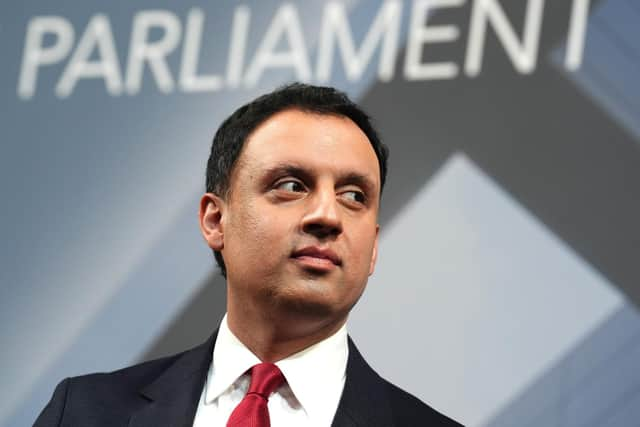

A certain Mr Sarwar has also repeatedly called for the abolition of the House of Lords, noting that it “has no place in 21st century politics”. He declared that it is “unacceptable” to have unelected representatives “wielding such power”, and called for it to be “replaced with an institution which better reflects the make-up and the identity of the United Kingdom”.
Dare I say it, this clearly smacks more than a little of hypocrisy if it is the same person, and should this be the case, it is no wonder people have so little faith in politicians.
Alex Orr, Edinburgh
Lateral Arabesque
I can’t help thinking that Anas Sarwar’s appointment to the House of Lords as a “business minister” is a classic corporate “lateral Arabesque”, when a person is given a vague, elevated job title simply to move them out of the way.
It makes sense when you consider his eminently forgettable tenure as Scottish Labour leader including two Holyrood election disasters, and Andy Burnham’s urgent to-do list, much of which won't sit well with the West of Scotland clique.
The problem the PM now has is finding a replacement from the shallow pool of talent. Will it be “Buggins’ turn” Indyref2 advocate Monica Lennon, Paul Sweeney or geographic outsider but sensible Michael Marra? It’s going to be a riveting contest. Not.
Allan Sutherland, Stonehaven, Aberdeenshire
England’s PM
The more I listen to the UK’s new Prime Minister, the more I sense the end of the Union. As only the second self-proclaimed northern Prime Minister since Harold Wilson, his whole tone reflects a desire to see change in England. For too long, he argues, power has been centralised in London and indeed, he has advocated for a No 10 of the North.
“Manchesterism”, as it is dubbed, suggests policy in areas like skills, economic development and education, should have a stronger local input, underpinning his call for greater devolution in English regions.
In Scotland he has proposed taking power away from the devolved parliament and empowering communities – effectively by-passing an elected Scottish parliament, to deal directly with the local councils. This has already been done by a previous Conservative government, when we left the EU. The “UK Shared Prosperity Fund”, replacing the “European Regional Development fund” and the “European Social Fund”, requires Scottish councils to apply directly to the UK government for project funding, bypassing the Scottish Parliament, which hitherto received funding directly from the EU, to fund community project applications, from the local councils. Surely to continue down this road is simply, in the case of Scotland, centralising power again at Westminster.
Burnham is arguably the first Prime Minister of England. As a northern MP he is advocating for the North. His argument is with the south, as the seat of power. He is a regionalist, rooting for the North of England. Many in Scotland advocate independence, so that a sovereign Scottish parliament can legislate in the interests of the people of Scotland. This however, as ever, will continue to be disregarded, despite a majority at Holyrood supporting a second referendum.
Stuart Smith, Aberdeen
Fooled again
In the words of London’s bard, Pete Townshend “meet the new boss, same as the old boss”.
Andy “king-in-the-north-of-the-very-far-south” Burnham pretends to be “serious about creating a new politics” but all I see is more of the same. He reportedly told First Minister Swinney that he will have to “agree to disagree” on the crucial matter of Scottish independence. This is a very immature response from our new Prime Minister, reflecting the disrespect shown to Scotland by his predecessor.
Burnham has not got the good grace to hear our duly elected leader presenting the case for independence. All I can presume is that Burnham has his eyes on Scotland’s resources to pay for his long campaign to win the seats in London and south-east England that he will need to hold off Reform UK.
Ni Holmes, St Andrews, Fife
Lessons not learnt
For years the SNP has been in power and in all that time one of its favourite catchphrases is “lessons will be learnt” when they never are. Labour is obviously using the same tactical manual.
Our brand new Prime Minister is performing the SNP trick of rotating failed ministers into other positions in a futile attempt to make these minister’s outcomes better than they were before. History tells us this simply does not work. Andy Burnham’s “honeymoon period” will not last very long. His “reign” comes as Westminster has shut down for several weeks. Probably no coincidence.
John Swinney is in the same boat. He hopes memories of the Peter Murrell affair will have disappeared from the public’s thoughts by the time Holyrood returns.
Both leaders are playing with fire. The public has both a very short fuse these days and a very long memory.
Gerald Edwards, Glasgow
Bread and circuses
Prime Minister Burnham’s removal of VAT from domestic electricity bills is to be welcomed, but it does not achieve anything, whereas 100 per cent tax relief on the purchase of plant and equipment would expand existing business, and attract new business to the UK.
We must not be duped by Labour’s usual gifts of bread and circuses, designed to distract us from their traditional neglect of business and the economy.
Malcolm Parkin, Kinnesswood, Kinross-shire
Abolish VAT
I note that Andy Burnham has announced a VAT cut on energy bills – but why does that pernicious tax on domestic trade persist, post-Brexit?
Upon accession to what became the EU, the UK had to introduce VAT to replace the much less cumbersome Purchase Tax (older readers may recall the admin nightmare that presented small businesses); that VAT still exists is clear evidence that Brexit still hasn’t been “done”.
If our new PM wants to kick-start our lacklustre economy, he should use the revenue from his proposed land-value levy to either slash VAT across the board or, better still, abolish it.
George Morton, Rosyth, Fife
Start drilling
It was welcome news that the new government is still considering whether or not the UK should be involved in the exploitation of the Rosebank and Jackdaw oil and gas fields.
Many of the jobs that would be created or saved if the sites get the go-ahead would be done by people not wearing nice lounge suits – and those who did wear a jacket to their place of employment would need to remove it before starting work which might make their hands grubby. Clearly not the sort of people to be encouraged by a modern Labour Party.
In any case, even if we are not involved in the development work the oil and gas in those fields will still be available for us to burn – we shall just have to pay other people for doing the dirty work.
S Beck, Edinburgh
Save the Mack
Architects Gordon Gibb and Malcolm Fraser are correct. Nothing but a full rebuild of the fire-ravaged Glasgow School of Art is sufficient (your report, 22 July).
A culture and a city is known by its buildings. No other world city or country would contemplate such dereliction of its heritage. Mackintosh’s work is genius. Why then is it that Glasgow School of Art, the Scotland Street School and The Hill House are simultaneously entombed in scaffolding? This is a simple scandal. Right must be done.
Haggis is nothing without heart, liver and lung. Glasgow needs this transplant now.
A walk round an empty summer holiday Mack in 1968 blew my mind. The sheer practical invention. I became an architect.
Will McMorran, Tedstone Delamere, Herefordshire
Scottish ‘Troubles’
Hugh Pennington’s letter (21 July) is a reminder that the so-called “Troubles” of Northern Ireland actually originated in Scotland.
Becoming king of England allowed James VI to deal with his bête noire, the Borders Reivers. Hundreds of the lower orders were hanged or drowned in the River Tweed, the better-off were deported to estates in Fermanagh – ie relatively well-off Presbyterians in an otherwise almost completely Catholic country.
By the time Ireland became separated from Great Britain in 1921 the Protestant population of the northern six counties was populous and rich enough to demand separation from the so-called free state of the South and remain part of Great Britain, hence the emergence of Sinn Fein and the murderous IRA etc in the latter part of the century.
A McCormick, Terregles, Dumfries
Write to The Scotsman
We welcome your thoughts – NO letters submitted elsewhere, please. Write to [email protected] including name, address and phone number – we won’t print full details. Keep letters under 300 words, and in the body of the email – no attachments – and avoid ‘Letters to the Editor/Readers’ Letters’ or similar in your subject line. If referring to an article, include date, page number and heading. No poems.
Comments
Want to join the conversation? Please or to comment on this article.