
Readers' Letters: Why should taxpayers stump up for SNP incompetence?
Scots taxpayers should not be burdened with court costs due to SNP intransigence, says reader
Peter Murrell has been jailed for five years, three months for stealing £400,000 from the Scottish Nationalist Party's bank accounts. He says he has the funds to repay this.
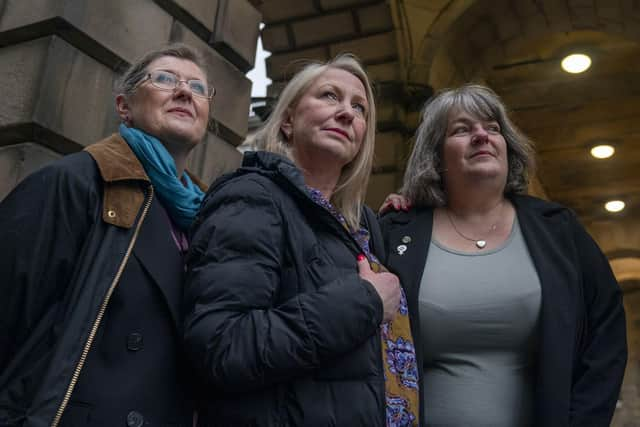
Last week SNP ministers lost a court battle brought by For Women Scotland (your report, 24 June). The Court of Session ruled that the prison guidance allowing trans prisoners to be housed according to their acquired gender was “unlawful”.
This means taxpayers will have funded the Scottish government's legal costs of £187,957 and will have to fund For Women Scotland's costs of more than £200,000. So politicians' stubbornness, some would say stupidity, has landed taxpayers with a £400,000 bill. At least Peter Murrell is saying he will pay back his £400,000. Can we have a similar pledge from the Scottish government ministers responsible that they will pay this £187,957 and the £200,000 out of their own pockets?

The UK parliament introduced a Recall of MPs Act in 2015 to get rid of MPs who breached the rules. May we please have a Recall of MSPs Act 2026 designed to get rid of incompetent politicians?
Clark Cross, Linlithgow, West Lothian
Return the money
The missing funds donated by SNP supporters to help finance a future referendum totalled £667,000. Now John Swinney tells us he’s using this money for SNP purposes. This money belongs to the SNP members who donated it, not the Scottish National Party. Perhaps Swinney should set his holier than thou attitude to one side and return these funds to the people to whom this money legitimately belongs?
Doug Morrison, Tenterden, Kent
Embrace Brexit
Ten years after the referendum of 23 June 2016, Britain should be honest about Brexit. It was never a magic wand, and it did not remove the need for competent government. But nor did the economic horror stories used to frighten voters come true.
Britain did not collapse after voting Leave. The City did not vanish. Trade did not stop. Mass unemployment did not follow. Britain was not left isolated on the world stage.
The more serious conclusion is that Brexit restored powers which successive governments have failed to use properly.
Leaving the European Union returned control over trade, agriculture, fishing, immigration, procurement, regulation and industrial policy. Those powers should have been used with confidence to make the UK more competitive, support farming and coastal communities, rebuild productive industry and reduce unnecessary burdens on enterprise.
Instead, Conservative and Labour governments have too often treated sovereignty as an embarrassment rather than an opportunity.
There are still clear examples of why leaving mattered. Britain is free to take a more flexible approach to artificial intelligence rather than follow the EU’s heavy-handed regulatory model. It can shape rules for gene editing, farming and food production outside the Common Agricultural Policy. It can regulate emerging areas such as nuclear fusion in a more proportionate way. It can reform financial services rules, pursue wider trade agreements, and decide its own immigration policy.
For Scotland, those powers should matter. Our farmers, fishing communities, energy sector, universities and exporters need a government willing to back them, not one constantly looking over its shoulder to Brussels. Expensive energy, high taxes, poor productivity, weak skills policy, and overregulation are not the result of the referendum. They are failures made in Westminster and Holyrood.
That is why the Labour government’s “reset” with the EU should concern anyone who values democratic self-government. A customs union would hand trade policy back to Brussels. Single market alignment would mean accepting rules we no longer help write. Dynamic alignment on food farming, or environmental regulation risks turning Britain into a rule-taker by degrees.
The lesson of the past decade is not that voters were wrong. It is that the political class lacked the confidence to use the decision they were given.
Ten years on, Brexit should not be apologised for, diluted, or quietly reversed. It should finally be used.
Alastair Majury, Dunblane, Perthshire
Cryptic Farage
Far-right Reform figurehead Nigel Farage declares the £5 million “gift” he received from a shadowy crypto tax exile and ultra-generous Reform benefactor based in Thailand is not the public’s business.
I wonder if he would be so understanding if it was Keir Starmer, Kemi Badenoch or John Swinney who had benefited personally from such largesse?
Clearly it’s not just the crypto that appears cryptic.
D Mitchell, Doune, Perthshire
Gloomy future
We have seen seven UK prime ministers in a decade, yet still some refuse to accept that the “United” Kingdom is fundamentally kaput. To make matters worse, some actually believe those who promoted Brexit and hastened Britain’s decline can actually fix a state that is broken economically, socially and democratically, as well as morally.
Some, incredibly, even hold token UK devolution, and more specifically the SNP, responsible for Scotland’s predicament within a constitutional tunnel at the end of which the only visible light (given unionist politicians and their supporters seem to shun any form of federalism) appears to be the hope of self-determination.
The SNP may, or may not, have a role to play in a future independent Scottish government but at least the people of Scotland will no longer be dictated to by an increasingly London-centric government likely to become even more authoritarian when Donald Trump’s puppet, Nigel Farage, becomes prime minister and scatters to the ether the last remaining vestiges of a once proud Great Britain.
Stan Grodynski, Longniddry, East Lothian
Dump pump
The recent heatwave has reminded me of the time I lived in West Wales in a dormer bungalow which enjoyed an open-plan kitchen, conservatory and living room.
During hot, sunny days it could become very uncomfortable to live in. Hence when we had a 4kW capacity solar array fitted on the roof, and being very conversant with the workings and capabilities of such a device, I asked to have an air-to-air heat pump fitted at the same time.
This initially proved a wise and energy-saving decision as said rooms in the bungalow became very cool and liveable during the hottest weather, that is, when the heat pump was in its air conditioning mode; the icing on the cake was the free solar electricity.
Unfortunately, in the winter months with minimal solar radiation it proved useless in keeping the rooms heated, and we had to resort to our oil-fired underfloor central heating boiler to keep warm.
The moral of this tale is to ignore Energy Secretary Ed Miliband’s plea to have a heat pump fitted if you are going to rely upon the device to keep your home warm. Remember, a heat pump is simply an enhanced electric heating device, or air conditioner – it totally relies on electricity, mains or otherwise, to function.
We were also very pleased with the roof-fitted solar array, which generated on average 4000kWh per annum… what’s not to like, dear reader?
Dave Haskell, Oswestry, Shropshire
Power of hope
Doug Clark, in his letter of 24 June, misunderstands the role of an Archbishop, and in doing so misrepresents the kind of commitment Dame Sarah Mullally offered when she promised Palestinians she would use her role to seek “the peace you desire and the freedom you deserve”.
I would say that any faith leader – from minister or priest to imam, rabbi, Archbishop or Pope – speaks from moral authority, not political or military power. Their task is to open eyes and hearts, and deliver hope to the hopeless. The last thing to emerge from Pandora’s box, after the terror of war and disease, was an almost invisible light, and it was called hope.
To dismiss such hope as “false” is to mistake its power; those who endure oppression are not naive enough to believe a cleric can deliver their freedom, but they know the difference between being ignored and being seen. The true danger is in believing that if we cannot immediately provide a solution, our voices mean nothing. The real peril is silence, and the absence of hope. Moral witness has never been about delivering outcomes single‑handedly, but about refusing to look away.
In a world where suffering is too easily ignored, the least we owe one another is the courage to speak.
Judith Campbell, Portree, Isle of Skye
Ball game
The reason Scotland's national football team is such an embarrassment in international finals is encapsulated by the fact Lawrence Shankland was somehow never good enough all the years he was top scorer in the Scottish league playing for Heart of Midlothian, but automatically joined the starting 11 when he signed for Glasgow Rangers.
Mark Boyle, Johnstone, Renfrewshire
Write to The Scotsman
We welcome your thoughts – NO letters submitted elsewhere, please. Write to [email protected] including name, address and phone number – we won't print full details. Keep letters under 300 words, and in the body of the email – no attachments – and avoid 'Letters to the Editor/Readers’ Letters' or similar in your subject line. If referring to an article, include date, page number and heading. No poems.
Comments
Want to join the conversation? Please or to comment on this article.