
The 6-point plan Scottish Labour must seize on to ram home the advantage against 'confused' SNP
Former first minister Henry McLeish has outlined a six-point plan for Scottish Labour to adopt after its triumph in Hamilton.

Against, the odds, depressing poll numbers and barely believable claims of Nigel Farage’s invincibility, this was a significant victory for Labour and a boost for the leadership of Anas Sarwar.
The phrase often attributed to Mark Twain seems appropriate - “reports of my death have been greatly exaggerated”.
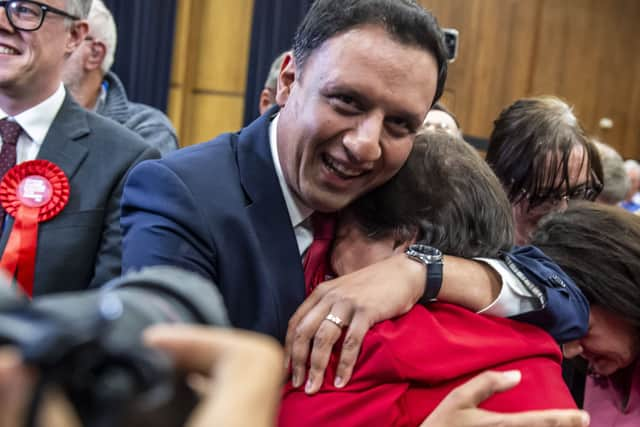

This by-election is also a timely reminder that after 18 years in government, the SNP look weary, divided and lacking momentum. The reality for most Scots is a governing party that has become less concerned with fighting Westminster, but is still not tackling with conviction the many policy areas impacting the everyday lives of the electors.
Farage and Reform remain a threat. They are eating into the Scottish Tory vote and act primarily as a party of protest with a populist, ultranationalist (English) and isolationist agenda.
The achievement to date, in the form of Ukip, was Brexit, an act of national insanity, more recently their barely concealed racist attack on the Scottish Labour Leader on social media and yesterday the offer of a referendum to ban the burka.
The Reform party has no pedigree, or political creed, or positive policies and is Trumpian in it’s behaviour and political outlook. Its appeal reflects protest, opportunism, cheap patriotism and a claim to be on the side of working people and a dislike of elites.
This is a poisonous fraud, a vulture party exposing predatory behaviour, and an amateur version of populist parties elsewhere in Europe. But because they represent the “anti-politics” lurking in the minds of many in the UK, they are dangerous, especially under the first-past-the-post electoral system. Their sickening addiction to barely concealed racism, hatred of immigrants and contempt for the European Union are unfortunately helping to divide and possibly destroy a once respected Conservative Party.
For the SNP, the picture is more confused. Scotland is stalled as a nation. Scotland is bitterly divided on its constitutional future, where many Scots see campaigning on Independence as a major distraction from the effective governance of the nation.
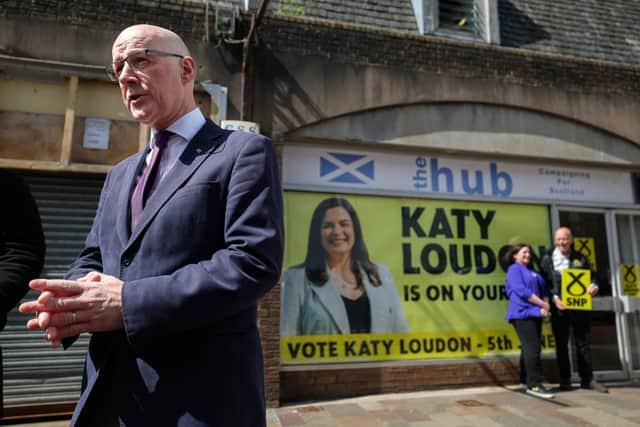
For the SNP, the drive to independence has lost momentum. This has led to much soul searching over the party’s immediate tactics and to what extent there should be a more enthusiastic push towards their primary purpose as a party.
It is a curious irony of politics that Scottish Labour now faces two nationalist parties that represent protest as a political weapon against the UK government. This provides an opportunity for Scottish Labour to project a more unified approach to our politics and hammer home the point that, as happened between 1999 and 2007, that rebuilding a critical harmony between Holyrood and Westminster and building on devolution is long overdue.
This is “Unfinished Business”, representing a journey, not a destination - opening up a new era of devolved government that makes more of Scotland’s potential and places our priorities much higher up the Westminster agenda and the public agenda.
This, of course, requires the UK government to waken up to the wisdom of four-nation governance and make much more significant concessions, opening up the possibility of a more Federated form of Union in the future as even England opens up to the benefits of decentralisation, which may then evolve into something more significant.
This would help allay the fears of many Labour politicians and supporters that being more Scottish would be equated with support for independence.
The remark from President Roosevelt seems appropriate. “The only thing we have to fear is fear itself,” he said. But for all the new opportunities facing Labour in Scotland, the fact the SNP has been in government for 18 years is hugely significant.
Being in government is hard work and the pressures and never-ending challenges of office can be draining. But for the SNP, the constant turmoil of competing priorities is clearly taking its toll.
Despite John Swinney steadying the ship after the Sturgeon era, the conflict between governing and campaigning is taking its toll as are the divisions within the SNP about priorities. This affords Labour the opportunity to become once again the party of choice for an ambitious Scotland.
For the labour Party in Scotland, there is, of course, more work to be done after a period of stress in the first year of the new Labour government at Westminster. Policy missteps, the impression that Scotland was slipping down the Westminster agenda, and proposed changes in welfare and cuts in benefits have concerned traditional Labour voters and supporters, and Mr Sarwar. These darker days are easing and a more progressive agenda looks likely.
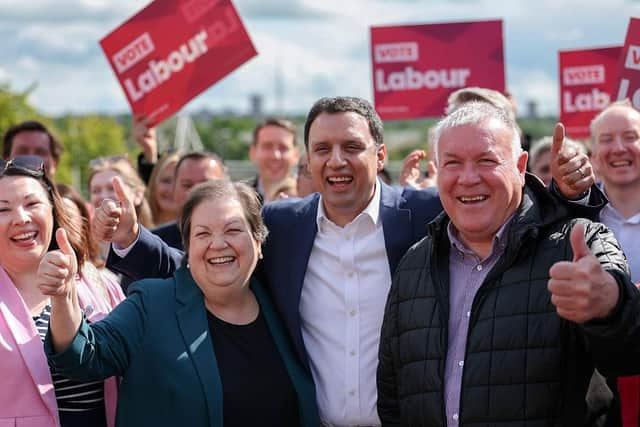
First Scottish Labour should continue to value distinctive Scottish perspectives on UK issues and be confident in emphasising differences with Westminster, when appropriate.
Second, the Labour Leader should follow the example of the Welsh Senedd Leader who does contest unpopular Westminster policies publicly in her role of defending Wales.
Third, Labour should intensify their assault on SNP policy failures in areas such as, education, health, prisons, industrial strategy and poverty - the peoples agenda.
Fourth, there is a pressing need to break the tribalism in the Scottish Parliament and accept that “coalitions of the willing” could achieve more consensus as happened with a real coalition in the period 1999 to 2007.
Five, assert a greater degree of willingness for dialogue and action with the other nations and the UK where issues and differences are resolved between governments, not in the Supreme Court. Warfare provides good copy but poor policy.
Six, there is a need for the Parliament to be freed from the tyranny of the Scottish Government who are suffocating innovation. The boundaries have become blurred. The legislature should represent all parties.
As 2026 approaches, Labour can offer a new deal for Scots and realise the potential of a remarkable idea, devolution, which is still in its infancy. Sir Keir Starmer must work to better understand that devolution can’t stand still and accept that further change is essential not just because it makes sense, but because it is the only way for Scotland to be content within a changing Union and knowing there are attractive alternatives to independence.
Scotland is a remarkable nation; it is also unfinished business. The next phase of devolution is long overdue and is required to set out a vision for the next quarter of a century.
More Britishness will not answer the “Scottish Question”, but Gordon Brown’s idea of a “Union of the Nations” could work if Westminster accepted the fact the debate about Scotland has a long way to go.
This article started with my description of Labour’s victory in Hamilton being significant, but it is more than that.
Spectacular would be more appropriate in relation to the victory in difficult circumstances, but mainly because of the potential it provides for Scottish Labour to once again be at the heart of how Scotland is governed.
Sarwar’s rallying call should be, “the chance to serve our country – that is all we ask”, which were the late John Smith’s last words.
- Henry McLeish is a former First Minister of Scotland who served as Labour MP and MSP for Central Fife.
Comments
Want to join the conversation? Please or to comment on this article.