
Scotsman Obituaries: Professor Alan Wright, internationally renowned Scottish geneticist
Professor Alan Finlay Wright MB, PhD, FRCPE, FRCPsych. Born: 18 April 1947 in Edinburgh. Died: 20 December 2025 in Edinburgh, aged 78
Alan Wright was born in Edinburgh, son of a minister who was chaplain at Loretto school, where he was initially educated, later moving to Glenalmond. At that time his nickname was “Jock” because of his love for all things Scottish.
He graduated in medicine from St Andrews University in 1971. Although medicine was his chosen vocation, on leaving school he spent some months working in a borstal to experience “life on the other side of the tracks.”
During his student years he extended his horizons with clerkships in Sudan and Ethiopia.

Following registration, he started training in psychiatry, but his interests were in research and he soon moved to the Mammalian Genetics unit in Kings Buildings, Edinburgh University, to undertake a PhD with Henrik Kascer. On completion he moved to the Medical Research Council Brain Metabolism Unit to study the genetic components of psychiatric illness at a time when this was particularly challenging, defining populations being difficult and genetic mapping techniques still rudimentary. A senior colleague suggested that more progress might be possible in studying eye disease. He moved to the MRC Population and Cytogenetics Unit at the Western General Hospital in Edinburgh where he started the work on the genetics of eye disease. It was to remain the dominant interest for the rest of his career.
The early years at this Unit were not easy. The shared office was in a small room in the basement and Alan would retreat to the boiler room when he needed quiet to write his papers. However John Evans, the Director at the time, was supportive and the research productive. The work was absorbing and the family have many memories of experiments extending through the night and encroaching on holiday time. The focus was identifying mutations underpinning inherited eye disease; X-linked retinitis pigmentosa being one of the most important. Many influential papers followed as the mutations were mapped and the underlying biochemical changes triggered by the mutations identified. Using similar technology the gene location responsible for Polycystic Kidney disease was also confirmed.
Studies of other eye diseases followed, including the common condition of age-related macular degeneration.
This genetic expertise was exploited in joint eye disease clinics with Professor Bal Dhillon at the Princess Alexander Eye Pavilion. Much of the research was supported by funds from charitable foundations – he was a director of Fight for Sight for more than 10 years.
But Alan was a visionary and recognised that identifying the genetic mutations implicated in causing common diseases such as Diabetes Mellitus was going to be difficult in large population studies. The best option would be to target small communities with stable populations and more consistent environmental influences. The results from this now widely adopted approach were rewarding, with many high-impact papers emerging. With strong support and involvement from the Unit director Nick Hastie and Senior team member Caroline Hayward, international collaborative studies were established in Croatia and Sardinia, but most importantly, in both Orkney and Shetland. Collaborators Harry Campbell, Igor Rudan and Jim Wilson were integral to subsequent success.
Travelling with Alan was almost invariably interesting. On one occasion, on his way to a genetics meeting, he was stopped because of a hammer in his luggage. With panache he demonstrated on the security official that it was in fact a tendon hammer. Why he had this in his luggage on the way to a genetics meeting remains a reasonable question - perhaps the bag had not been unpacked since his student days.
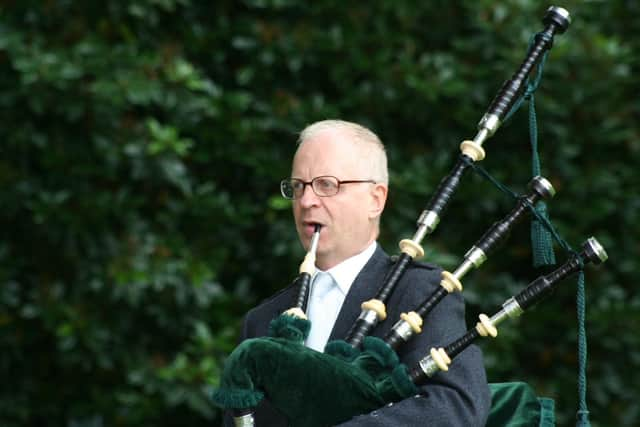
Alan married Elizabeth, his lifelong partner, also a doctor, soon after graduation. Two children followed, Helen and Sarah, and subsequently five grandchildren. Their house in Applecross was a wonderful location for entertainment of family, friends and colleagues from all over the world – an opportunity for others to experience his sense of fun and humour. An accomplished hill walker he had climbed many of the Munros in the west of Scotland, including the Cuillin ridge on Skye. He took an immense pride in Scottish music and verse and, whilst playing the concertina and piano, was much in demand as an excellent piper.
Obituaries
If you would like to submit an obituary (800-1000 words preferred, with non-copyright image), contact [email protected]