
Police Scotland told by watchdog to improve custody services 'at pace'


Inspectors say many areas remain of concern across force
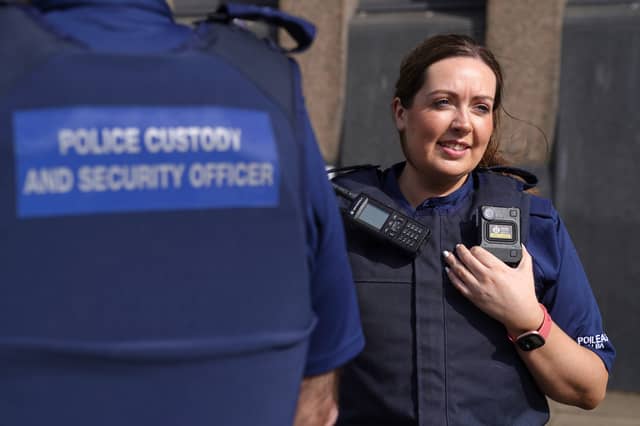
Police Scotland has been urged to improve its custody arrangements "at pace" after a watchdog flagged a host of concerns, including “unsafe” staffing levels, gaps in the recording of vulnerability information, cell visits and observation checks.
Inspectors at His Majesty’s Inspectorate of Constabulary in Scotland (HMICS) said they had identified new cases where children were being held in custody for an “extended period” without a clear rationale being recorded on the national force’s system.
They also highlighted instances of adults being detained in custody long after a decision had been made to release them, including one case where a detainee was held for a further 25 hours, and two cases where detainees were held for an extra 10 hours.
Its review identified “ongoing inconsistencies” in the management of detainee risk,” with a “stubborn disconnect” between detainees being assessed as ‘high’ risk, but managed at a lower level.

The watchdog said it and Healthcare Improvement Scotland (HIS) had published ten custody inspection reports over the past three years, and despite issuing a series of recommendations, “many issues” that had been previously raised were still of concern.
Assistant Inspector of Constabulary in Scotland, Brian McInulty, said: “These ongoing challenges relate to the custody operating model, the ageing custody estate, staffing and workforce planning, and operational practices associated with the supervision of vulnerable detainees, including children and those assessed as high risk.”
Mr McInulty said that while many of the pressures had been exacerbated by financial constraints and the increasing vulnerability of the custody population, further action was required “at pace” to progress the outstanding recommendations and secure “sustained improvement.”
As part of the joint inspection review by HMICS and HIS, three new recommendations have been issued, including that Police Scotland revise its custody operating model as a matter of priority.
The current model - which sets a minimum staffing ratio of one member of staff to ten custody cells - was based on the custody estate and staffing levels that were in operation before the inception of Police Scotland in 2013.

However, the inspection review says the staffing ratio is now widely viewed by staff as both “unsafe and unsustainable.”
Inspectors found that while there may be a sufficient number of police custody cells nationally, in the more populated parts of the country weekend cell capacity was widely described as “critical.”
The review noted some improvements, with a reduction in the number of children held in custody, and better oversight of the issue. It acknowledged that in some cases, staff had said the problems with children being held in custody for prolonged periods was being made worse by delays in children being picked up by their care providers.
Chief Superintendent Christopher Stewart, from Police Scotland’s criminal justice services division, said: “We are working at pace to enhance custody provision so that it supports effective operational policing, provides a safe and secure environment for everyone in custody, and has the right staffing in the right places, across Scotland. The inspection report found strong leadership and vision to deliver these improvements.
“We fully recognise the importance of maintaining a custody estate that supports both operational policing and the wellbeing of our workforce. Improving a large custody estate will require time and investment and we'll bring forward plans as progress is made.”
Comments
Want to join the conversation? Please or to comment on this article.