
Business tax concerns reach five-year high as regime could threaten futures

The Institute of Directors says business leaders are growing increasingly concerned about taxation in Scotland.
Scottish businesses have warned tax burdens are threatening their survival after concerns over rates hit a five-year high.
The Institute of Directors Scotland's annual state of the nation survey found that concerns about business tax rates among business leaders have increased by 132 per cent since 2021.
Five years ago, only 28 per cent of business leaders said it was a concern, compared to 65 per cent in 2026.
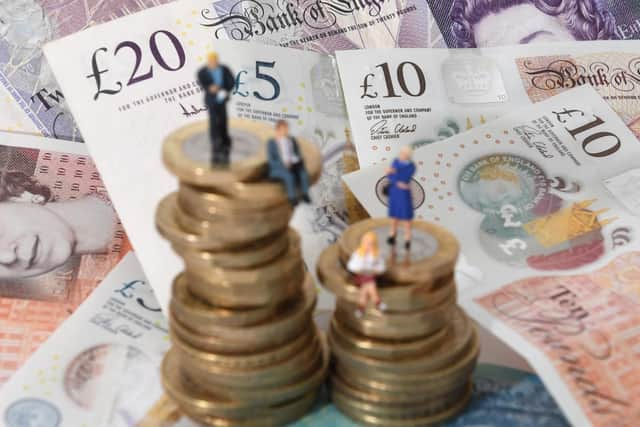

On top of this, 71 per cent said income tax rates were too high, and 41 per cent said changes to employer National Insurance contributions have significantly impacted their organisation.
A further 74.8 per cent said tax divergence was a worry, and tax disparity between Scotland and the rest of the UK is hampering their ability to attract investment and hire skilled workers.
The survey also found tax is the biggest priority for business leaders at the upcoming Holyrood election - in 2024, it was listed as just the fifth biggest priority for this group.
Catherine McWilliam, nations director at the Institute of Directors, said the next Scottish Government needs to work with the UK Government to bring in more support for businesses north of the border.
She said: “Over the past five years, Scottish businesses have shown remarkable resilience.

“From the focus on employment in 2021 following the Covid-19 pandemic, to prioritising skills retention and accelerating growth, business leaders are now moving beyond recovery and turning to investment and scaling ambitions.
“However, members tell us that ongoing tax burdens are hindering acceleration, inward investment and skills retention, which leaves Scotland at risk of falling behind the rest of the UK.
“If we want to unlock our economic growth potential, businesses need stability and long-term policy certainty.
“While we welcome the support measures included in the recent Scottish budget, they do not go far enough, particularly for businesses outside the retail, hospitality and leisure sectors.
“Seventy-two per cent of our members surveyed said the budget did not reflect Scotland’s priorities, emphasising the need to implement concrete support measures, such as the Scottish Government’s 2021 framework for tax, to alleviate cost pressures and allow businesses to flourish.”
The Scottish Conservatives said the issues lie squarely with the SNP government and its “punitive” tax regime.
Murdo Fraser MSP, the party’s business spokesman, said: “This is just the latest siren warning from businesses that the SNP’s economically illiterate approach is threatening growth, investment and jobs.
“John Swinney’s punitive tax regime makes it harder to attract firms and skilled workers - and Scotland is falling behind the rest of the UK as a result.
“Business leaders could not be clearer that Scotland having the highest income tax in the UK is holding the country back and endangering the economy, but John Swinney is still hammering hard-pressed Scottish workers to fund a ballooning and unsustainable benefits bill.
“As the party of business, we are the only ones with a credible plan to lower taxes and deliver the action firms want on business rates because - unlike the other parties, including Reform - we would rein in unaffordable welfare spending.
“If the SNP continue on this economic doom loop, we are heading for a catastrophic financial reckoning.”
Jamie Greene MSP, the Scottish Lib Dems’ economy and finance spokesman, said: “Small and medium sized businesses are the engine rooms of Scotland’s economy, but far too many are being pushed to the brink under the SNP.
“Scottish Liberal Democrats recently secured £178 million to help businesses like pubs, restaurants, hotels and more through crushing rates rises, and we are determined to do more.
“We need a competitive and fair tax regime that supports growth and employment- not one that stifles investment and threatens the survival of those who make some of the biggest contributions.”
Lorna Slater MSP from the Scottish Greens said: “It is a really difficult time for business across Scotland, especially small businesses. They’ve been hit with a perfect storm of soaring costs, increased NI contributions, and the ongoing damage done by Brexit.
“The number one issue for small businesses this year is going to be the cost of energy. Scottish Businesses need to see the benefit from the low-cost renewable energy being generated in Scotland. That can only happen if the UK Government break the artificial link between electricity prices and gas prices,
“There is an important role for both our governments in helping businesses to reduce costs by investing in clean energy and energy efficiency, improving transport links and local infrastructure, and supporting the skills that people need for the green jobs of the future.
“Part of the challenge will be reforming council tax and non-domestic rates to ensure that small businesses are supported while large businesses and multi-nationals are finally made to pay their fair share.
“Scotland’s future success depends on building an economy that is innovative, sustainable and fair. The Scottish Greens want to work with businesses and communities to make that happen.”
Finance Secretary Shona Robison said: “Thanks to decisions taken by this government, 55 per cent of taxpayers in Scotland can expect to pay less income tax than in the rest of the UK in 2026/27.
“And by asking those on higher salaries to pay slightly more, we can provide support with the cost of living that is not available anywhere else in the UK like free tuition and free prescriptions.
“Our tax policies are grounded in evidence and that is demonstrated by new figures showing that more taxpayers have moved to Scotland than have left since the introduction of devolved tax powers.”
Comments
Want to join the conversation? Please or to comment on this article.