
Faslane to receive multi-billion pound upgrade from UK Government's Defence Investment Plan
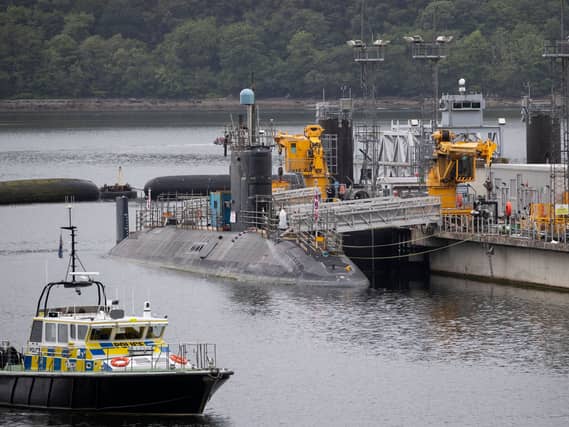

The infrastructure at HMNB Clyde will be “transformed” over multiple decades, in the £15 billion Defence Investment Plan announced by Sir Keir Starmer.
Faslane naval base is to receive a multi-billion pound upgrade as part of the long-awaited defence investment package designed to deter and defend a Russian attack against the UK by 2030.
The infrastructure at HMNB Clyde will be “transformed” over multiple decades as part of the £15 billion increase in the Defence Investment Plan (Dip) announced by Sir Keir Starmer.
The upgrade at Faslane, the home of the UK’s nuclear deterrent, is part of the £26bn Project Royal Oak, which will improve the UK’s naval bases.
The investment is the biggest programme of naval base upgrades in more than 45 years.
Upgrades at HMNB Clyde will directly support the UK’s nuclear deterrent programme, including spending on Dreadnought and SSN-AUKUS submarines, a new sovereign warhead and other critical infrastructure, with working conditions also to be improved.
There will also be “strategic investment” at RNAD Coulport on Loch Long, the storage and loading facility for the UK’s nuclear warheads.
First minister John Swinney has warned Scotland could face “budget reductions” to pay for increased spending on the UK’s defences.
While Mr Swinney welcomed the UK Government’s delayed document, he said the “enormous investment” made in nuclear weapons made it “more difficult” to strengthen the country’s conventional forces.
He said the Dip “falls short of the ambition that was previously promised”.
The first minister – who was briefed by UK ministers on the proposals – added: “We are still to receive full details of the budget reductions for Scotland that will be required to pay for this.”
A major element of the new Dip includes £5bn to fund a "drone transformation" for the armed forces and more than £8bn for the global combat air programme (Gcap), a scheme to build the next generation of RAF stealth jets, in partnership with Japan and Italy.
Plans are also in place for the Royal Navy to become a "hybrid navy", using self-controlled vessels and AI alongside warships, with six new warships planned.
Pressure is growing on the UK government to ensure the new vessels are built in Scotland, potentially at the Clyde or Rosyth yards.
Trade union GMB Scotland urged the UK Government to ensure that the increase in defence spending secures Scottish shipbuilding jobs.
Industry experts have raised concerns after it was confirmed the six Type 45 destroyers currently in service will no longer be replaced by the planned Type 83 versions.
The navy will instead get several cheaper common combat vessels which will act as hubs controlling a fleet of uncrewed vessels or drones.
Louise Gilmour, GMB Scotland secretary, said: "The spending announced today will help secure the UK but must also secure skilled UK jobs and modern, world-class apprenticeships.
"Every pound spent making our country safer should be a pound spent making our country and our communities economically stronger.
"For too long, our governments have been content to send work, jobs and skills abroad, while allowing our own industrial capabilities to wither. It cannot go on. Procurement must be far faster and much fairer."
Scottish Secretary Douglas Alexander said Scotland’s “world class defence sector” would “directly benefit” from the investment.
He addd: "From the naval shipbuilding expertise on the Clyde and at Rosyth, to our nuclear deterrent and submarine support at Faslane, to our world-leading strengths in cyber, space, advanced radar and electronic warfare, Scotland's diverse and capable defence sector will continue to deliver the capabilities our Armed Forces depend on every day.
"The UK Government’s Defence Investmen Plan will make Britain safer at home, stronger abroad and deliver a defence dividend for Scotland with opportunities for communities across the country."
Across the next four years there will be £298 billion of defence investment, including the extra £15 billion announced in the Dip.
But this falls short of the £28 billion military chiefs had reportedly requested.
Annual defence spending will increase from £54billion when Labour came to power to £80billion by 2029, Sir Keir Starmer said.
The prime minister acknowledged some other areas of Government spending would have to be cut in order to fund defence commitments going forward, with transport and energy budgets to be reduced.
But he stressed: “When the world is arming and aggression is rising, the best way to avoid war is to prepare for it.
“The best way to defend is to deter, to have the strength to make your adversaries think again before they act. And that is what we are doing.”
Commons Defence Committee chairman Tanmanjeet Singh Dhesi criticised the Dip for having less detail than previous equipment plans, with “no full 10-year expenditure plan”.
The Labour MP said the Government had not shown how it will reach its initial target of spending 3% of gross domestic product – a measure of the size of the economy – on defence.
The Government has promised to reach the initial figure “in the next parliament” and meet its Nato commitment to ultimately spend 3.5% by 2035, but no timeline has been given.
Mr Dhesi added: “It is disappointing that we do not have a clear timeline for reaching 3% of GDP, let alone the pathway to 3.5% which the UK has committed to at NATO.
“This risks leaving Parliament, and indeed industry, without a clear line of sight on future capability, timelines and funding. So the focus must now be on whether the ambition is matched by a credible delivery plan—and how exposed this leaves the UK and our Forces in the short term to the growing threats we face."
“We are at a dangerous juncture, which means making difficult choices. The world is less safe, less stable and the pressures on our military are far greater. Given the rising threat level, including warnings from the Prime Minister that NATO needs to be ready for an attack by Russia by 2030, the UK needs to properly invest in our defence and meet the moment.”
Yesterday, when Sir Keir was asked if he could say the funding was enough to deter a Russian attack by 2030 or fight it if required, he said: “Yes, I can.”
The Defence Secretary, Dan Jarvis, promised he would “commit to fight for the funding that defence needs”.
The Dip, which was originally due to be published last year, was published on Tuesday, after repeated delays by Whitehall following wrangling over the funding.
SNP Westminster leader Dave Doogan was critical of the Defence Investment Plan.
He told the Commons it was “300 days late and £13 billion short.”
He continued: “It ensures we fall further behind our allies and a greater exposure to those that would seek to do us harm, and it leaves us falling short of our NATO commitments.”
Comments
Want to join the conversation? Please or to comment on this article.