
'Immediate change' is needed to tackle violence against women and girls, says Stacy Hunter's brother


Survivors and the families of women who suffered at the hands of abusive partners called for the justice system to be totally overhauled, as they say it “favours the perpetrators” at every turn.
The brother of a woman murdered by her ex-partner has called on the Scottish Government to action “immediate change” to tackle violence against women and girls.
Sean Hunter - whose sister Stacy Hunter was murdered in July - was among a group of families and survivors who spoke during a summit with First Minister John Swinney in Holyrood on Tuesday.
Stacy was killed by Jim Mair just weeks after he was released from court on bail where he appeared after being accused of strangling her.
Following the meeting, the First Minister announced in Parliament that those accused of domestic abuse would be GPS-tracked - as part of a pilot starting in Tayside and Fife in 2027.
Swinney - who said he has “deeply affected” by the number of women dying at the hands of men in Scotland over the summer - also said the Scottish Government will bring forward laws that could hand the Crown the powers to issue non-harassment orders.
But survivors called for the justice system to be totally overhauled, with one saying it currently “favours the perpetrators” at every turn.
Campaigners say women will continue to be “at risk” unless more is done to address domestic violence.
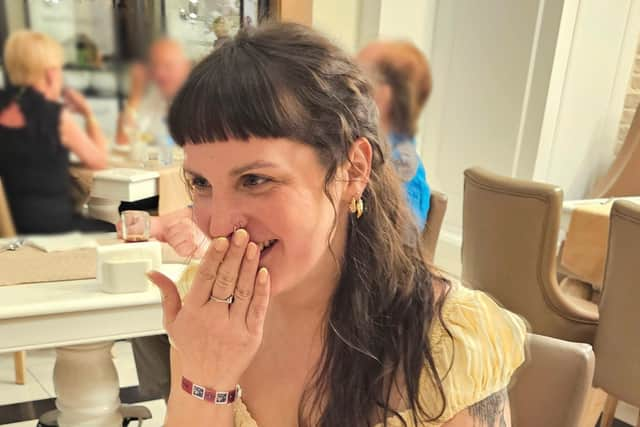
Stacy’s family have previously called for GPS to be used to track offenders. Mr Hunter said Mair should never have been released.
He said: “If this had been committed by somebody to a stranger in the middle of the street, and they tried to strangle them to death, I don’t think they would have been released the next day. So why, because it was somebody that she knew, would it be okay?”
Asked if the Scottish Government was doing enough to tackle violence against women and girls, Mr Hunter said: “No, absolutely not.”
He said there needed to be urgent reforms adding: “I think there needs to be immediate change. Something needs to be done now because there are people out there today being tormented by their partners and that needs to change.
“The initial change is bail conditions. These things are inevitable and there will be more names, but not letting people out to freely do what they please is the first port of call.
“After that we need a register for domestic violence perpetrators so people are more aware of what kind of people they are.”

When asked how much of a risk women will be in if nothing changes, he said: “People are definitely at risk. There will be a risk no matter the changes, these things will continue to happen, but we can make them happen less often.
“We need to remain confident and take [the government’s] word for it. I hope there is change coming.”
Domestic abuse survivor Liz Shanks said she had footage of her attacks but still faced barriers during prosecution: “I had been catching the abuse on CCTV inside and outside the house.
“When I initially got enough courage to report it, I thought it would be really straightforward - here is the evidence, here is the perpetrator, let’s get this done.
“It was anything but, and I discovered how poor the justice system is and how it favours perpetrators.”
She said meeting other survivors at the parliament had been eye opening as they all experienced the similar abusive behaviour.
Ms Shanks said: “It is so frightening. Like any other person, I put my trust in the justice system and automatically believed it will do the best for you, but I went on to realise just how much it favours the perpetrators with things like pleading guilty early leading to a third off their sentence.”

She added: “It is great they are talking about it and putting it into practice is different and more difficult than they can comprehend.
“I would love for the government to pick up on our experiences and see where they can tackle the issue. We had to shout and scream to get results which shouldn’t happen.
“Unfortunately we are seeing the law being changed that makes it easier for perpetrators, and that makes you lose faith in the justice system.
“In my experience, the justice system is no deterrent for domestic abuse and it doesn’t encourage other women to come forward, so we need to change that dynamic.”
Demi Hannaway died in May 2021 after being subjected to physical and mental abuse by Andrew Brown. Police Scotland initially claimed the 23-year-old had killed herself.
Her mother Helen Simpson and her brother John James Hannaway attended the meeting on Tuesday to try and advocate for ‘Demi’s Law’.
Demi’s Law would mean police officers would be legally bound to check for critical red flags if they are attending a scene with a perpetrator who has a history of domestic abuse or coercive control. If these red flags are apparent, a full investigation must instantly begin.
The family said: “Domestic abuse tore our cherished daughter from us, ripped a devoted sister from her siblings, and robbed her two children of a loving mother.
“It is a profound pain our family will carry for the rest of our lives.
“The light she brought to the world shines bright in both her children, who deserve absolute answers, complete clarity, and the systemic change we are here to secure.”
They added: “In our own tragic experience, Demi died in her home on May 13, 2021. With a domestic abuse conviction against her former partner already documented and held on police databases and registers, all 10 of the red flag predictors under Joanna’s Law were present in her case.”

The family added: “There can be no greater degradation than to endure a relationship of physical and psychological torture, only for the perpetrator to be the one who shapes the official narrative of how the beautiful life was lost.
“Abuse is so often a devastating cycle born from unaddressed early trauma. When unhealed pain drives control and ends in tragedy, suicide is left as the official line.
“This cycle must end, and it will only end with the uncovering of truth.
“We cannot allow our children to carry the deepest wounds and inherit a false narrative written by an abuser.
“When abusers realise that they will face the full weight of the Scottish justice system, their attitudes will change. This will in turn save lives.
“Out of the horrific loss of our beautiful daughter Demi, we refuse to let her story end in silence, turning our pain into power to ensure no other family has to walk this path.”
After the meeting Ms Simpson told The Scotsman her daughter had been “failed miserably” by the justice system, and said she hopes the government takes her family’s experience seriously.
She said: “Mr Swinney speaks a good game, so I hope he steps up and does the right thing for women and girls, and the men who can be victims too.”
Comments
Want to join the conversation? Please or to comment on this article.