
Now hard work begins for John Swinney after 'greatest privilege' of being elected first minister
John Swinney has a busy inbox after being elected first minister by MSPs.


John Swinney has been voted back in by MSPs as first minister following the SNP’s election victory but he has a long list of headaches lining up before he’s even got started. Now, the real work begins.
A rare consensus broke out in the Holyrood chamber as part of the theatrics to elect Mr Swinney - with all parties seemingly in agreement that they will spend the next five years working in co-operation. We will see how long it lasts.

Despite Mr Swinney having been at the heart of the SNP government for almost two decades, winning his own personal mandate will be a huge deal and moment for him. No longer will he simply have a reputation as a loyal party man - he will have the chance to shape the future of the SNP in his own name.
Mr Swinney described being elected FM as “the greatest privilege and the greatest responsibility of my life”.
“I promise to work every day to repay the trust that the people of Scotland have placed in me,” he added.
Mr Swinney, who will be officially sworn in as first minister at the Court of Session on Wednesday, insisted he has “ambitious goals” for the next five years - including easing the cost-of-living crisis, protecting the NHS and a focus to “ensure cohesion in our communities and protect the environment”.
But having fallen short of a majority, Mr Swinney will need to work with other parties in Holyrood to get anything done.
He has many options to choose from and it is likely the make-up of parliament actually puts Mr Swinney in a strong position to form alliances with different parties on specific issues.
Anas Sarwar, after his humbling election defeat, was also in a collegiate mood, calling for “a new spirit of co-operation and unity” and politicians to “not just to shout louder when we disagree”.

The Scottish Labour leader pointed to “areas where this parliament has a duty to rise above old habits and take action where we agree to make sure we are getting things done for Scotland”.
Mr Swinney told MSPs he was now “determined to get on with the job”, and there is plenty he will need to grapple with in the coming weeks, months and years.
NHS improvements

The NHS is a well-established political football at Holyrood, particularly so since the pandemic.
Mr Swinney has unashamedly claimed that under the SNP, Scotland’s health service is improving - with some waiting times getting better. However, there is no getting away from the fact that for so many Scots languishing on waiting lists, it will feel like things are not improving fast enough.

The SNP government’s key policy to roll out walk-in GP clinics have been popular with voters, albeit there have been some reported problems.
But Mr Swinney’s strategy to revitalise the NHS in Scotland will require much more work. And this will come as no surprise to Mr Swinney and who he appoints as health secretary in the coming days.
With big waiting time targets not met, including a flagship aim missed just last month that no-one waits longer than a year for outpatient appointments, the SNP government will be looking for real sustained progress on the NHS in order to keep critics at bay.
Budget

Although Mr Swinney and his SNP team boasted during the election campaign about balancing a budget every year, whoever was put into Bute House was always going to have a huge challenge to put Scotland’s finances on a sustainable footing.
The Scottish government is facing down a budget shortfall, combined for both day-to-day revenue spending and for capital projects of around £5 billion. There is simply no extra money.
The choices for Mr Swinney and the lucky person named Scotland’s new finance secretary are pretty bleak - raise taxes despite strong hints at wanting to cut income tax and reform business rates or cut services.
Public sector pay

One of the biggest pressures for Mr Swinney’s government is public sector pay.
SNP ministers used up the majority of the 3-year 9 per cent policy within the first two years and it would appear unreasonable to expect the public sector to accept a deal far below inflation this year with the UK still in the grip of the cost-of-living crisis.
Despite the stark budget pressures, the SNP government will likely need to find extra money to fund pay deals for the public sector - a task much easier said than done.
Manifesto pledges

As all parties did, the SNP made bold pledges during the election campaign.
For Mr Swinney, his flagship policies included legislating to cap certain supermarket food prices and extending a £2 bus fares cap to the west of Scotland.
With no extra money and a need to win support from opposition MSPs to pass any legislation, Mr Swinney will not find it easy to implement his manifesto promises, so will likely need to prioritise effectively.
Council tax

Unsurprisingly, reforming council tax won’t be an immediate priority for Mr Swinney. As history tells us, doing so is no easy or quick task.
The SNP, which has been promising reforms since 2007, has made clear that plans will be brought forward in this parliament, and some options have already been proposed.
Getting a consensus from an extremely divided parliament to reforming council tax looks near-impossible, with any outcome inevitably throwing up some people paying more. After all, the last thing that stretched local authorities need is less funding.
Independence
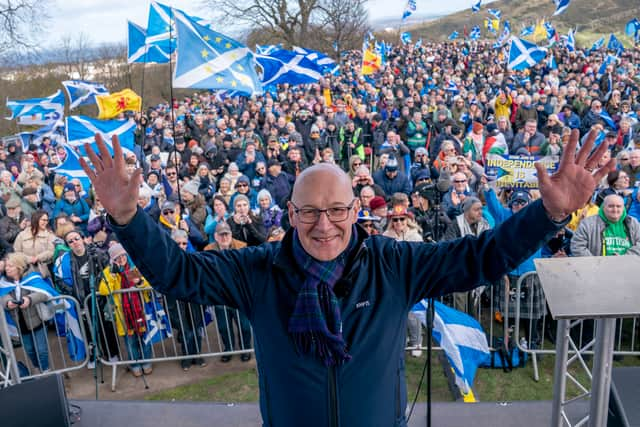
Whatever your view may be on the constitution, Mr Swinney’s manifesto vowed to push forward the case for Scottish independence.
The SNP leader essentially argued during the election campaign that task would be made more difficult without his party securing a majority.
So now Mr Swinney has fallen short of that ambition, the pressure is on from within his party and the wider Yes movement to move the dial on independence, despite the prospect of separation currently looking as unlikely as it has done since the 2014 referendum.
Comments
Want to join the conversation? Please or to comment on this article.