
Next prime minister 'faces battle for heart and soul of the country'
Scottish Labour leader Anas Sarwar said his party must prepare for ‘fight of our lives’
The next prime minister will face a battle for the "heart and soul" of the country, the leader of Scottish Labour has warned, as Andy Burnham looks set to enter 10 Downing Street within weeks.
Anas Sarwar said his party must now prepare for "the fight of our lives" after Keir Starmer quit as Labour leader.
Sir Keir acknowledged he had lost the support of his MPs and promised an “orderly handover of power” to his successor in an emotional statement.
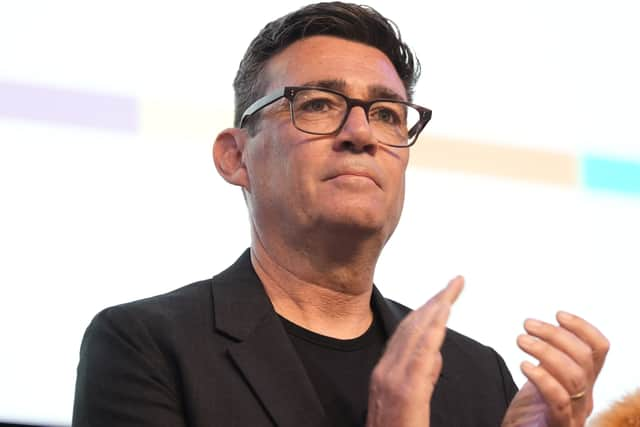

The announcement came just hours before Mr Burnham arrived in Westminster to be sworn in as the MP for Makerfield following his by-election victory.
A coronation for the former Greater Manchester mayor now looks increasingly likely, with his main rival Wes Streeting quickly expressing support for him and urging others to row in behind.
Mr Sarwar told journalists in Glasgow: "If you're asking me what I think the single biggest challenge is that this country faces in the coming years, it's a fight for the heart and soul of our country.
"I think it's as big as that. Do we want to be a country where difference is exaggerated, where people are made to think they should be suspicious of their neighbour rather than look to build relations in their individual communities?
"And is this a country that ends up in the hands of the poison of Reform and a dangerous individual like Nigel Farage?
"And ultimately I think that is the big fight that this country faces - for the heart and soul of our nation.”
Mr Sarwar said there is "a lack of hope in this country", adding: "There is a disengagement and a disenfranchisement across the country, and I think that is actually quite a dangerous and difficult point, I think, for our democracy and also for our country.
"I think fundamentally what we need to see over the next period is a politics that gives hope back to people, brings heart back into our politics and ultimately takes on that big fight.
"Honestly, and I can't emphasise this enough, I honestly believe that we are in the fight of our lives, and I think this is bigger than just the existential reason for the Labour Party.
"I think this is going to be a period where we are fighting for the heart and soul of our country, and Labour has to make sure it's making that fight with heart and with soul."
Mr Sarwar previously called for Sir Keir to quit in February, with many in Scottish Labour blaming the unpopularity of the UK government for the party’s defeat at the Holyrood election last month.
However, Mr Sarwar paid tribute to the Prime Minister on Monday, saying he always believed he was a man of integrity. Sir Keir texted him before his resignation on Monday morning as a courtesy, it is understood.
Mr Sarwar also said he intended to stay on as Scottish Labour leader, despite widespread speculation he will quit after last month’s losses.
“I'm hungry for the fight ahead and I want to play my full part in making sure this country never ends up in the hands of Nigel Farage and Reform,” he said.
If Mr Burnham is the only candidate to receive the support needed to stand in the contest for the vacant Labour leadership, he could become prime minister in mid-July.
However, there are reports allies of Sir Keir are urging Darren Jones, the current Chief Secretary to the Prime Minister, to run against Mr Burnham as a continuity candidate.
Mr Burnham said Sir Keir’s resignation “marks the beginning of a transition”.
He said: “The Labour movement has always been at its strongest when it looks forward with confidence and purpose. This is what we will do from here and we will make sure this transition is a positive process of renewal for our party and our country.”
In chaotic scenes at London’s Euston station, he played down the prospect of calling a snap general election if he becomes prime minister.
“You’re jumping several hurdles ahead there,” he told reporters.
Mr Burnham was formally sworn in as an MP at the start of the Commons business for the day at around 2.40pm, five hours after Sir Keir announced his decision to quit. One MP heckled him, saying “he’s not the messiah”.
Nodding to Monty Python’s Life of Brian, Mr Burnham replied: “Naughty boy.”
He was given a hero’s welcome by Labour MPs, and posed for pictures with scores of his new parliamentary colleagues, including Cabinet ministers and other senior figures.
Mr Burnham’s journey down to London from Manchester had been closely monitored, with rolling footage on news channels of his delayed Avanti West Coast train.
It arrived 21 minutes late and Mr Burnham was met by around 50 journalists, photographers and videographers.
His chances of becoming the next prime minister were boosted by former health secretary Mr Streeting’s backing.
Mr Streeting quit the Cabinet in protest at Sir Keir’s leadership and had indicated he would be prepared to fire the starting gun on a contest to oust him if he did not voluntarily quit.
He said he had spoken with Mr Burnham “at length” and concluded he could “win the fight of our lives against the forces of nationalism”.
He added: “We could spend the summer exaggerating small differences, or we can roll up our sleeves and help him to deliver the change our party and our country needs.”
First Minister John Swinney called for a “fundamental change of direction” from the UK government.
“Sir Keir Starmer has made the right decision,” he said. “It was past time for him to face reality and the fact he now has allows some hope that things can change.
"However, rather than simply a change of personnel, what is needed is a fundamental change of direction. Labour’s time in power has been characterised by broken promises, poor judgement and, ultimately, failure.
"Instead of supporting those who are struggling to pay their bills and put food on the table, the Labour Party has continued the instability and infighting for which Westminster is known, and there seems to be no end in sight.
"People will rightly be frustrated and embarrassed that the UK's sixth Prime Minister in ten years once again failed to get to grips with the challenges facing this country, and there is no reason to believe the seventh will be any different.
"This is no way to govern. Scotland deserves better.”
Sir Keir’s statement followed a weekend spent mulling his future with his family at Chequers, the Prime Minister’s country residence.
In a statement that competed with a protester playing the EU anthem Ode To Joy, he said his party had asked “whether I am best placed to lead us into the next general election”.
He added: “I have heard the answer of my parliamentary party to that question, and I accept that answer with good grace.”
Sir Keir said he would ask Labour’s ruling National Executive Committee (NEC) to set out a timetable that would see a new leader in place by the time Parliament returns from its summer recess on September 1.
But the anointing of a new leader could come much sooner, with nominations closing on July 16. Potential candidates have until then to amass the support of at least 81 Labour MPs.
If Mr Burnham is the only candidate to meet that threshold he will become leader without a vote of the membership and is likely to become prime minister on either July 17 or 18.
Sir Keir’s decision to quit means the UK will now have its seventh prime minister in a decade.
Comments
Want to join the conversation? Please or to comment on this article.