
AI to unlock 'billions of pounds of investment and thousands of new jobs' in Scotland

Scotland to be epicentre of 'next great industrial leap', UK Government says, as AI Growth Zone confirmed
Scotland is poised to be at the centre of “this generation’s next great industrial leap” with billions of pounds of investment and thousands of new jobs created after the UK government earmarked an AI Growth Zone to be established north of the Border.
The country's booming offshore wind industry is set to power the strategy - which could see data centres and other crucial technology infrastructure built.

The UK government has pointed to Scotland's access to wind, hydro and solar power sources making up a renewable energy capacity of 17.6 GW – enough to power more than 10 million homes .
Labour UK ministers see it as an ideal base to help drive forward the UK's AI agenda, but other emerging sectors, including low carbon hydrogen are hoping to take advantage of an excess in renewable electricity being generated.
The Scottish Government has welcomed the announcement and it is understood that devolved enterprise agencies north of the Border are working with partners that are seeking to support credible investment proposals and ensure Scottish content can be maximised in the construction and operation of the facilities.
AI Growth Zones were unveiled by the UK government in January – and will serve as dedicated hotbeds for AI that speed up the rollout of vital infrastructure like data centres which are crucial to the technology’s development.
READ MORE: New supercomputer for Scotland and funding for Acorn Project confirmed in Spending Review
Concerns have been raised about the scale-up of AI - including around jobs, security, reliability and the sheer amount of energy required to power AI data centres amid the climate crisis when energy demand will need to be reduced.
The UK government believes new data centres will allow researchers and businesses to process huge amounts of data to deliver the next generation of breakthroughs and innovations.
It is hoped the technology can assist efforts to find new ways to treat and cure diseases, speed up how conditions like cancer can be diagnosed - while there are even ambitions to use AI to help in the fight against climate change.
AI is being harnessed in Scotland to develop a 25-minute skin cancer diagnosis test - with artificial intelligence projects around skin and breast cancer diagnostics being pushed forward.
The rollout will mean that permanent, high-skilled jobs alongside construction roles will be created with the UK government hoping to scale up the sector at pace.
In a further boost for the Scottish economy, Edinburgh will be home to the UK’s first national supercomputing centre after Chancellor Rachel Reeves announced up to £750 million of funding for the project in last month’s Spending Review.

The centre, to be based at Edinburgh University, will work as a dedicated centre of expertise, with individual sites hosting everything from large data sets and cutting-edge processing power, to linking up researchers and academics with leading talent in their region.
It is hoped the new supercomputer will give scientists from across the UK the capacity needed to carry out research – including related to personalised medical treatments, making air travel more sustainable or modelling climate change.
The supercomputer plan was initially shelved by Prime Minister Sir Keir Starmer’s Labour government last August amid reported concerns the project was not focused enough on artificial intelligence. That move angered SNP First Minister John Swinney who claimed projects in Scotland were being neglected in favour of investment projects south of the Border.
The supercomputer will work alongside an AI research resource (AIRR), a network of the UK’s most powerful supercomputers, that were built to bolster scientific research.
The AIRR is already being used to research Alzheimer’s vaccines and treatments for cancer by simulating how drugs work inside the body and ‘testing’ millions of potential drugs virtually to speed up the creation of new medicines.
UK Science, Innovation, and Technology Secretary, Peter Kyle, said: “From the shipyards of the Clyde to developments in steam engine technology, Scottish trailblazers were central to the industrial revolution.

“AI is this generation’s next great industrial leap, so who better to help drive that change than a nation with innovation hardwired in its DNA.”
He added: “We’ve set out an ambitious plan to cement our position as a global leader in AI, with Scotland set to play a key role – unlocking fresh investment and new opportunities.
“That’s how we’re putting our plan for change into action.”
Scottish Secretary, Ian Murray, said the announcement was “a landmark moment” that “will place Scotland at the forefront of the UK's technological revolution”.
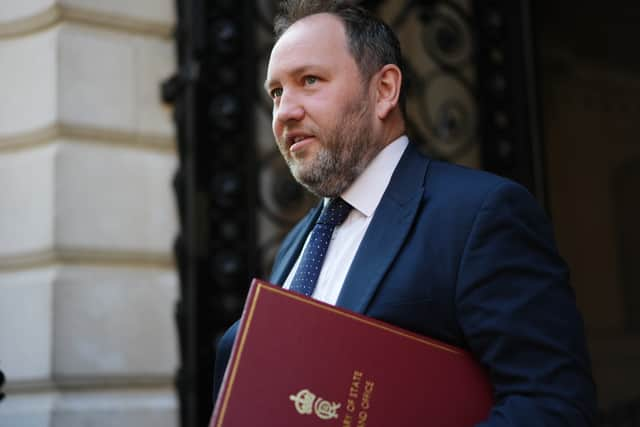
He added: “The up to £750 million investment in Edinburgh's new supercomputer also places Scotland at the cutting edge of computing power globally.
“This will see Scotland playing a leading role in creating breakthroughs that have a global benefit - such as new medicines, health advances, and climate change solutions. This is the plan for change – delivering real opportunities and economic growth for communities across Scotland."
The Labour plans form part of the new compute roadmap, a strategy aimed at reducing reliance on foreign processing power and transform the UK’s public compute capacity.
By 2030, the UK government expects this capacity to increase to 420 AI exaFLOP – the equivalent of one billion people spending 13,316 years doing what the system will do in one second.
To support the plans, researchers, academics and tech bosses have been brought together to develop an AI science strategy to be published in the autumn.
The group includes Google DeepMind vice-president Pushmeet Kohli, vice-president of the Royal Society Alison Noble and chairwoman of the Engineering and Physical Sciences Research Council Charlotte Deane.
Ms Reeves said the plans would “transform our public services, drive innovation and fuel economic growth that puts money in people’s pockets”.
SNP Business Minister, Richard Lochhead, said the Westminster announcement was “welcome”, adding that Holyrood will work “collaboratively with the UK government to make sure “Scotland is at the heart of this globally-important industry”.

He said: “With our world-renowned talent for research, innovation and ingenuity Scotland is perfectly placed to capitalise on AI’s rapid growth and be a supplier of this transformational technology, not just a consumer.
“We are also home to vital supporting and enabling infrastructure - from good quality digital connectivity to the abundant renewable energy supplies needed to power the huge demand from computer processing in a sustainable way.”
“The UK government’s confirmation that an AI Growth Zone and national supercomputing centre will be established in Scotland is welcome”, he added.
“It will help unlock new opportunities for businesses, researchers, citizens and communities—supporting high-quality jobs through economic growth and boosting productivity.
“The Scottish Government and our enterprise agencies have been working with prospective Scottish AI Growth Zone projects to support high quality bids into the national selection process being led by the UK government.
“Once this process has completed, we look forward to working collaboratively with the UK Government alongside partners and stakeholders to ensure the AI Growth Zone is a success and ensure Scotland is at the heart of this globally-important industry.”
Comments
Want to join the conversation? Please or to comment on this article.