
SNP 'keeping communities in the dark' over whether onshore wind expansion on the cards
The Scottish government has not set out whether it will continue to scale up onshore wind capacity after 2030
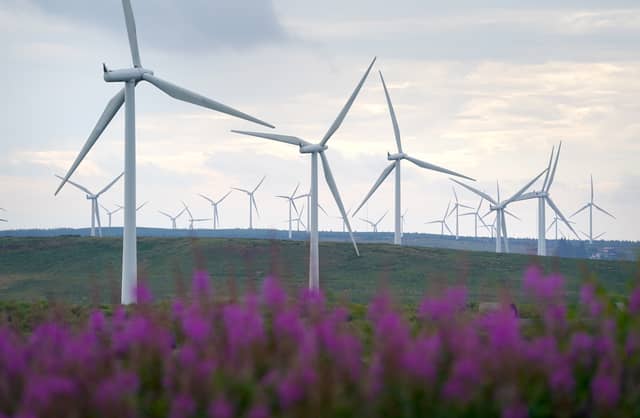


SNP ministers are under pressure from Scotland’s renewables industry to set out a “long-term future” for onshore wind amid fears the government is in “hiding” over whether to boost more turbines to be built across the countryside.
The Scottish government has been accused of keeping “concerned communities in the dark indefinitely” about what the future of onshore wind will look like, with concerns raised SNP ministers are not being “upfront” about their strategy for the coming decades.

With opposition to pylons and other energy infrastructure from some communities and some political parties moving away from a consensus in support of Scotland’s net zero strategy, fears have been raised that communities could lose out with a potential further expansion of onshore wind farms.
Payments by energy developers to local groups for so-called “community benefits”, of up to £6,000 per MW of onshore wind capacity, remain voluntary under Scottish government rules, while planning processes deal with specific applications.
READ MORE: Swinney calls on Burnham to review Ming Yang's controversial wind factory plans blocked by Labour
Scotland has a capacity of 10.7GW of onshore wind power, compared to just 4.3GW for the more high-profile offshore wind. But SNP ministers, who have not published a full energy strategy in nine years, have set a target to deploy 20GW of onshore wind by 2030.
Whilst the Scottish government has pledged to ramp up offshore wind capacity tenfold to 40GW of capacity by 2040, no such commitment has been made for onshore wind.
The Scottish government has acknowledged that following its flagship ScotWind and Innovation and Targeted Oil and Gas (INTOG) contracts, “no further offshore wind leasing rounds are planned in the near term”.
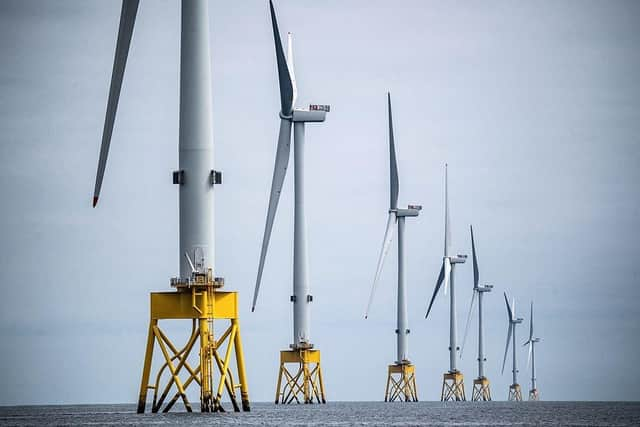
But industry chiefs have appealed for the future of Scotland’s onshore wind sector to be mapped out by SNP ministers.
The appeal comes after research commissioned by the Scottish Onshore Wind Development Forum, conducted by Aurora Energy Research, found that billions of pounds could be saved for system costs if onshore wind is prioritised by SNP ministers.
The model, which still assumes a substantial build out of offshore wind, with an “onshore priority pathway” was found to lower the average total system costs by around 6 per cent, approximately £5 billion a year between 2030 and 2050. This reduction was driven by a 21 per cent reduction in policy costs and 13 per cent reduction in balancing costs.
Colin Palmer, director of policy for onshore and offshore delivery at Scottish Renewables, said: “Onshore wind is a proven technology and serves as the backbone of our energy system, providing energy security for households and businesses.
READ MORE: New wind farm profit figures show Scotland's 'gross policy failure' in energy, communities warn
“Scotland has an established onshore wind fleet, supporting more than 16,800 jobs and delivering real value through local community benefit schemes.”
He added: “With 2030 fast approaching, it is vital that we have clarity over the sector’s long-term future. The Strategic Spatial Energy Plan, currently under development, will help guide our energy system beyond 2030 and should maximise Scotland’s renewable energy potential across all technologies.
“For onshore wind, that means creating the conditions for continued deployment while also seizing the significant opportunity to repower existing sites, ensuring Scotland gets the full value from its renewable energy resources.”
Scottish Labour energy spokesperson, Daniel Johnson, said: “Once again the SNP is trying to play both sides and kick a serious issue into the long grass.

“The expansion of onshore wind farms is a chance to deliver quality jobs and strengthen energy security, but these projects need to happen with communities rather than to them.
“The SNP needs to stop hiding from this issue and set out its plan for onshore wind and energy more broadly.
“Crucially, we need to see a real plan to ensure this investment benefits local communities and delivers jobs and energy security for Scotland.”
Scottish Conservative energy spokesman Liam Kerr, said: “SNP ministers cannot keep concerned communities in the dark indefinitely about potential plans for further windfarm developments.

“Many people already believe their local areas have been saturated with these projects and will want the nationalists to be upfront if they are being earmarked for more.
“While wind energy will have a crucial role to play in meeting Scotland’s future energy needs, John Swinney cannot put all his eggs in this basket.
“If we are to protect Scotland’s energy security, then he should also give his backing to new drilling in the North Sea and new nuclear power immediately.”
The community concerns come as the UK government announced that communities close to electricity transmission projects will be eligible for a £250 discount on electricity bills. Up to 160,000 households could be eligible for the cut to energy bills across the UK, with the majority of projects in Scotland.
The Scottish government’s onshore wind sector deal, agreed in 2023, stated that the industry will “work with the government, agencies and stakeholders to ensure a balance is struck between the need for increased onshore wind capacity and the impacts that onshore wind can have on land use and the environment”.
It added that “balancing the need for more wind farms with the safeguards defined” in the latest national planning framework “will be a crucial aspect of achieving the 2030 onshore wind ambition”.
SNP energy minister, Stephen Gethins, said: “The majority of renewable electricity generated in Scotland comes from onshore wind. It is a cheap and reliable source of power, with Scotland leading the way in deployment and support across the UK.
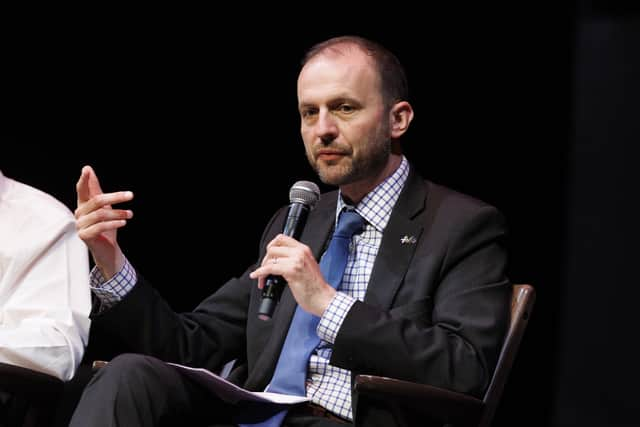
“The Scottish government has made progress on key commitments in the onshore wind sector deal, such as ramping up resourcing of the energy consents unit and launching the national planning hub for renewable energy.”
He added: “We are ensuring that projects benefit communities and businesses, delivering economic growth and jobs as we increase capacity in the coming years.
“It is vital that Scotland maximises the opportunities from the energy transition and we will deploy every lever we hold to do this.”
Comments
Want to join the conversation? Please or to comment on this article.