
Scottish Labour MP lays into Keir Starmer's 'race to the bottom' as welfare cuts pressure mounts
A Scottish Labour MP has refused to back Keir Starmer leading the party into the next general election.


An outspoken Scottish Labour MP has accused Sir Keir Starmer of continuing a “relentless race to the bottom” with proposed benefit cuts as he refused to back the Prime Minister leading the party into the next general election.
The pressure comes as Sir Keir said he took “ownership” of the internal row engulfing his leadership. The Prime Minister has attempted to take pressure off his chief of staff Morgan McSweeney, who is facing accusations of driving the UK government’s policy direction rather than the Labour leader.
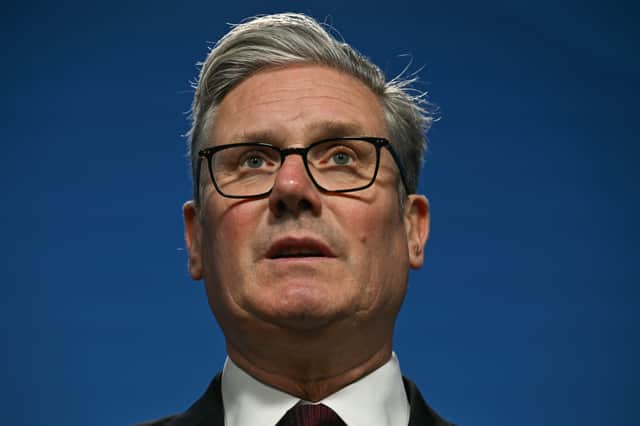
Brian Leishman, Labour MP for Alloa and Grangemouth, is one of the key rebels piling pressure on Sir Keir to reverse his controversial cuts to disability benefits.
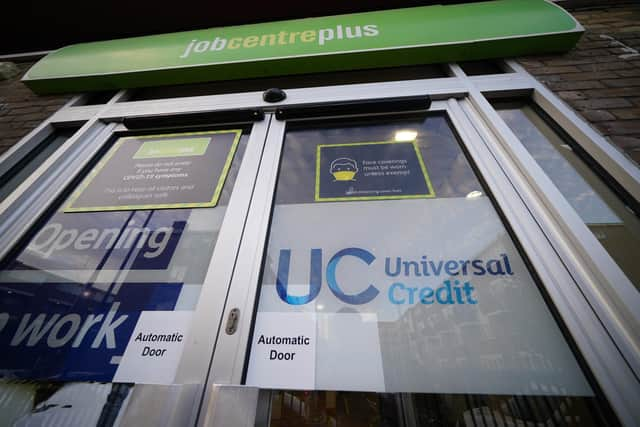
Original plans restricted eligibility for Pip and cut the health-related element of Universal Credit. To try and see off the Labour rebellion, the changes to Pip will be implemented in November 2026 and apply to new claimants only, while all existing recipients of the health element of Universal Credit will have their incomes protected in real terms.
READ MORE: Welfare cuts: SNP accuse Sir Keir Starmer of creating 'two-tier disability system' with U-turn
The policy is devolved and will not apply in Scotland, but Holyrood’s funding for social security is dependent on how much UK ministers allocate to the policy area.
Asked by the BBC if the revised plans will pass in the Commons on Tuesday, Mr Leishman said: “I hope not.”
Rebels still a threat to Starmer
He added: “I’m certainly working to make sure that it doesn’t. Quite simply, the concessions that were made at the tail end of last week, they are not enough.
“The sensible thing to do, the common sense thing that the government should do, is to withdraw the Bill and consult with organisations and charities that are experts in the field - come back to the table with a proper welfare system.”

Mr Leishman said “some have been placated by the compromises and the concessions”, but he warned there was “a healthy amount of us, a big cohort of MPs, who feel this [legislation] should be withdrawn”.
He said: “Behind the scenes, there’s conversations being held all the time. My gut reaction would be there is enough of us to think again.”
MP criticises cuts
Mr Leishman, who has been the only Scottish Labour MP to openly criticise Sir Keir, insisted “what we have seen over the last decade-and-a-half has been chronic austerity that has really impoverished some of the most vulnerable people in the country”.
He added: “The notion that we solve these austere cuts with more cuts, that’s frankly ridiculous. Instead of this relentless race to the bottom that cut after cut after cut ultimately leads to and decimates society, what we’ve got to do is look at how we raise revenues.”
READ MORE: UK welfare cuts: The 9 Scottish Labour MPs set to rebel against Sir Keir Starmer's government
Asked if Labour was the party for him, amid speculation former Labour leader Jeremy Corbyn could set up a breakaway party, Mr Leishman said: “I’m proud to be a Labour party member.
“The Labour party really is the most likely vehicle to achieve a much more equitable and fairer society. I have to try and shift the Labour party to where I think it should be.”
Mr Leishman, who said he was not proud of Labour’s first year in government, was asked if Sir Keir was the right person to lead the party into the next general election.
He said: “I’m not interested in the personnel. I think the Prime Minister has shown that degree of honesty that I think the electorate will appreciate. He admits he’s made mistakes. One year into a five-year term, we’ve got to do better.”
The MP stressed the situation was “not irretrievable for him [Starmer]”, but warned backbench MPs “should be consulted much more on policy” going forward.
He said: “The next election is four years away and we’ve got to see demonstrable change in culture from the government.”
READ MORE: Chancellor Rachel Reeves told to abandon 'austerity' welfare cuts in spending review by the SNP
Amid pressure on his chief of staff that he has misread the mood of Labour backbenchers over the controversial welfare reforms, Sir Keir told the Sunday Times “all these decisions are my decisions and I take ownership of them”.
He said: “I do not talk about staff and I’d much prefer it if everybody else didn’t.”

The Prime Minister also told the paper that allegations in a book by Patrick Maguire and Gabriel Pogrund, Get In, that Mr McSweeney was setting the government’s agenda were “total b*******”.
Sir Keir has hit back at allegations his government’s agenda is not in tune with traditional Labour values. “I’m sorry, that is a charge I do not accept,” he said.
Further concessions possible
“We settled the public pay dispute. We’ve got breakfast clubs being rolled out in 750 schools. We’ve announced free school dinners today for children from families on Universal Credit. That’s 500,000 children who will now get free school meals.
"We’ve just re-nationalised the railways. We’ve set up the first publicly owned company in I don’t know how long, in GB Energy. You name it, each one of the things I’ve just run through is core Labour value. I don’t accept that charge.”

Health Secretary Wes Streeting has signalled confidence the UK government will win a crunch vote on welfare reforms on Tuesday, but did not rule out further concessions.
Mr Streeting said the changes “have put us in a much better position” and give “peace of mind” to those in receipt of personal independence payments.
“When things change and evolve as you bring in new systems, it does change sometimes from group to group, student finance being an example,” he told the BBC’s Sunday With Laura Kuenssberg programme.
He said “we’ve got to listen” when asked if further concessions could be made on Pip.
Unite general secretary Sharon Graham has called for the government to start from scratch on the Bill and said the latest plans were “divisive and sinister”.
“Creating a two-tier system where younger disabled people and those who become disabled in the future will be disadvantaged and denied access to work and education is morally wrong,” she said.
Comments
Want to join the conversation? Please or to comment on this article.