
SNP handed stark 'wake-up call' over frittering away £100m ScotWind revenues to balance books



Ministers have used more than £100m of ScotWind funds to balance its annual budget and have anticipated using a further £507m of the revenue by 2031
SNP ministers have been handed a stark “wake-up call” over frittering away more than £100 million of ScotWind revenues to balance the books - amid accusations of an “aversion to transparency” over the flagship energy policy.
John Swinney has been told to draw up a long-term plan for his flagship energy policy after a damning investigation by Scotland’s spending watchdog.

The Scotsman revealed in February that Audit Scotland had launched a probe into the finances around the ScotWind projects, with the findings highly critical of SNP ministers for a lack of transparency.
The investigation has also warned that Scottish government ministers plundering ScotWind funds to plug budget gaps risks “weakening budgetary control” and could exacerbate Holyrood’s fiscal crisis as Mr Swinney seeks to reform public services.
SNP ministers were criticised for “selling off Scotland’s seabed on the cheap” after leasing areas for offshore wind development, through Crown Estate Scotland, for a total of £755m.
The leasing round offered buyers capped prices for the option to develop the seabed - rather than maximising immediate returns through an open auction. Officials chose this strategy in an attempt to increase the chance of securing long-term lease payments, but no single business case for the ScotWind leasing round was ever produced.
The auditor general has now warned it will not be known whether this strategy has delivered value for money until it is clear how many projects are constructed, with alarm raised at the “high risk and reward approach”.
Already, Shell has handed back one of the ScotWind leases - with supply chain delays throwing the sustainability of other ScotWind projects into doubt.
READ MORE: Warning Scottish floating wind projects could be 'delayed or cancelled' under energy plan pressure
The Scottish government initially insisted that the revenues would be used to further the nation’s journey to net zero. But SNP ministers have been forced to use the funding pot to balance the books, despite the funding being a one-off.
Ministers have used more than £100m to balance its annual budget - £96m in option fees and £7m in interest - and have anticipated using a further £507m of the revenue by 2031. Another £80m from the fund is forecast to be used to support the 2026-27 budget while hundred of millions of additional money from the pot has been earmarked in previous years, but not spent.
In its report, Audit Scotland has warned that “using ScotWind money in this manner contributes to the wider financial management challenge facing the Scottish government as it looks to address fiscal sustainability and reform pressures”.
It added: “Placing reliance upon offshore wind funding means that the budget year starts in a non-recurring balanced position. This can have a significant organisational impact, potentially weakening budgetary control.”
If the proposed ScotWind projects become operational, it is estimate that between £3m and £4m could be tallied up as rental income per GW per year.
READ MORE: Flagship North Sea floating wind projects stall as SNP warned not to 'squander' renewables potential
The SNP manifesto, ahead of May’s Holyrood election, pledged to set up a ScotWing wealth fund.
Audit Scotland has warned that “ministers need to be transparent about its purpose and set out how it will operate”.
Auditors have also raised concerns about the set-up of the ScotWind projects, warning that the 10-year agreements not due to expire until 2032, means “the size of the geographical footprint of the developments offered under the ScotWind leasing round has limited the opportunity for further larger-scale leasing rounds to take place”.
Stephen Boyle, auditor general for Scotland, said: “Crown Estate Scotland and the Scottish government took a high risk and reward approach to the ScotWind leasing round. Whether that decision represents value for money will be determined in the coming years.
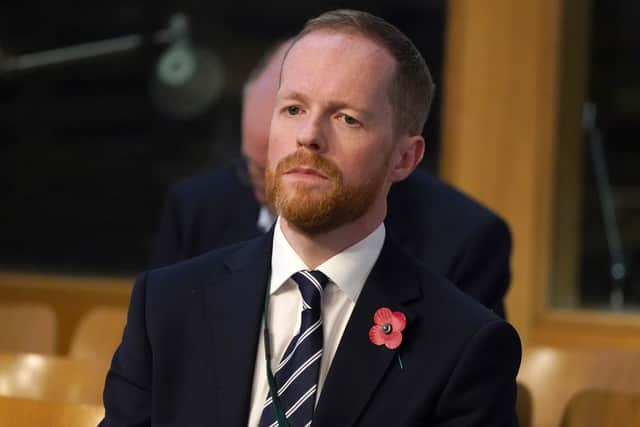
“If developers sign long-term leases before their option periods end, then annual payments will continue to benefit Scotland for the next 60 years.”
He added: “However, if they give up their options the capped option pricing model will result in limited wider economic benefits and substantially reduced public revenues.
READ MORE: Swinney calls on Burnham to review Ming Yang's controversial wind factory plans blocked by Labour
“What is now important is that the Scottish government is much more transparent about their plans for how the ScotWind funds will be used across this parliamentary term and beyond.”
Scottish Labour energy spokesperson, Daniel Johnson, said: “ScotWind was a huge opportunity for our economy and our energy industry, but the SNP’s management has been shambolic from day one.
“The SNP sold off our seabeds on the cheap and then spent years frittering away the proceeds plugging their own budget gaps.”

“With hundreds of millions of pounds on the table, the SNP must set out how it will put this money to good use.”
Scottish Conservative energy spokesperson, Liam Kerr, said: “This report must act as a wake-up call for SNP ministers.
“It is typical of their aversion to transparency that independent auditors have now demanded they are much more open about their ScotWind programme.

“They have repeatedly used these funds to plug other gaps in Scotland’s finances which are facing a £5 billion blackhole thanks to two decades of SNP economic mismanagement.
“John Swinney needs to upfront about his plans otherwise his ScotWind Wealth Fund election pledge will look like another headline grabbing policy that will not be delivered.”
Energy Minister Stephen Gethins said: “ScotWind will bring in an estimated £80-110 million in annual income over the 60-year lifetime of the project, with the report also pointing to £29.1 billion of commitments so far in the wider supply chain.

“This vindicates the decision to focus on project delivery and attracting investment, rather than upfront revenues. This approach will help ensure sustainable economic value through future employment, energy security and public revenues.
“ScotWind was designed to secure long-term economic benefits for Scotland and this report makes clear that more than £755 million of fees have been generated from this opening leasing round alone.
“I recognise the importance of providing clarity on how offshore wind revenues will be managed, and we will continue to do so through our annual budget setting process.”
A spokesperson for Crown Estate Scotland said: “The report recognises both the significant sums raised for public spending and the long-term benefits that will flow from offshore wind developments.
“We are pleased that the Auditor General has highlighted the rationale behind the structure of the ScotWind leasing round. The report makes it clear that although there was some risk attached to the approach, there are considerable long-term economic benefits to be gained, because of the decisions that were taken by Crown Estate Scotland and the Scottish government when the leasing round was designed.”
Comments
Want to join the conversation? Please or to comment on this article.