
Exclusive:UK energy transition 'lagging behind global rivals' amid North Sea row
A global energy expert has warned an obsessive row over supply of power from the North Sea is risking the UK lagging behind other global powers in the transition

The general secretary of the World Energy Council has warned the UK’s transition is at risk of lagging behind other parts of the world - with politicians and industry stuck in a row over the future of North Sea oil and gas.
The stark warning comes as the organisation appeals to the UK to sign up to the platform, which was founded by Scottish pioneer, Daniel Nicol Dunlop, more than 100 years ago.


Speaking to The Scotsman after delivering the Prosper annual lecture in Aberdeen, chief executive Dr Angela Wilkinson argued that there is “an opportunity to rise above the political fractured lines that we see in UK policy”.
She added that “there's an opportunity to look beyond the narrow focus on supply”, with the debate largely pitting traditional oil and gas against renewables in the North Sea.
READ MORE: Climate advisers lash out at Reform and Tories' 'slogan-based' net zero opposition ahead of election
“And there’s an opportunity to lead and learn with other regions about what's going on”, she added.
“There are things that are happening here that other people would like to know about.
“And there are things that are happening in the rest of the world that would really help the UK learn about how to sharpen its policies.”
Since Labour formed the UK government in 2024, the relationship between politicians at Westminster and the fossil fuels and renewables industry in the North Sea, has been one of hostility.
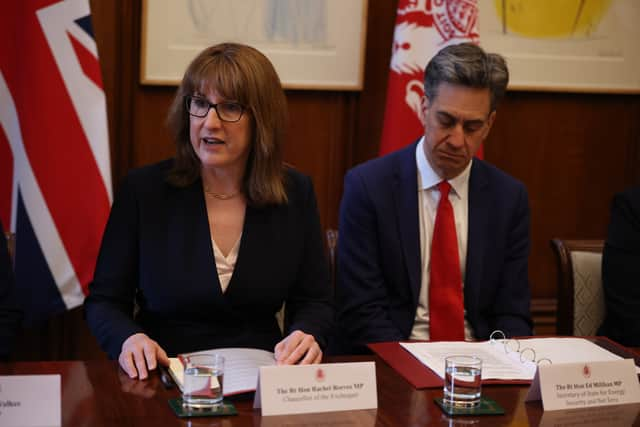
The industry has vented its frustration over the Labour government’s energy profits levy, introduced by the Conservative administration during the energy crisis and not due to be reformed permanently until 2030.
“Oil and gas will always cry when you ask them for money, but I don't think it's the profit levy that gets to them,” Dr Wilkinson said.
“I think it's the changing of the rules all the time that creates investor uncertainty, that means that oil and gas can't stay in this country and will go abroad. Because that's where they can get investment from, that's the reality.
“It's not about the government being mean to them. They're arguing about the wrong thing. It's not the amount of the levy, it's the uncertainty and the variability of it, that's creating challenges for them.”
Dr Wilkinson said that in the UK North Sea, renewables is simply seen as “just wind and solar,” despite Scotland holding opportunities over other forms including tidal.
“Renewables in the rest of the world is a whole plethora of different technologies,” she said.

“We seem to be looking inward very narrowly, and actually there's no space to breathe here, there's no space to raise a challenging and constructive debate about disagreement.
“If you don't have a constructive debate about disagreement, how do you learn?”
The expert warned that “the energy transition, globally, is moving into a new phase”.
“And it's a really, really tough phase that it's moving into, in a new era of fragmentation and games,” Dr Wilkinson added.
“One hundred years ago, it was a Scot that founded the World Energy Council, Daniel Nicol Dunlop, on a mission of energy for peace.”
Asked whether the UK and Scotland were accelerating the transition fast enough amid the climate crisis and need for economic transformation, Dr Wilkinson said: “I think the pace of energy transitions globally is being accelerated by countries like China, and by Southeast Asia and by things that are happening in Japan and the Middle East.
“Ironically, it’s not being accelerated by things where conventional leadership, policy leadership was. The UK was known and had a reputation for its remarkably flexible and diverse energy policy. That's no longer the reputation of the UK internationally, which is a pity.
“When I used to go overseas people used to talk with great admiration of UK energy policy. I don't hear that so much these days so that's the reality check.”
She added that “the energy transition is one of the most misunderstood politically mischievous and contested phrases in the world”.
“It absolutely means different things in different places.”
Dr Wilkinson said that observing UK energy policy “I don't hear the growth agenda”.
“I hear a decarbonisation agenda and that worries me”, she added.
“I think the renewables agenda has met the social energy agenda in different ways and different parts of the country. And this is difficult.
“The conversation in the UK seems to have got stuck on politics. Places like Aberdeen know that energy transition isn't an abstract policy debate - it’s a lived reality by communities, by workers, by companies and by regional development agencies.
“You have to help people understand what does energy transition mean in their lives.”
Dr Wilkinson has argued that the UK signing up to the World Energy Council could take the politics and the heat out the increasingly polarised political debate around the future of the North Sea.
“When Daniel Dunlop started this wacky idea, 100 years ago, your Scottish visionary, his idea was that you actually have to have a leadership ecosystem that helped keep itself honest”, she said.
“You couldn't let it be passed by for profit or by government only. You actually have to hold the space between government, business society and academia. In posh language, it's called trilateralism.”
In 2022, the World Energy Council hosted its "Energy Trilemma Summit" in Aberdeen, after the proposed event in St Petersburg could not go ahead - with the Scottish government stepping in to help.
Dr Wilkinson stressed that the big blind spot in the UK’s politicised energy debate is “fiscal transformation”.
“Isn’t that the hot potato that no government by itself in one single term of government can manage that actually, we're going to have to redesign the tax system to bring this transition to scale?
“And that's a political hot potato. You can't have it in the space of politics, you've got to put it into the World Energy Council space.
“That's not a political decision, it's not a for profit company decision space. For profit dominates supply, for profit dominates demand in this country.
“You’ve got to have a space like the World Energy Council to bring different leadership and to bring common good conversations to a better level and better standard.”
Comments
Want to join the conversation? Please or to comment on this article.