
Ukrainian super sponsor scheme permanently closed due to Scottish housing shortages

Around 30,000 Ukrainians found sanctuary in Scotland after the illegal Russian invasion - but finding housing was one of the biggest challenges faced.
Scotland’s Ukrainian super sponsor scheme has been permanently closed as a lack of housing has made the scheme “unsustainable”.
Since Russia’s illegal invasion of Ukraine in 2022, 30,000 Ukrainians have found sanctuary in Scotland, including over 21,000 through the Scottish Government’s super sponsor scheme.
This scheme was part of the UK’s wider Homes for Ukraine scheme, and meant those displaced from Ukraine could select the Scottish Government as their visa sponsor and travel immediately.


A new report into the super sponsor scheme has now been published, which praised the Scottish response as “ambitious and unprecedented in scale, delivering a rapid and compassionate programme that provided safety to tens of thousands of displaced people”.
However, the report also said the scheme has now permanently closed because it is “no longer sustainable in its current form”.
The report said challenges included “pressures on housing, public services [and] budgets”, and added: “It therefore recommends that the scheme should be closed to new applications, enabling the continued focus on longer-term integration outcomes for displaced Ukrainians already in Scotland.”
It said: “Delivering a response of this scale was challenged by limitations in the key areas of surge capacity for the initial emergency response as well as housing, funding and data systems.
“In particular, the availability of longer-term accommodation within a wider housing system under pressure emerges as a defining constraint on sustainable resettlement.
“A key lesson is the necessity of aligning early decisions about arrival numbers and scheme design with longer-term needs, system capacity and adequate resources.”
It also said finding temporary accommodation when Ukrainians first arrived in Scotland was “one of the most significant challenges” as “uncapped arrival numbers grew beyond initial projections”.
At the peak, over 30 hotels in Edinburgh were being used to house displaced Ukrainians, which had “significant implications for the city’s temporary accommodation system”.
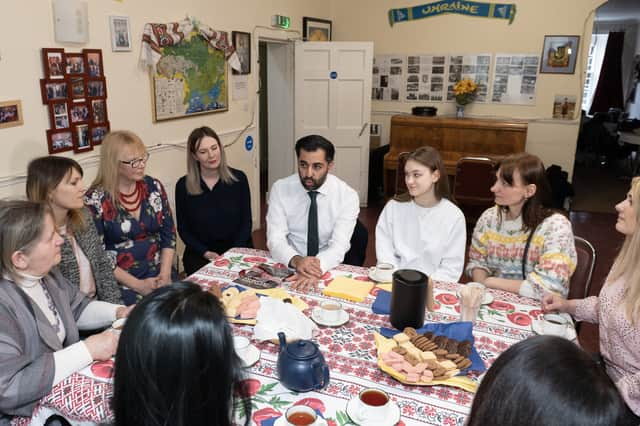
Ukrainian refugees were arriving in Scotland “at a time when the housing system was already experiencing considerable challenges” and this “reflected national shortages”.
Officials at Edinburgh Council said the use of the MS Victoria and MS Ambition to house Ukrainian refugees “saved us from an accommodation point of view” and directly prevented Ukrainians from becoming homeless.
Cosla and the Scottish Refugee Council both said there was a “strong political will to show up for displaced Ukrainians”, but there was “very little time to understand and consult partners on housing capacity”.
As well as better long-term housing options, the report also said there needs to be better access to English language classes and employability services if Scotland ever creates a super sponsor scheme again.
The report also noted how local government staff were “reassigned at pace, new teams were created in real term and colleagues with distinct policy responsibilities had to collaborate immediately”, but it was often “difficult” to get the right people together quickly enough.
One senior official said the early weeks were “hand to mouth operations delivered by a very small number of people”, which was “very challenging for the staff involved”, many of whom had no crisis response experience.
The UK Home Office also said it had concerns about “possible visa fraud” with the Scottish super sponsor scheme, as well as concerns that not all hosts were staying in Scotland themselves.
The super sponsor scheme had been paused since July 2022 after a “sharp increase” in applications.
Andrii Madzianovskyi, the Ukrainian Consul in Edinburgh, said: “[This] report highlights the extraordinary act of compassion and solidarity seen in Scotland’s response to those fleeing Russia’s full-scale invasion of Ukraine.
“The warmth and generosity shown to more than 29,000 Ukrainians represents an unprecedented triumph of humanitarian protection and values-driven diplomacy.
“Looking ahead, the Consulate remains committed to protecting the rights, safety and wellbeing of Ukrainians in Scotland while continuing to work closely with the Scottish Government, local authorities and public services.
“We remain committed to helping shape practical, long-term solutions that benefit both displaced Ukrainians and the communities that have welcomed them.”
Equalities Minister Simita Kumar added: “This review highlights much that we can be proud of.
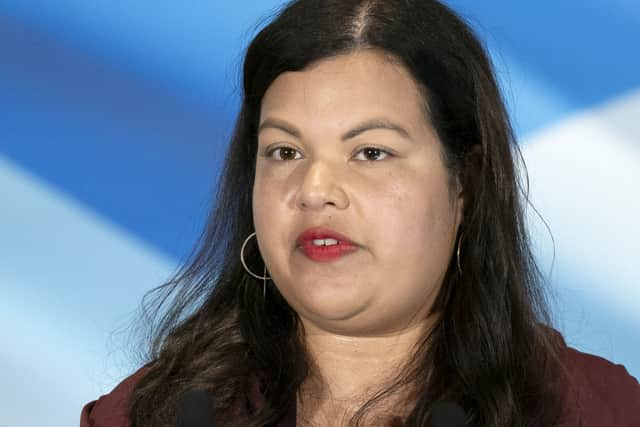
“It shows that the Scottish Government, along with partners, moved quickly to help Ukrainian people fleeing Russia’s illegal war to come to Scotland and find refuge.
“I am deeply grateful to individuals, communities, organisations and public services that responded with such generosity, compassion and determination. The scale and speed of the response was extraordinary, and it reflected the very best of our country.”
She added: “The review identifies important lessons - for example in relation to planning, working with partners and operational delivery - that we can build on in future.
“Its recommendations will help shape how we respond to future humanitarian crises and support people who come to Scotland seeking safety.”
Comments
Want to join the conversation? Please or to comment on this article.