
What is the UK Government's Warm Homes Plan and will it bring down my bills?
The UK Government has called the programme “the biggest homes upgrade plan in British history” and said it will lower people’s energy bills.
The UK Government announced its £15 billion warm homes plan this week.
It has called the programme “the biggest homes upgrade plan in British history” and said it will lower people’s energy bills.
But the plan only impacts England - with Scotland given its share of the money to spend as it wishes.
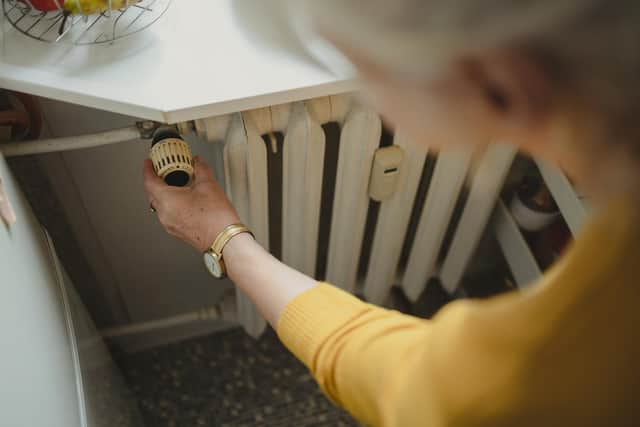

The UK Government has urged the Scottish Government to follow suit. But the SNP has hit back, saying Labour has given them a lack of detail.
But what does this mean for ordinary householders who are paying high energy bills?
What is the Warm Homes Plan?
The £15 billion public spending programme aims to deliver energy efficiency and technology upgrades to British homes, in a bid to cut bills and reliance on fossil fuels, reduce carbon emissions and lift people out of fuel poverty.
Homeowners will be able to access low and zero-interest loans to install solar panels, heat pumps and batteries under the flagship energy upgrades scheme.
Low-income households and fuel-poor families struggling to pay energy bills will also receive free upgrades for insulation and clean tech backed by £5 billion of public investment.
Some £2 billion is earmarked for consumer loans, £2.7 billion for the “boiler upgrade scheme” for heat pump grants and £2.7 billion in innovative finance through a new “warm homes fund” investment facility for home upgrades.
There is also £1.1 billion for heat networks and £1.5 billion for other funding including the devolved administrations.
The programme aims to roll out upgrades to up to five million homes, saving families hundreds of pounds on their energy bills, and lift up to a million households out of fuel poverty by 2030.
How will it work in Scotland?
As housing is devolved to the Scottish Parliament, Scotland is not part of the Warm Homes Plan.
The Scottish Government will be given money to spend due to the Barnett formula - the mechanism which calculates Scottish public funding by how much is spent per head in England.
There is more than £1 billion to be split between the Scottish, Welsh and Northern Irish devolved governments.
But the SNP administration is under no obligation to spend the money in any particular way.
SNP urged to copy UK Government
Labour energy minister Martin McCluskey urged the SNP to copy the UK Government’s plans.
He said: “I’m calling on the Scottish Government to match our ambition. They’re going to get Barnett consequentials as a result of this, so that people in Scotland, people in my constituency, can benefit from the work that we are doing here.”
He also attacked the Scottish government for its record on solar panels and heat pumps, saying it is not keeping track with the rest of the UK.
He said: “The affordability crisis is the biggest crisis facing people across the country at the moment, and we're really aware of that, which is why, in the plan, we're prioritizing not just stuff that's going to make homes warmer, but also things that are going to bring down bills.
“So we know that deploying solar, batteries, heat pumps can bring bills right down for people at hundreds of pounds, in some cases, and even more, if they're on certain tariffs with their energy suppliers. So that's why we're so keen to get this rolled out across the country.”
“We've seen Scotland fall behind on both solar and heat pumps over the last few years.
“This data is from [green energy charity MCS Foundation] ... But in 2019, 23 per cent of rooftop solar across the UK was in Scotland, and that number last year was 10.8 per cent.
“On heat pumps, 17.8 per cent of deployment was in Scotland, and now it's just 11.2 per cent.
“So we're actually seeing Scotland going backwards as a proportion of the whole of the UK, at a time when, if you were to deploy these technologies, it could reduce bills.”
‘Missed opportunity’
But SNP Energy Secretary Mairi McAllan said the plan was a “missed opportunity”.
She said it does not “contain the promised detail on how the UK Government plans to reduce electricity prices for the long term.”
She also urged the UK Government to bring in a social tariff to bring down bills for the poorest households.
Ms McAllan said: “This long-awaited publication is a missed opportunity to accelerate the move to clean heat and bring down energy bills.
“The high cost of electricity is the biggest obstacle to reducing household bills and encouraging the uptake of clean heating at scale. This Plan does not contain the promised detail on how the UK Government plans to reduce electricity prices for the long term.
“Bills remain around £190 higher than at the time of the general election, despite the UK Government’s promises to reduce them by £300, and if energy prices returned to 2019 levels there would be 389,000 fewer households in fuel poverty in Scotland in 2023.
“I urge the UK Government again to take forward our proposals – jointly developed with industry, consumer, fuel poverty and disability groups – for a social tariff in the form of an automatic and targeted discount on energy bills to address unaffordable bills at source. Under those proposals, 660,000 households in Scotland would see their estimated fuel bills go down by an average of £700.
“The Scottish Government’s draft 2026-27 Budget allocates more than £330 million to help install clean heat and energy efficiency measures in homes and buildings, and we expect our schemes to support an estimated 20,000 households make improvements.
“Between now and 2030, we are allocating £1.3 billion to heat in buildings - around 60% of this will be targeted at those most at risk of fuel poverty so that they live in warmer, more affordable to heat homes.
“Our own New Build Heat Standard already ensures that all new homes granted a building warrant since April 2024 have clean heat installed, and that no more homes will be built with polluting systems.”
Devil in the detail
The Scottish Government has made energy a key point of its Holyrood election campaign.
It has pointed the finger at Labour for not yet achieving its promise of bringing energy bills down by £300.
First Minister John Swinney has used the slogan “It’s Scotland’s Energy” to advocate for more control over renewable energy to lower energy bills - deliberately harking back to the “It’s Scotland’s Oil” campaign from the 1970s.
If these measures make a big difference in England, the SNP will look stupid for not copying them.
Equally, they may claim the credit for putting into place ideas which the UK Government suggested.
SNIPEF, the trade association for plumbing and heating professionals in Scotland, said the plan “lacks explicit and substantial detail about investment in the training and skills development required to deliver quality home upgrades at scale”.
Crucially, the devil will be in the detail.
Make sure you don't miss a moment of breaking news from across Scotland by signing up to our free newsletter here.
Comments
Want to join the conversation? Please or to comment on this article.