
Readers letters’: Andy Burnham must tackle care homes’ profiteering
A reader says many private care homes are making obscene profits while operating on a shoestring
The one aspect of care home reform that appears to have been overlooked is the obscene profits made by private care homes who charge anything from £1,400 to £2000-plus per week for minimum care.
Many pay hard-working staff minimum wage while giving residents basic care and meals in basic accommodation while providing little stimulation apart from plonking residents in front of a television screen.
A number of care homes are owned by large companies, some with offshore accounts, meaning that they avoid paying tax.
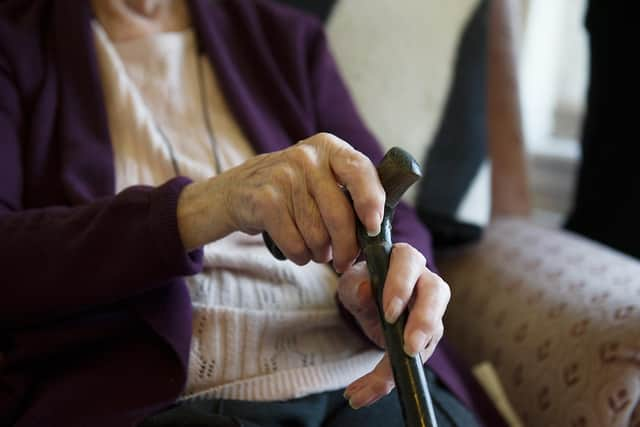

If Andy Burnham is serious about reforming social care, then profiteering from vulnerable residents and families needs to be included in any review.
Paul Lewis, Edinburgh
Vetting police
The importance of psychological screening when police officers are recruited has never been more vital in the wake of the revelations surrounding the rapist police officer Alan Greer (your report, 27 July).
I am aware that artificial intelligence has been seen as part of the potential solution for screening new recruits. However, it is important to remember that AI can’t replicate genuine human connection nor recognise subtle social cues or emotions.
Although cost is clearly being seen as a barrier to having human-led psychological screenings for all new officers, the role of any potential AI screening needs to be considered cautiously. Clearly, well-resourced in-person screenings would be ideal if not essential.
The shocking actions of Pc Greer should be a wake-up call for how the recruitment process is currently carried out. If something doesn’t change, horrific cases such like this one may repeat themselves in the future – a situation we surely want to avoid at all costs.
Dr Adam Mahoney, Chair of the British Psychological Society’s Division of Forensic Psychology Scotland, Napier University, Edinburgh
Empty promises
You rightly castigate the SNP regime for its “glib election promises ” (Editorial, 29 July), having reported on the scam of its “free” school bags the previous day and now the mirage of its projected “walk-in GP centres”. These new goodies were both front and centre in the SNP’s election campaign literature in May 2026, and we can be sure that gullible people voted SNP while believing they were a genuine offer rather than a lie. Like other SNP promises before them, they have turned to dust. Who can forget Nicola Sturgeon’s much-trumpeted, at an SNP conference in 2017, “not for profit, publicly-owned energy company”, which never came to fruition and whose non-viability had to be admitted by the SNP energy minister a couple of years ago?
The death of the business and energy giant, Sir Ian Wood, reminds us of how Alex Salmond in 2014 strained every sinew to deny Wood’s expert opinion that Salmond had exaggerated by 45-60 per cent the extent of the oil yet to be capable of extraction from Scottish waters.
The moral of the story is that, if the SNP makes an offer or a promise or a projection, you can be pretty sure that, if it is not entirely worthless, its value can be massively discounted.
Jill Stephenson, Edinburgh
Call them out
In my near 50 years reading The Scotsman, in recent times the editorial comment has progressively got stronger in its opinions. The latest one (29 July), regarding GP walk in clinics, states bluntly the ineptitude of the SNP, once again not heeding the advice of expert GPs, but instead rolling out a useless, money-draining policy for more soundbites.
This newspaper has a history of being honest and fair-minded across the political spectrum, but as we see more and more nonsense from the SNP on a daily basis, I am pleased that The Scotsman is calling this lot out for what they are: shambolic, completely out of touch with reality, no financial accumen whatsoever, and a belief that they are beyond reproach from anyone or any other organisation. More galling than anything is that, for the second time in two years, I am being forced to go “private” for heart treatment as the lists are so long, even for an ultrasound, I could be waiting months.
So congratulations to The Scotsman, for continuing to haul these charlatans over the coals and expose their utter uselessness for all to see. A free copy to Bute House as a gift to Honest John might just stir up the wasps’ nest further!
David Millar, Lauder, Scottish Borders
Go to blazes
Once again, Edinburgh’s city council demonstrates its inability to deal with – as a matter of urgency – the aftermath of the Princes Street fire.
Any other city faced with a similar problem, and with the upcoming Festival approaching, would have found a way to ease the disruption caused by the loss of the tram service, with the consequential damage to retail and hospitality trading.
Similar lethargy is demonstrated over the liklihood of any decision – let alone action – being taken on the Sheriffhall roundabout issue.
It would appear that the council prefers to develop fanciful plans, unlikely to be funded, about further pedestrianisation in the city and, of course, another tram route. Anything other than dealing with live issues affecting residents and visitors alike.
Edinburgh’s disgrace indeed.
Derek Stevenson, Edinburgh
Trams vindicated
The news that trams may be moved by road (your report, 28 July) to resume a restricted service in Leith and Newhaven really does bring into focus just how much the service is contributing to life in the north of the city.
A great deal of hand-wringing before and during the laying of the rails has been overturned by how much the tram service has contributed to the city.
Maybe the council got it right in the end. What of the future, though?
Charles Lowson, Fareham, Hants
Second best
Everyone agrees that consumption of fossil fuels is contributing to global warming. In an ideal world all countries would seek to cut their carbon emissions. Unfortunately countries such as China and India continue to pollute.
The economic theory of second best now kicks in. The UK’s emissions are insignificant. What the UK should do is not to ban oil and gas production, but to take action to mitigate the effect of global warming. Examples might include more water reservoirs, drip feed irrigation, coastal defences against rising sea levels, and actions to heat-proof our towns by planting more trees. Anything else is futile virtue-signalling.
Colin McAllister, St Andrews, Fife
Blown away
Roy Bedlow (Scotsman, 29 July) claims that “on-shore wind is critical for energy security” but makes no reference to dunkelflaute weather conditions. When the wind does not blow then there will be no power produced from such a technology.
The claim that “energy costs are soaring due to the fossil fuel shock” is incorrect as building a very expensive back-up system to keep the lights on is one of the reasons for Scottish electricity prices being double that of France. The other reason is the huge increase, by a factor of 1.7, in the strike price.
What Holyrood needs to do is produce a power plan that provides electricity at 13p/unit to match the cost charged in mainland Europe.
Ian Moir Castle Douglas, Dumfries and Galloway
Fan trouble
I have been astonished that there have not been more letters on what was thought to be shocking behaviour by Celtic and Rangers supporters following their Scottish Cup quarter-final match earlier this year (your report, 22 July).
The best punishment would be that no supporters from either team would be allowed into games for the next six months, adding salt to the wound by the opposition being allowed extra tickets to fill the empty space.
This might cure their bad behaviour.
M Dickson, Edinburgh
North versus South
Andy Burnham is in good company when he considers that Manchester to be in the north. Mrs Gaskell’s novel, North and South, depicting the cultural and political differences between the south of England and Manchester, was given its title at the insistence of Charles Dickens.
Ni Holmes disagrees with Burnham, but restricts the definition of the north to the geographical (Letters, 29 July). But when Hadrian’s Wall was built, its purpose was not geographical but was to protect the south from attacks coming from the north.
I was brought up in Lancaster, 60 miles north of Manchester. Even so, it very much considered itself to be in the north, despite militarily and historically the north being only a source of trouble. It was burned to the ground by a Scottish army in 1322 and suffered from an unfriendly visit by Bonnie Prince Charlie and his soldiers in 1745.
Ni Holmes says that Scotland doesn’t need an increased military budget. Vladimir Putin will be pleased.
If Scotland becomes independent one hopes that it will not follow the example of Southern Ireland, which stayed neutral in the Second World War, and which ended with Eamon de Valera, its political leader, officially offering the Germans condolences on Hitler’s death.
Hugh Pennington, Aberdeen
Write to The Scotsman
We welcome your thoughts – NO letters submitted elsewhere, please. Write to [email protected] including name, address and phone number – we won’t print full details. Keep letters under 300 words, and in the body of the email – no attachments – and avoid ‘Letters to the Editor/Readers’ Letters’ or similar in your subject line. If referring to an article, include date, page number and heading. No poems.
Comments
Want to join the conversation? Please or to comment on this article.