
Exclusive:Scottish quango urged to provide detail over £30m Center Parcs subsidy


UK government body highlights ‘areas of improvement’ around subsidy assessment
A Scottish government quango has been urged to explain how it considered queries raised by its independent financial advisers as part of plans to award a major multi-million pound subsidy to Centre Parcs for its first resort north of the border.
The Scottish government has committed up to £30 million in public money to deliver “essential infrastructure” for Center Parc’s inaugural Scottish resort near Hawick, with the funding being delivered by South of Scotland Enterprise (SoSE)
The regional economic and community development agency claims the landmark tourism development, which will be the seventh Center Parcs village in the UK and Ireland, will create around 1,200 jobs, and help “tackle head on” challenges in the area by contributing £75m annually to the Scottish Borders economy.
But a new report by an arm of the UK Competition and Markets Authority (CMA) has called on SoSE to set out in greater detail its decision-making process and provide more information around its due diligence process.
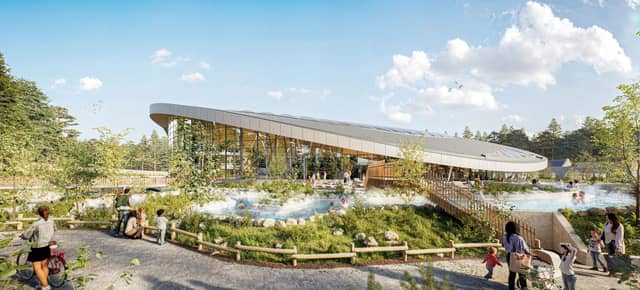
With planning permission granted last December by Scottish Borders Council, work on the £450m project began in March. As part of the development, Center Parcs will create an entirely new forest, and it is planning to build around 700 lodges with capacity for more than 356,000 guests every year.
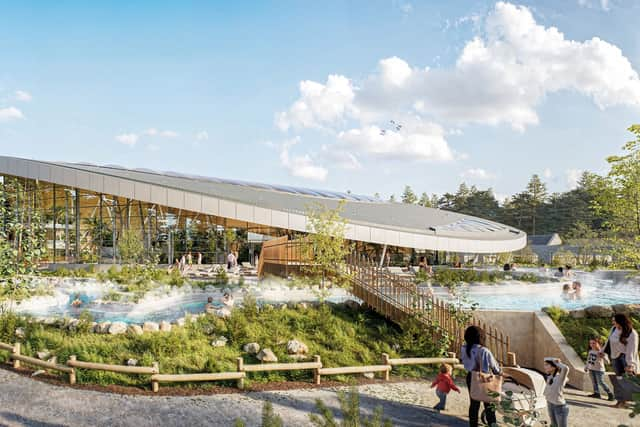
The firm has said the “natural beauty” of the Scottish Borders ensures it is the “perfect spot” for one of its resorts, and hopes the new park will be open by 2029. As part of the project, it will also create a purpose-built activity loch, an indoor swimming complex, restaurants and cafes, retail outlets, a health spa and a heritage centre.
The plan for the subsidy, which has to be awarded, was referred by SoSE to the Subsidy Advice Unit, part of CMA, in March, in order to assess its compliance with the Subsidy Control Act 2022, which was brought in to replace EU-wide state aid rules.
The unit found that SoSE had “considered in detail the compliance of the subsidy with the subsidy control principles,” noting that the regional quango had “clearly described and evidenced” its specific policy objective, and the ways in which the subsidy would address so-called “equity rationale.” It also said that its assessment “clearly sets out” the positive effects of the eight-figure subsidy, and how it would bring about changes that would not otherwise occur without it.

However, its report also highlighted “areas for improvement,” including how it considered the viability of the overall project and the impact of the subsidy.
The report states that the SoSE assessment explained that Center Parcs’s position was that the financial viability of the development was “contingent” on securing the £30m contribution, and that without it, its return on investment hurdle “would not be met.”
It said this was based on “viability calculations” Center Parcs prepared and shared with SoSE, and which SoSE assessed and “stress tested” with the help of the independent financial advisers.
The SoSE assessment, according to the report, saw the independent advisers query Center Parcs’s “approach to the ROI (Return on Investment) calculation,” but ultimately concluded that documentation and engagement with the holiday firm during the due diligence process provided a “reasonable basis” for assessing the resort’s viability.
But the Subsidy Advice Unit said the quango’s assessment “should explain how SoSE considered the queries raised by its independent financial advisers during the due diligence process in reaching its conclusions.”
It also said that the quango’s assessment should “explain more clearly” how it reached its decision to make the award, and provide more “detailed analysis” of Center Parc’s potential impact on competitors within the market.
The report also states that SoSE’s assessment could better explain why some alternative instruments, such as a commercial loan, or equity investment on commercial terms, were found to be unsuitable.
The money in question is earmarked for a range of enabling infrastructure works, including electricity, water supply, wastewater treatment, and a new priority transport junction. It will also go towards fibre connectivity and an energy substation.
In March, John Swinney joined Center Parc executives for a ceremonial tree-planting event at the 530 acre site, based in Huntlaw, near the hamlet of Hassendean.
Speaking at the time, he said the financial commitment from the Scottish government would deliver “the essential infrastructure needed to make the resort possible,” and unlock the private funding from Center Parcs.
“Investing in the south of Scotland through this project is a direct expression of our belief that every part of Scotland deserves to benefit from a growing economy,” Mr Swinney explained.
Noting that 30 per cent of the jobs being created were targeted at 16 to 24 year-olds, he added: “Investing here is a deliberate statement that we are serious about reducing regional inequality and creating genuine opportunity for young people.”
In a statement, Center Parcs said the report “clearly sets out” why the subsidy is necessary, and shows the SoSE assessment met the statutory requirements for a subsidy referral.
It added: “It also recognises the detailed and thorough approach taken to assessing compliance with the subsidy control principles and processes. We look forward to working with all relevant stakeholders to deliver on our promise of opening a holiday village by the summer of 2029, a development that will have a transformative impact on the economy of the Borders and the wider region.”
A SoSE spokesperson said: “We welcome the Subsidy Advice Unit’s report and thank the Competition and Markets Authority for its thorough and constructive review.
“The report confirms that our assessment met the statutory requirements for a subsidy referral and recognises the detailed and structured approach taken to assessing compliance with the subsidy control principles.
“Further feedback has been provided by our legal counsel confirming that the review is broadly positive, with only minimal areas identified for improvement. Our legal counsel also acknowledge the robustness of our assessment.”
They added: “This proposed infrastructure investment is critical to responding to long-standing economic and social challenges in the Scottish Borders and to making meaningful progress against the underlying policy objective. We will now carefully consider the report as part of the next stage of our decision-making process.”
Comments
Want to join the conversation? Please or to comment on this article.