
Spike in firms in critical distress a 'red flashing light' for Scottish economy


Situation reminiscent of pandemic shutdown, new report warns
A “deeply concerning” spike in businesses in critical states of distress across Scotland signals a “red flashing light” for the economy, according to a new report.
There was a spike of more than 51.2 per cent in firms encountering the most serious instances of distress in the first quarter of the year, according to the latest Red Flag Alert data.
Whereas there were 2,190 companies in such a position in the final quarter of 2025, the number surged to 3,313 for the first four months of 2026. The rate at which the number of Scottish businesses in critical distress has increased also outpaces the UK average of 36.9 per cent.
Amid rising costs linked to the ongoing conflict in Iran and volatile energy and logistics markets, the firm behind the quarterly report, BTG, warned that the current pressures would “further compound” the challenges facing businesses.

The independent financial and real estate advisory group said the situation was reminiscent of the Covid shutdown six years ago, which required urgent government intervention to support businesses across all sectors.
The latest Red Flag Alert data, published today, shows that instances of ‘significant’ distress were also rising steadily in Scotland, up by 12.65 per cent to 32,282 in the first quarter of 2026 when compared with the same period a year earlier.
All but one of the 22 industry categories monitored by Red Flag Alert saw critical distress levels rise since the same period a year earlier, with only printing and packaging saw a modest fall in the most serious signals of distress.
The highest annual increases were reported in financial services businesses (191 per cent), media (148 per cent), utilities (117 per cent), wholesale (90 per cent) and leisure (77 per cent).
Every sector also endured rises in significant distress year on year with the largest increases in early signs of distress in print and packaging (52 per cent); real estate and property (23 per cent); retail (19 per cent) and financial services (18 per cent).
Thomas McKay, managing partner for BTG in Scotland, said: “Unfortunately, we have seen year on year rises in distress across the board in the first three months of the year in Scotland and we continue to outpace the UK average which is particularly concerning.

“The fact that the number of instances of the most serious critical distress are now over 51 per cent higher than a year ago, and that no sector of the economy is spared these rises is a red flashing light for our economy.
“Also, since the last data release in January, rising costs linked to the Iran-US conflict have become a major concern. We expect this to significantly impact upcoming data, further compounding the challenges businesses in our region will face for the remainder of 2026.”
He added: “We are monitoring our exposure in the energy sector and its supply chain very closely. Because global energy and logistics markets can fluctuate dramatically overnight, there is a real risk that the market shocks seen since February could lead to rapid, widespread financial distress. This situation is reminiscent of the Covid shutdown in 2020, which required urgent government intervention to support businesses across all sectors.
“While the headwinds we faced in 2025 were already significant, the added uncertainty of a global energy crisis could push an unprecedented number of businesses to the brink this year. Without a rapid de-escalation of the current hostilities, the outlook remains concerning.”
The previous Red Flag Alert data, published at the end of January, showed the most serious critical instances of distress rose by 49.5 per cent year on year as of the fourth quarter of 2025, ahead of the UK average increase of 43.8 per cent.
The firms in distress have been identified by Red Flag Alert’s proprietary credit risk scoring system, which screens companies for a sustained or marked deterioration in key financial ratios and indicators including those measuring working capital, contingent liabilities, retained profits and net worth.
Responding to the latest data, Michelle Ferguson, CBI Scotland’s director, decribed the figures as “clearly concerning” and a “stark wake-up call” for the Scottish economy.
“Firms are navigating rising employment costs, a challenging tax environment and now the mounting uncertainty of a global energy shock - taken in isolation, each of those pressures is significant, but having to navigate all three at once is incredibly tough for any business,” she said.

“With the Scottish election next week, this data underscores what we have been saying to all political parties: sustainable economic growth must be the central mission of the next Scottish government.”
Charandeep Singh, chief executive of the Scottish Chambers of Commerce, said: “Challenges like business rates, taxation, and energy costs are consistently cited by businesses of every size, sector, and geography. The cumulative effect is that many firms are now operating with very limited headroom.
“With party manifestos now set out ahead of the election, the priority must be ensuring the next five years are better for business than the last five. That requires early, decisive action to reduce the cost of doing business and create the conditions that allow firms to invest, hire, and grow.
“Without that shift, more businesses will be pushed into financial difficulty, with direct consequences for jobs, communities, and Scotland’s wider economic outlook.”
Russell Borthwick, chief executive of Aberdeen & Grampian Chamber of Commerce, described the figures as “deeply concerning,” but said they would not come as a surprise to firms grappling with rising costs, weak demand, and mounting uncertainty.
“No economy can thrive if businesses are stuck in survival mode,” he stressed. “These figures should serve as a clear warning that urgent action is needed to restore confidence and unlock growth.”
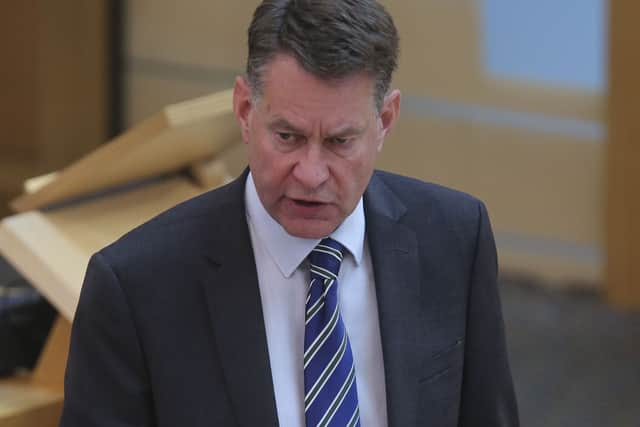
Scottish Conservative business spokesman, Murdo Fraser, said: “The SNP’s higher taxes and failure to pass on business rates relief have left Scottish firms at a disadvantage, and these are the dire, predictable consequences. John Swinney’s punitive tax regime is putting Scottish firms out of business and, if he wins a majority, things will only get worse.”
However, Eilidh Munro, the SNP candidate for Skye, Locharber, and Badenoch, said Labour’s National Insurance hike had “hammered” Scottish businesses, and accused Westminster of failing to “lift a finger” as businesses face some of the highest energy bills in Europe.
“Firms in an energy superpower like ours should never feel the tremors of a global energy price shock,” she said. “It's time the Labour government acted or handed over the powers to a Scottish government that will.”
Business figures in key sectors said the data showed the need for political action, with some stressing their areas remained resilient.
David Lonsdale, director of the Scottish Retail Consortium, said it was crucial that the next Scottish government put the economy front and centre of its plans.
“It’s a challenging time for retail and a number of well-known brands have tumbled or stumbled in recent months,” he said. “Consumer spending is becalmed, supply chain and government-mandated cost pressures have spiked, and the conflict in the Middle East isn’t helping.
“It’s imperative following next week’s election that economic growth is the priority of priorities for the newly-elected Scottish government and that they avoid doing anything that compounds the cost and regulatory burden retailers face.”
Sandy Begbie, CEO of Scottish Financial Enterprise, pointed out that the financial services sector’s economic contribution now stood at £17.7 billion annually, but added: “Given the range of political and economic volatility, businesses are undoubtedly facing significant pressure and these statistics will come as no surprise to many across the economy.
“The next government should focus on creating the right conditions for business to thrive, through a consistent narrative, well-run public services and a stable and competitive tax environment, and otherwise avoid interfering in businesses and workers driving the growth our economy needs.”
A Scottish government spokesperson said: “Scotland's economy grew 1.4 per cent overall last year – more than the UK as a whole. In December Ministers welcomed a rise in business investment to more than 10 per cent of GDP for the first time in 20 years.
“The First Minister convened a meeting of the Scottish Government’s Resilience Room in March to consider the impact of the conflict in the Middle East on Scotland’s people and businesses.”
Comments
Want to join the conversation? Please or to comment on this article.