
Storm names 2025/26: These are the 21 new storm names chosen by Met Office - including nod to Fleetwood Mac

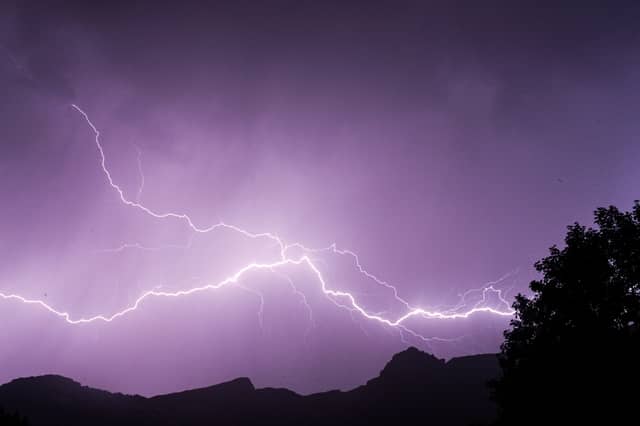

The list of names have been inspired by everything from Fleetwood Mac to a husband who snores loudly
The Met Office has revealed its official list of storm names, and the stories behind them, for the 2025-26 season.
The weather agency names storms when they’re deemed to have the potential to cause medium or high impacts in the UK.
This year, every name has been chosen by the public - with tributes to loved ones, pets and everyday heroes influencing the final list of names selected by the Met Office in partnership with Met Éireann and KNMI, the Dutch national weather forecasting service.
More than 50,000 suggestions were submitted from across the UK and Europe for this year’s list.
Amy, Bram and Chandra will be the first three named storms this season - which runs from early September to late August next year.

Amy was the most popular female name submitted, with many respondents associating the name with their loved ones. Other names submitted included Dave, with one respondent suggesting the name in honour of their husband “who can snore three times louder than any storm,”.
Isla was the most popular name starting with ‘I’, inspired by little girls who leave chaos in their wake.
Meanwhile, the name Violet was chosen in honour of a little girl “every bit as fierce and unstoppable as a storm” after being born at 27 weeks, while her mum was unwell.
Stevie was inspired by a little girl named after the Fleetwood Mac song Dreams, which includes the line: “Thunder only happens when it’s raining.”
Cherished pets featured heavily in the submissions, too. One respondent’s cat, Oscar, was described as “a good boy, but crazy when he gets the zoomies,”.
Read on to find the full list of storm names for 2025-26.
Why are storms named?
While the process of choosing storm names is a light-hearted exercise, naming storms has a serious purpose, helping to keep people safe and informed when stormy weather hits.
Eoin Sherlock, Head of Forecasting Division at Met Éireann, said: “Naming storms is a powerful tool that supports us and other public safety organisations to increase awareness of severe and impactful weather alongside our weather warnings.
"We know that naming storms makes it easier for people to track important and up to date forecast and safety-related information.”
When is a storm named?
In the UK, a storm will be named when it is judged to have the potential to cause serious disruption and damage, and could result in an amber or red weather warning being issued.
The decision is made by looking at the impact the weather may have, and the likelihood of it occurring. They usually apply to storms where there is likely to be strong winds, but heavy rain or snow could also lead to a storm being named.
In 2024-25, six storms were given an official name - the last being Storm Floris at the beginning of August. The previous year saw a record 12 storms meet the threshold.
How are storms named?
A new list of names are compiled jointly between Met Éireann, the Met Office and KNMI every year, and issued each September. The list runs from early September to late August the following year.
People can suggest names to be considered through an online forum.
When a storm needs to be named, either the Met Office, Met Éireann or KNMI can name a storm - using a name from the latest list in alphabetical order.
Full list of storm names for 2025-26
- Amy (Met Office)
- Bram (Met Éireann)
- Chandra (pronounced Ch-an-dra) (KNMI)
- Dave (Met Office)
- Eddie (KNMI)
- Fionnuala (pronounced Fee-new-lah) (Met Éireann)
- Gerard (pronounced Jer-ard) (Met Éireann)
- Hannah (KNMI)
- Isla (Met Office)
- Janna (pronounced Yah-nah) (KNMI)
- Kasia (pronounced Ka-shaa) (Met Éireann)
- Lilith (KNMI)
- Marty (Met Éireann)
- Nico (KNMI)
- Oscar (Met Office)
- Patrick (Met Éireann)
- Ruby (Met Office)
- Stevie (Met Office)
- Tadhg (pronounced Tie-g) (Met Éireann)
- Violet (Met Office)
- Wubbo (pronounced Vuh-boh) (KNMI)
Comments
Want to join the conversation? Please or to comment on this article.