
Suckler beef producers deserve better from our government
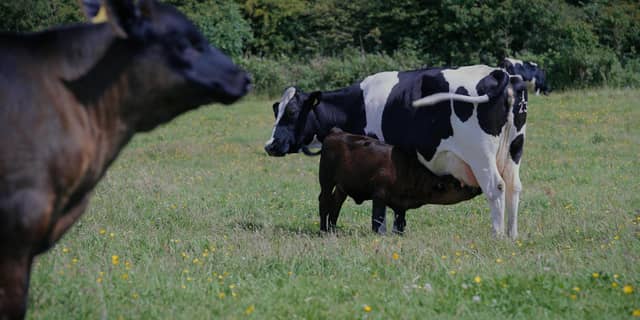

The question is whether decisions are being made on sound evidence
Last Thursday at NFU Scotland’s Autumn Conference, the Scottish government announced a change to the Suckler Beef Support Scheme that we knew nothing about.
It was a decision with significant implications for suckler beef farmers across Scotland, particularly smaller producers, made without any meaningful prior consultation with the industry.
Under the Scottish Suckler Beef Support Scheme (SSBSS), the calving interval requirement will fall from 410 to 400 days for the 2028 and 2029 scheme years, subject to legislation.
Put simply, this means reducing the time allowed between a cow having one calf and her next, putting greater pressure on farmers to get cows back in calf sooner if they are to qualify for support.
The thinking behind the change is relatively straightforward. Cows that calve more regularly produce more calves over their lifetime, improving efficiency and potentially reducing emissions per kilo of beef produced. But what looks like a simple productivity target on paper does not account for the very different conditions in which Scotland’s suckler herds operate.
That is particularly concerning for smaller producers, including crofters and those farming in remote and disadvantaged areas, where geography, climate and the scale of their operations can present additional challenges.
These businesses are an important part of Scotland’s beef sector and must be properly considered when changes to support schemes are developed.
The question is not whether efficiency matters. It does. Nor is it whether farmers should play their part in reducing emissions. They already are.
The question is whether decisions are being made on sound evidence, with a proper understanding of the different farming systems across Scotland.
We had repeatedly asked for the SSBSS Stakeholder Group to be reconvened before further changes were considered.
It exists for a reason: To bring government, industry and technical expertise together to examine what changes mean on the ground. Yet it was not consulted before this announcement. Consultation is not a courtesy – it’s how you get policy right.
There are also serious questions about the evidence. The emissions figures cited come from a Scotland’s Rural Collage (SRUC) report covering the 2025 scheme year, the first year of the 410-day requirement. The report itself cautions against attributing the reported reductions to the calving interval rule alone, with changes in herd structure and market conditions also contributing. So, our question is whether one year of data is the right foundation for tightening the rules again.
Herd size, breed, geography, climate and production system all influence reproductive performance. A 400-day interval may be achievable for some, but there is a world of difference between a target on paper and a working farm, particularly in remote and disadvantaged areas where conditions can be unforgiving.
The report also indicates that smaller producers have been significantly affected. While a derogation applies to producers claiming ten calves or fewer, there is an argument to increase the threshold to better protect smaller herds.
And then there is the timing. Against a backdrop of fertility issues already emerging as a result of this summer’s extreme heat and drought, alongside the known impact of Bluetongue virus (BTV) on fertility, with its full effects on reproductive performance yet to be seen, last week’s announcement was particularly insensitive and ill-judged.
The SSBSS was established to support the viability of Scotland’s suckler beef sector, maintain domestic beef production and sustain businesses, particularly in disadvantaged areas. Those objectives must remain front and centre.
I have written to Cabinet Secretary Gillian Martin and Agriculture Minister Jim Fairlie calling for the proposed changes to be paused, the stakeholder group reconvened and the evidence properly examined with industry.
This is not about resisting change. It’s about making sure change works in practice, not just in policy.
Andrew Connon is President of NFU Scotland