
Edinburgh Airport's huge expansion will be like 'changing the engine of the aircraft as we’re flying it'
£500 million terminal overhaul to create space for 12 million more passengers over next 20 years

It promises to be a huge and remarkable transformation, enabling Edinburgh Airport to expand from 18 to 30 million passengers, but its bosses admit: “We will be changing the engine of the aircraft as we’re flying it”.
Scotland’s busiest airport is embarking on the biggest terminal expansion in its near 80-year history, ditching its past piecemeal approach to development in favour of a comprehensive overhaul that will “completely transform” the building.
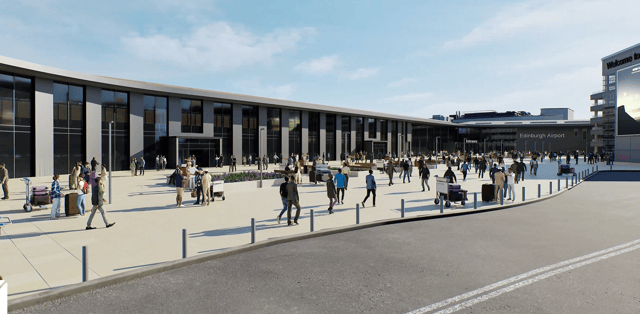

Over the next five years, the airport will spend £500 million enlarging the terminal by 60 per cent, which will include a double-height departure lounge extension and bigger immigration and arrivals halls.
In a second phase of the project, expected to total around £1 billion overall, the front of the terminal will be pushed out onto a vehicle-free plaza, and more shops added before security.
What’s been your experience of Edinburgh Airport? Tell us what you think here
The work is aimed at providing more space to accommodate growth and enable passengers to move more easily through the building, which opened 49 years ago.
However, the airport has warned that things could get worse before they get better, with the then chief executive Gordon Dewar admitting in February the project was likely to cause “huge disruption”.
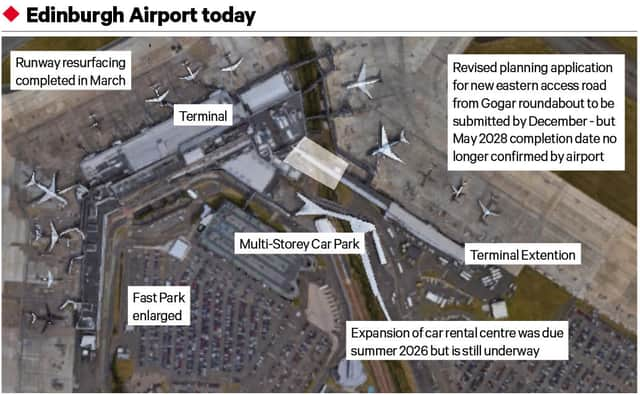
Chief communications and sustainability officer Gordon Robertson told the airport’s consultative committee on Monday: “We will be changing the engine of the aircraft as we’re flying it”.
The airport has grown rapidly since the 1990s when you could park right outside the terminal and the baggage reclaim belts were just a few metres long.
Passenger numbers have nearly doubled over the last 15 years and are expected to near 18m this year and 20m in 2030, having recovered after the Covid pandemic lockdowns faster than expected.
The airport is the sixth busiest in Britain after four in London, and Manchester, and is now as busy in October as it used to be in July - its peak month.

However, as Mr Robertson acknowledged, the terminal had previously expanded piece by piece.
He told the committee: “We have been a bit guilty in the past of building a security hall and bolting it on”.
Steven Naismith, who is masterminding the new expansion, said the approach had affected other areas too.
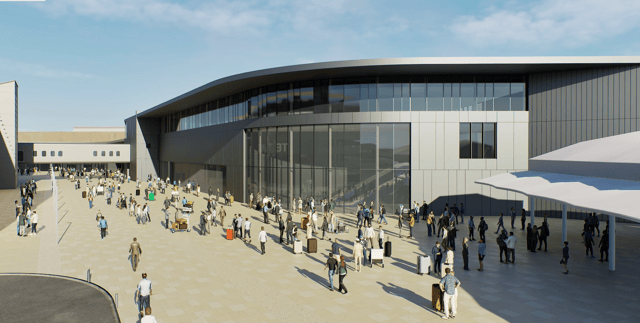
He told The Scotsman: “We have largely grown incrementally, and what that has led to in the departure lounge, in particular, are things being added a bit at a time. “No one has stepped back at any point and said: ‘What is the overall passenger journey?’
“One of the changes here is that we have been building as growth came in over the last decade or so. [We’re] now saying, let’s build ahead of that growth so we have capacity to grow into.
“It’s all about creating a bigger, more resilient Edinburgh Airport.”
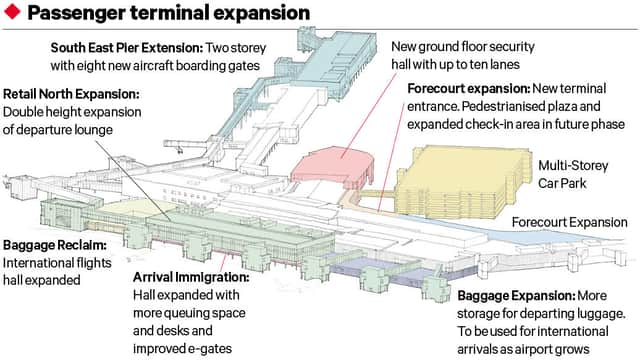
Mr Naismith said the expansion project, called Our Future, would enable the airport to handle 30m passengers, which is expected by the mid-2040s.
However, he said it was difficult to gauge how close to capacity the terminal had reached. He said: “In some areas, it’s almost like more levels of discomfort rather than being full.”
In the first stage, eight new departure gates are due to be completed by September next year.
The airport has not published visualisations of the revamped terminal interior, but a further expansion of the departure lounge could see the most dramatic change.
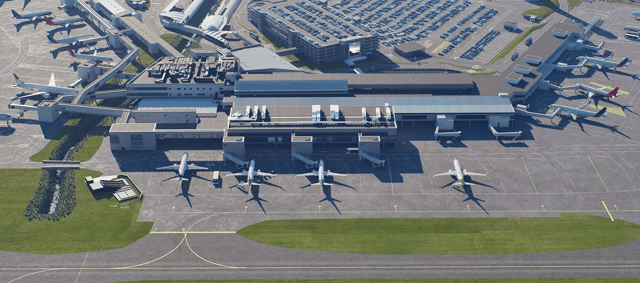
Mr Naismith said: “Because the departure lounge is the biggest dwell space, in which passengers spend the most time, we have spent a lot of time on its design and I think it’s the most impactful.
“It’s a double-height, 5,000 sq m extension - there will be lots of natural light pouring in. It will feel like a completely transformed space.
“This is also about better space, to put things where they should come in the passenger journey - it’s about getting the flow right.”
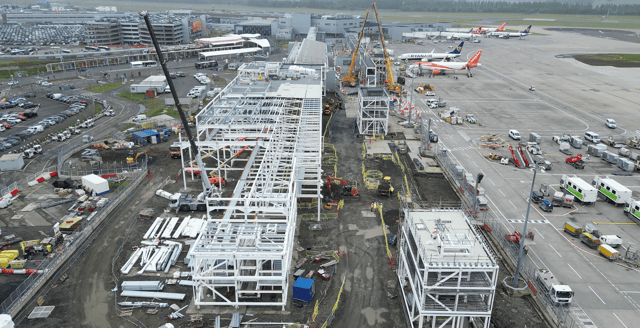
As an example, Mr Naismith said more restaurants had been added over the years in response to passenger demand, “but maybe not as consciously planned as this will be in the future”.
He explained: “In the extension, it will be much less individual units boxed off and much more open so passengers can flow through the space.” Central seating will be put back.
Mr Naismith said: “Our ambition is to celebrate more of the best of Scotland in the lounge, and there’s a really clear, uniquely Edinburgh offer versus [that at] any other airport.
“We have lots of tourists coming into the country, and when they are having that last experience of Edinburgh Airport in our departure lounge, we want them to genuinely know it’s Edinburgh and it’s their last taste of Scotland.”
Mr Naismith said that would involve a combination of local brands and “more Scottishness and more authenticity” in what larger, international brands will offer.
It will include a “vibrant food market” featuring street food provided by local traders and inspired by the Bonnie & Wild food area in the St James Quarter shopping centre in Edinburgh and the Dockyard Social street food hall in Glasgow.
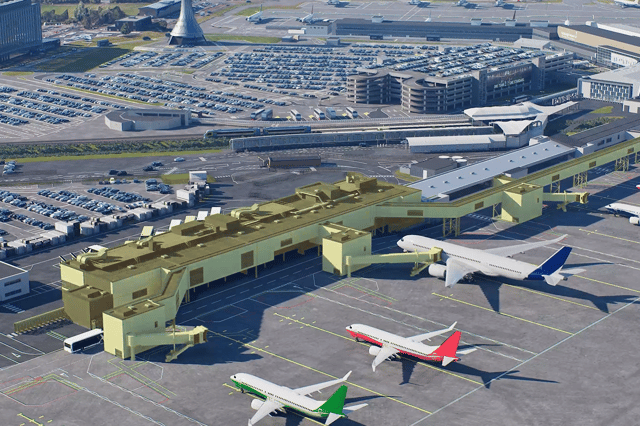
In the arrivals area, which has come in for the greatest criticism, Mr Naismith said the focus would be on increasing efficiency because “passengers want to get through that process quickly”.
That would be achieved by increasing capacity, such as with more e-gates at passport control and the two immigration halls consolidated into a single, larger space, which he said would bring a “significant benefit”.
The two international arrivals halls will also be replaced by a single, larger area on the east side of the terminal, freeing up space to expand check-in.
The airport previously said the departure lounge would be completed in 2028 and the arrivals hall in 2029, but has since declined to confirm the dates.
Domestic arrivals will be switched from the east to the west side of the building, with a new terminal entrance and assisted travel area. Security screening will be moved to the ground floor with the eight lanes increased to ten.
Comments
Want to join the conversation? Please or to comment on this article.