
Electric scooter riders face ‘higher risk of traumatic injuries than motorcycles and bikes’

Women more likely to suffer serious injuries due to e-scooter design and riding patterns
Electric scooter riders have a higher risk of brain and internal organ injuries than cyclists or motorcyclists, according to a study published on Thursday.
The research was carried out in England and Wales where a series of rental trials are continuing, but e-scooters are also a common sight in Scotland even though their use on all but private land remains illegal.
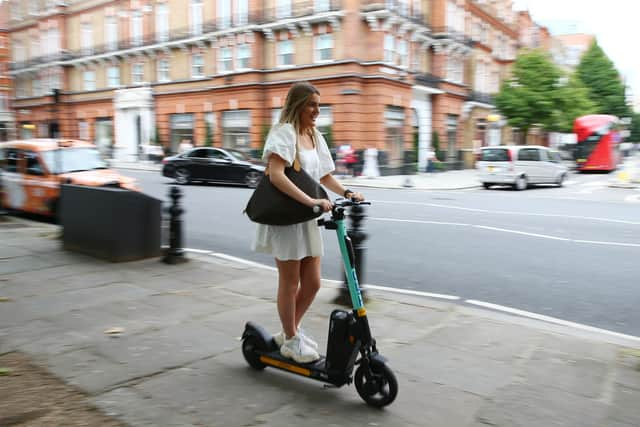

It found that compared with motorcyclists, e-scooter riders faced a 3.5 times higher risk of a traumatic brain injury, a 1.5 times higher risk of injuring internal organs, and a 3.2 times higher risk of injuries to the arteries or veins.
The risk was 1.7, 1.4 and 1.7 times higher respectively when compared with cyclists.
The study also showed women riders were more likely to suffer severe injuries.
Some 20 trial rental schemes operate in towns and cities south of the Border, launched by the UK Government in 2020.
However, the Scottish government has repeatedly declined to follow suit despite interest from cities such as Glasgow.
From 2022-24, one person was killed and 19 seriously injured among 45 casualties in e-scooter collisions in Scotland.
In the study, published in the journal Scientific Reports, a team led by surgeon David Bodansky at Chelsea and Westminster Hospital NHS Foundation Trust in London analysed data for 15,247 patients, including 580 e-scooter riders, 7,000 motorcyclists and 7,740 cyclists.
Each had moderate to severe injuries after incidents in 18 cities in England and Wales from 2020 to 2022.
Helmet use was documented in 5.9 per cent of e-scooter riders compared with around three quarters of motorcyclists and 45 per cent of cyclists.
However, the fracture risk for e-scooter riders was 20 per cent lower than motorcyclists and 10 per cent lower than cyclists.
A separate analysis of 23,000 self-reported e-scooter collisions and near misses showed men had a 36 per cent lower crash risk than women, who were also twice as likely to be severely injured.
That could be because of e-scooter design being based on male body proportions and female riders being more likely to ride on footpaths and unpaved surfaces than roads.
The researchers said: “Embedding rigorous public health evidence into forthcoming UK legislation will be critical to ensure the benefits of micromobility are realised while minimising avoidable harm.”
Stephen Kerr, justice spokesperson for the Scottish Conservatives, who want illegal e-scooters confiscated, said: “This research is yet more evidence they pose a growing risk to public safety.”
A Transport Scotland spokesperson said: “We’ve been clear that e-scooters have the potential to boost local connectivity and reduce emissions.
“Local authorities have previously expressed interest in participating in trials and we had hoped to support this.
“Unfortunately, the short application window offered by the UK Department for Transport process for trials means it is not possible to implement the necessary legislation in time for the final round of trials.
“As such, we are continuing to engage closely with DfT on their proposed legislation to fully legalise e-scooters, and continue to develop the evidence base and policy position on e-scooters in Scotland.
“Any legislation would need to carefully balance potential benefits with important considerations around public safety, enforcement and the protection of vulnerable road users.”