
Exclusive:Giving bus passengers priority is not anti-car but best use of road space, says bus firm boss
Call for bus speeds to be tracked because “what gets measured gets attention”

Bus passengers should have a right to expect priority over cars on key routes as part of action by councils to tackle bus speeds, the boss of one of Scotland’s major operators will tell the industry on Monday.
West Coast Motors managing director Colin Craig said bus firms should not have to fight for every bus lane, case-by-case, because “giving priority to the vehicle carrying the most people is not anti-car - it is simply efficient use of public space”.
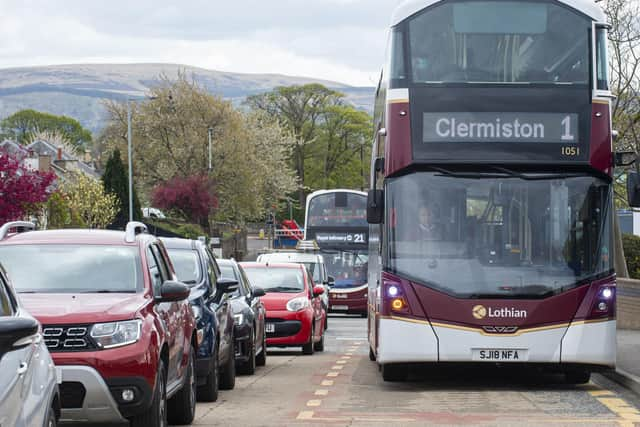

The chair of the Confederation of Passenger Transport Scotland (CPT), whose members are responsible for three quarters of public transport journeys, will tell its annual conference in Glasgow that bus speeds must be tracked by councils and action taken if they fall below minimum levels.
Speeds average between just 7.7mph in cities and 17.4mph in rural areas, according to a CPT report last October.
CPT Scotland director Paul White has warned that cutting fares alone - such as extending the £2 maximum single fare from the Highlands to the west of Scotland last week - is “only part of the picture”.
He said: “Without action on bus speeds and reliability, a fares-only approach will not address the wider challenges facing the network.”
The CPT report said: “Faster journeys for buses mean shorter journey times for passengers and more attractive schedules.
“This time-saving is especially significant for commuters, making public transport more competitive with other modes, including the car.”
Mr Craig will say: “We need a culture in which bus priority is expected on key bus corridors, not treated as an exceptional request that must be justified from scratch every time.
“Where many people are moving along a constrained road, giving priority to the vehicle carrying the most is not anti-car - it is simply efficient use of public space.
“One practical step would be a statutory duty for local authorities to measure bus speeds on key corridors and publish action plans where performance falls below an agreed standard.
“What gets measured gets attention. A consistent approach would make the problem visible, help target investment and let passengers see whether action is working.”
The City of Edinburgh Council agreed in January to ask bus operators for journey data “and evidence of congestion blackspots” so plans could be devised to reverse journey time increases, such as with bus gates, bus lanes and bus priority at traffic lights.
Other measures could include extending bus lane operating hours, banning parking and improving roadworks co-ordination.
However, the council’s plans for a trial bus lane extension to 7am-7pm every day for Lothian service 44 between the city centre and Duddingston has met with opposition from shops on the route.
An Edinburgh Bus Users Group spokesperson said: “Research consistently shows that extended and unreliable journey times are the main barrier to bus use that can be remedied in the short term.
“Bus priority should be the norm on key roads, not justified at enormous expense for every project.”
A Glasgow City Council spokesperson said: “Giving buses greater priority on the road network is one of the most effective ways to improve public transport for the many thousands of people who rely on it every day.
“That is why we are progressing a range of measures to cut delays and improve reliability.”
Comments
Want to join the conversation? Please or to comment on this article.