
Loganair reveals the new fuel which is set to power its first zero-emission aircraft


Glasgow-based airline excited by new tie-up with engine developer
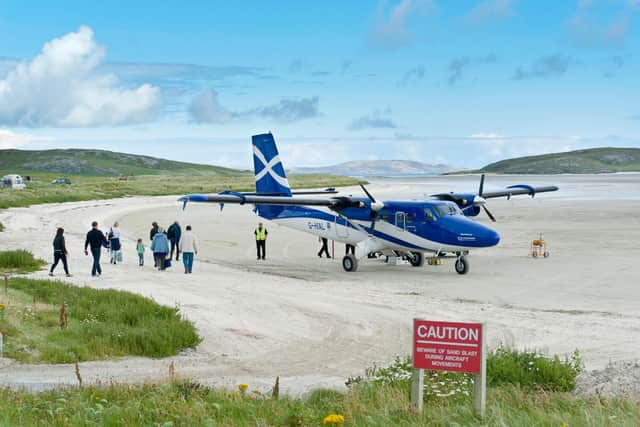
Loganair now expects hydrogen rather hybrid-electric engines to provide the first zero-emission air travel, with one of its adapted aircraft flying passengers to islands such as Barra beach in the early 2030s.
The new prediction from chief executive Luke Farajallah comes a year after he told The Scotsman: “Hybrid is by far and away the most logical thing to do.”
The Glasgow-based airline said it would be one of the first to adopt new propulsion technology, but hydrogen engines now appeared to have taken the lead.
Loganair signed a deal last year with Heart Aerospace to jointly develop the use of a new 30-passenger ES-30 aircraft, which will be powered by batteries and traditional aviation fuel.
But in June, Loganair agreed a separate deal with ZeroAvia, which plans to retrofit hydrogen engines to aircraft such as the Twin Otter, whose Loganair routes include to Barra.
Loganair chief executive Luke Farajallah said he thought adding new types of engines to existing planes would have the edge over new aircraft.
He said: “Bringing a new aircraft to market with a new engine is going to be much harder. I think it’s more likely the engine space will be filled first. So, equipping a conventional aircraft with a new engine is more likely than bringing a new aircraft on line with a new engine as well.”

Mr Farajallah described ZeroAvia, which has opened a factory near the airline’s offices at Glasgow Airport, as “particularly smart and agile”. He said its hydrogen engine development was “almost overtaking everything at the moment”.
“I think ZeroAvia’s approach is likely to move much for quickly,” he said. “They are moving so quickly and have got such a grip on the subject. When you talk to them, they really understand the art of the possible.”
The chief executive said it could make a great joint project with the Scottish Government, which leases the Twin Otters to Loganair, which carry up to 15 passengers on its Barra flights.
He said: “It might be a really nice tie-up for Loganair, ZeroAvia and the Scottish Government to have a tri-partite arrangement to see the first fully hydrogen fuel cell aircraft in Scotland be a Twin Otter, perhaps into one of the islands.
“A year ago, it looked quite different and things have moved very quickly.”
However, Mr Farajallah acknowledged the supply and storage of hydrogen remained a “challenge” as airports had yet to install the infrastructure, which would be “tough”.
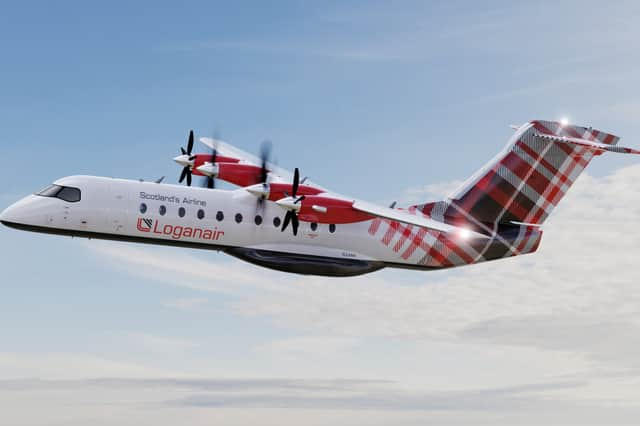
He said things could change again, but the first passenger flights in Heart’s aircraft in Orkney and Shetland had been pushed back from last year’s prediction of 2028 to the early 2030s.
ZeroAvia spokesperson Dominic Weeks said: “We are building a major manufacturing site close to Glasgow Airport and Loganair’s headquarters, and we look forward to bringing hydrogen-electric flight to Scotland over the next few years.”
READ MORE: World's largest electric flying machine with top speed of 180mph - study planned for Orkney
He said Scotland had several “unique advantages” to becoming an early adopter of zero emission flight, including the Scottish Government “building a strong hydrogen eco-system and committed to delivering net zero by 2045”.
David Holden, regional sustainable aviation manager for the Highlands and Islands Transport Partnership co-ordinating body, said: “We would be very supportive of this type of collaboration.
“We continue to support activities that will deliver lower emission, lower cost services that will provide greater connectivity."
Comments
Want to join the conversation? Please or to comment on this article.